
Kuddala Jataka
The Tale of the Weaver's Son
Long ago, in the bustling city of Savatthi, renowned for its vibrant markets and skilled artisans, lived a humble weaver named Kuddala. Kuddala was not just a weaver of cloth; he was a weaver of dreams, his fingers dancing across the loom, creating patterns of exquisite beauty. He lived a simple life with his wife, working diligently from dawn till dusk. Their greatest joy was their son, a bright and inquisitive boy named Bodhisatta.
Bodhisatta, even as a child, possessed a keen intellect and a compassionate heart. He would often sit beside his father, watching the threads transform into fabric, but his mind was always drawn to the suffering he saw in the world. He noticed the beggars in the streets, the hungry children, and the weary laborers, and his heart ached for them. He would ask his father, 'Father, why are some people so rich and others so poor? Why do some have plenty to eat while others starve?'
Kuddala, a man of simple wisdom, would explain, 'My son, the world is filled with ups and downs. Our fortunes change like the seasons. We must work hard, be honest, and share what we have, and that is the best we can do.' But Bodhisatta felt this was not enough. He yearned to alleviate the suffering he witnessed on a larger scale.
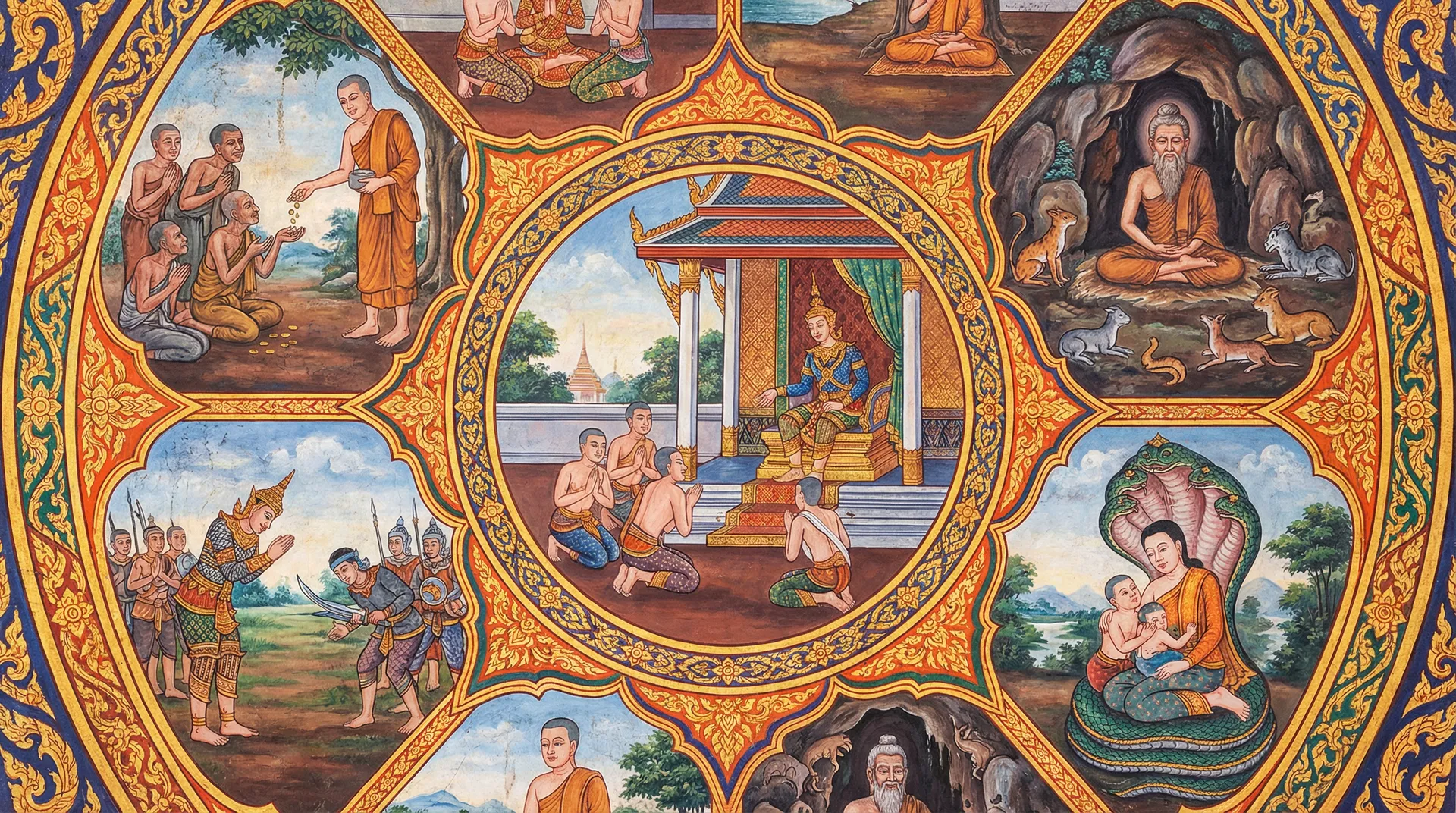
One day, a renowned king, known for his magnanimity and his love for his people, visited Savatthi. The king, a man of deep Dharma, was inspecting the city when he came across Kuddala's humble dwelling. He noticed the exquisite cloth being woven and was impressed by its quality. He stopped to speak with Kuddala and his son.
Bodhisatta, seeing his chance, bravely stepped forward. 'Your Majesty,' he said, his voice clear and earnest, 'I see much suffering in your kingdom. People go hungry, and many lack basic necessities. While your kingdom is prosperous, the distribution of wealth is uneven. I believe there is a better way to ensure everyone has enough.'
The king, intrigued by the boy's boldness and sincerity, asked, 'And what way do you propose, young one?'
Bodhisatta, drawing upon his observations and his innate wisdom, replied, 'Your Majesty, if you were to enact a policy where a portion of the wealth generated by the kingdom, perhaps from trade and taxes, was systematically collected and distributed as aid to the poor and needy, then no one would suffer from want. You could establish granaries filled with grain, and centers for distributing clothes and shelter. This would not only alleviate suffering but also ensure the loyalty and well-being of all your subjects.'
The king was deeply moved. He had always strived to be a just ruler, but he had never considered such a comprehensive and systematic approach to welfare. He saw the genuine compassion in the boy's eyes and the practical wisdom in his words. He thanked Kuddala for raising such a thoughtful son and declared, 'Your words have opened my eyes. I shall implement this policy. From this day forth, a portion of the kingdom's revenue will be dedicated to the welfare of the poor. We shall build granaries, and establish systems to ensure no one in my kingdom goes hungry or without shelter.'
And so, the king, guided by the Bodhisatta's counsel, established a royal welfare fund. He appointed officials to oversee the collection and fair distribution of resources. The granaries were filled, and the needy received aid. The kingdom flourished, not just in wealth, but in happiness and contentment. The people, knowing their king cared for them, were even more devoted and hardworking. Crime decreased, and the overall well-being of the populace improved dramatically.
Kuddala, the humble weaver, was filled with pride as he saw his son's wisdom benefit so many. Bodhisatta, though happy to have made a difference, continued to live a life of simplicity, always mindful of the suffering that still existed and always seeking ways to alleviate it.
Years passed, and the king, ever grateful, often consulted Bodhisatta, who had grown into a wise and respected advisor. The welfare system he had inspired became a cornerstone of the kingdom's governance, a testament to the profound impact that a compassionate heart and a wise mind, even in the humblest of beings, could have on the world.
— In-Article Ad —
💡Moral of the Story
A truly prosperous kingdom is one where the well-being of its poorest citizens is a priority, and where systematic compassion is integrated into governance.
Perfection: Generosity (Dana) and Wisdom (Prajna)
— Ad Space (728x90) —
More Jataka Tales You May Enjoy
 359Pañcakanipāta
Mulaka Jataka
Mulaka Jataka In the bustling city of Savatthi, renowned for its vibrant markets and learned scholar...
💡 Integrity and honest hard work are virtues that ultimately bring true reward and respect, even when initially met with injustice. True perfection lies in dedication and honesty, not in pleasing the whims of the corrupt.
 196Dukanipāta
Mūtapāda Jātaka
The Tale of the Muddy-Footed ElephantIn the ancient kingdom of Mithila, there once lived a wise and ...
💡 True wisdom and the power to bring about positive change often come from selfless action and a compassionate heart, rather than from outward displays or material offerings.
129EkanipātaMora Jataka
Mora JatakaIn the heart of a dense and ancient forest, where sunlight struggled to pierce the thick ...
💡 True power lies not in physical strength or material possessions, but in the purity of virtue, the wisdom of compassion, and the ability to inspire transformation through truth.
116EkanipātaDhammapala Jataka
Dhammapala Jataka In the ancient city of Varanasi, nestled beside the sacred Ganges, lived a king re...
💡 True treasures are not material possessions, but wisdom, compassion, and the restraint shown in the face of temptation. Unchecked greed leads to destruction, while true leadership is characterized by foresight and the well-being of others.
71EkanipātaThe Jataka of the Clenched Fist
In a time long past, in the prosperous city of Varanasi, the Bodhisatta was born as a young Brahmin ...
💡 True leadership lies in protecting the vulnerable, even at great personal risk.
102EkanipātaSattigumba Jātaka
The Story of the Spear-Bearing Tree In a time long past, when the world was wilder and the whispers ...
💡 Distrust and suspicion, while seemingly protective, ultimately lead to isolation and inner barrenness. True security and fulfillment come from cultivating trust, understanding, and genuine connection with others.
— Multiplex Ad —