
Kosiya Jataka
Kosiya Jataka
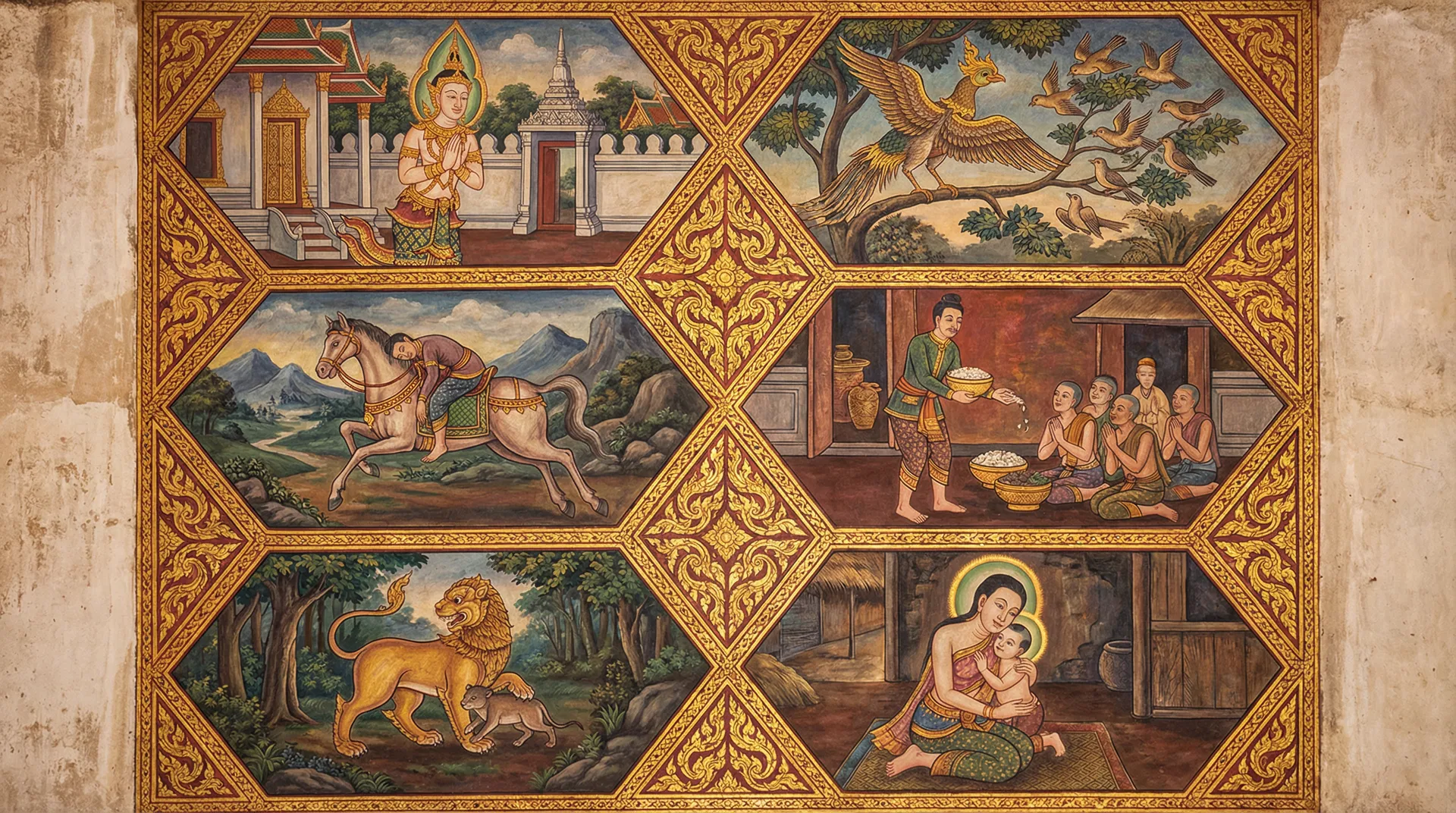
In the bustling city of Mithila, nestled beside the mighty Ganges, lived a merchant named Kosiya. He was known far and wide not for his vast wealth, though he possessed it in abundance, but for his extraordinary generosity. Kosiya's heart was as open as the sky, and his doors were always ajar for those in need. His lavish almsgiving was legendary, a constant stream of food, clothing, and shelter flowing from his mansion into the lives of the less fortunate.
One day, a wise old ascetic, his body weathered by years of devotion and his eyes reflecting a deep inner peace, approached Kosiya's mansion. He carried nothing but a simple begging bowl and a staff. He sat at the entrance, not asking for anything, simply observing the flow of people and the merchants' benevolent deeds.
Kosiya, ever vigilant to those in need, noticed the silent observer. He approached the ascetic with a humble bow. "Venerable sir," he began, his voice warm and inviting, "you have been here for some time. Is there anything this humble servant can offer you? Sustenance? Shelter? A comfortable place to rest?"
The ascetic smiled, a gentle crinkling around his wise eyes. "Merchant Kosiya," he replied, his voice like the rustling of ancient leaves, "your generosity is indeed renowned. But I seek something more profound than material comfort. I seek the true nature of giving."
Kosiya, intrigued, invited the ascetic into his grand hall. "Please, sir, enlighten me. What is the true nature of giving? I believe I give freely and without expectation."
The ascetic nodded. "You give, Kosiya, but do you give with wisdom? Do you give to those who truly deserve it? Or do you give indiscriminately, potentially enabling idleness and vice? True giving is not merely the act of dispensing wealth, but the act of dispensing it with discernment, with foresight, and with the ultimate aim of fostering virtue and well-being."
Kosiya pondered these words deeply. He had always believed that giving was a virtue in itself, a direct path to merit. But the ascetic's words planted a seed of doubt, a call for introspection.
The next day, Kosiya, guided by the ascetic's wisdom, changed his approach. Instead of simply handing out food and money, he began to inquire. He asked the beggars about their circumstances, the struggling artisans about their crafts, and the destitute families about their plight. He offered not just alms, but also advice, encouragement, and opportunities for self-reliance.
To a strong young man who always begged for food, Kosiya offered tools and training to become a carpenter. To a woman who lamented her inability to feed her children, he provided seeds and land to cultivate. To those who were sick, he arranged for proper care and healing.
The ascetic watched from a distance, his presence a silent testament to the transformation. Kosiya's generosity, once a broad river, now became a targeted irrigation system, nourishing the land where it was most needed, allowing it to flourish.
Years passed. Kosiya, now an elder, continued to practice his refined generosity. The ascetic, his task complete, once again appeared at Kosiya's mansion. "Kosiya," he said, his voice filled with quiet approval, "you have learned the true nature of giving. You give not to empty your coffers, but to enrich the lives of others, to empower them, and to cultivate goodness in the world. This is the highest form of generosity."
Kosiya, filled with gratitude, bowed deeply. "Venerable sir, you have opened my eyes. My wealth is a tool, and its true value lies in how it is used to uplift others and foster a better society."
From that day forward, Kosiya became known not just as a generous merchant, but as a wise benefactor, a man who understood that true giving was an act of profound wisdom and compassion, aimed at cultivating lasting good.
— In-Article Ad —
💡Moral of the Story
True generosity lies not just in the act of giving, but in giving with wisdom, discernment, and the aim of fostering self-reliance and virtue in others.
Perfection: Wisdom (Prajna)
— Ad Space (728x90) —
More Jataka Tales You May Enjoy
 387Chakkanipāta
Sutasoma Jataka
Sutasoma JatakaIn a kingdom nestled between whispering mountains and a shimmering sea, there lived a...
💡 Wisdom and compassion are more powerful than brute force. True liberation comes from understanding and overcoming ignorance.
102EkanipātaSattigumba Jātaka
The Story of the Spear-Bearing Tree In a time long past, when the world was wilder and the whispers ...
💡 Distrust and suspicion, while seemingly protective, ultimately lead to isolation and inner barrenness. True security and fulfillment come from cultivating trust, understanding, and genuine connection with others.
31EkanipātaThe Bodhisatta as a King of Elephants
The Bodhisatta as a King of ElephantsIn the heart of a vast and verdant forest, where ancient trees ...
💡 Wise leadership, determination, and the ability to inspire trust can guide a community through perilous journeys to safety.
71EkanipātaThe Jataka of the Clenched Fist
In a time long past, in the prosperous city of Varanasi, the Bodhisatta was born as a young Brahmin ...
💡 True leadership lies in protecting the vulnerable, even at great personal risk.
 217Dukanipāta
Kusa Jataka
Kusa JatakaIn the ancient kingdom of Mithila, ruled a just and benevolent king, whose reign was mark...
💡 True love, unwavering determination, and compassion can overcome even the greatest of obstacles. Facing challenges with wisdom and kindness is a path to success.
141EkanipātaMugapakkha Jataka
The Tale of the Mute Prince In the ancient kingdom of Mithila, ruled a just king named Dhanañjaya. H...
💡 True leadership is demonstrated through actions, courage, and compassion, not merely through eloquent speech.
— Multiplex Ad —