
Temiya Jataka
Temiya Jataka
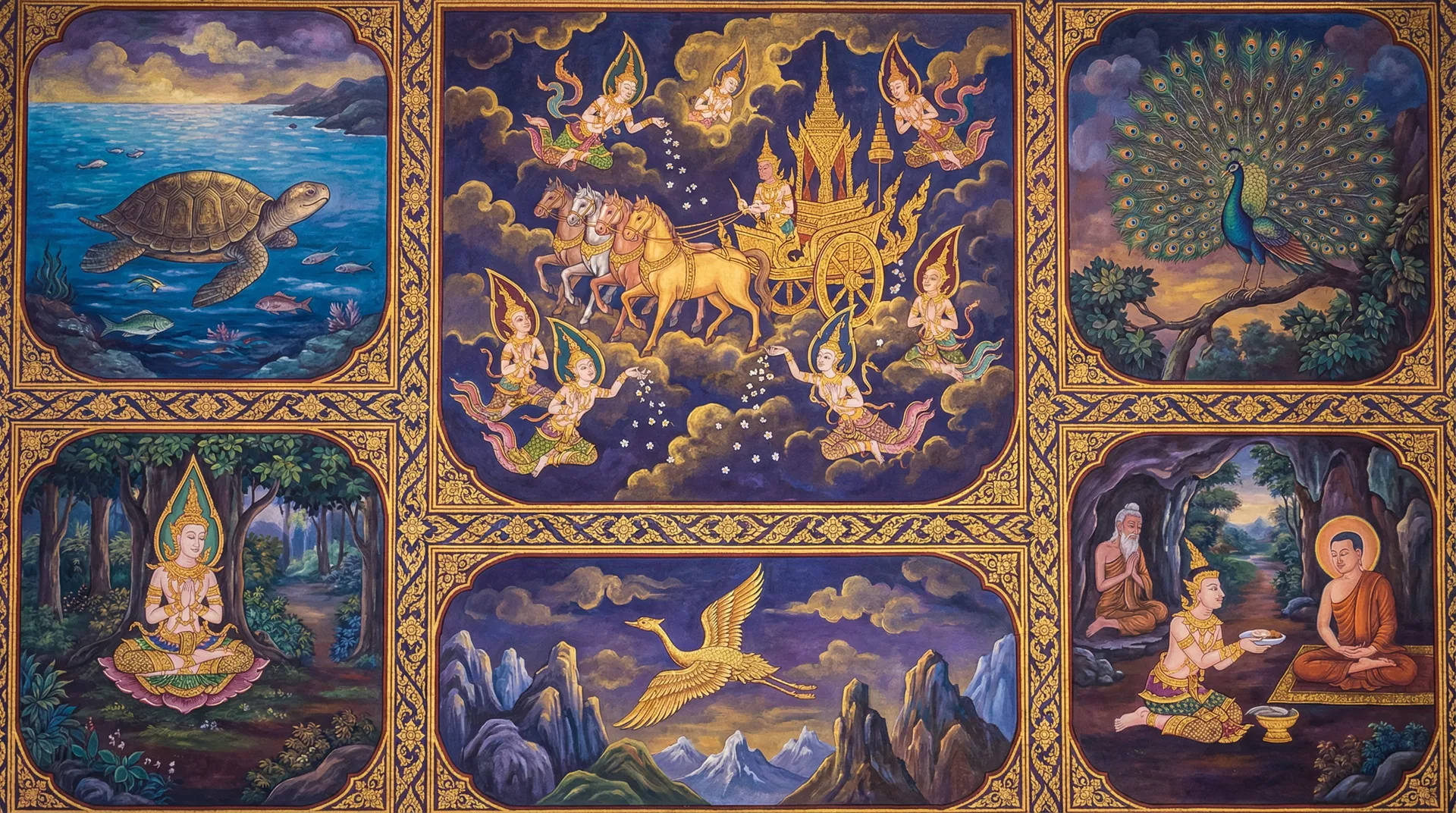
In the opulent kingdom of Sankhapura, a kingdom renowned for its splendor and its flourishing trade, lived a prince named Temiya. From the very moment of his birth, Temiya was unlike any other child. He possessed an extraordinary stillness, a profound detachment from the worldly pleasures and pains that occupied the minds of most people.
As he grew, this detachment deepened. While other children delighted in games and toys, Temiya would sit for hours in quiet contemplation, his gaze often fixed on the impermanence of all things. He saw the laughter of children as fleeting, the treasures of the kingdom as transient, and the grandest palaces as destined for decay.
His parents, King Sankha and Queen Pancali, were deeply perplexed and worried. They showered him with the finest silks, the most exquisite jewels, and the most entertaining diversions. Yet, Temiya remained unmoved, his serene demeanor a stark contrast to the vibrant life of the court.
"My son," Queen Pancali would plead, her heart heavy with concern, "why do you not smile? Why do you not enjoy the wonders that surround you?"
Temiya would offer a gentle, faraway look. "Mother," he would reply softly, "these things are like dreams. They appear real, but they are fleeting. True happiness lies not in possessing these transient things, but in understanding their true nature – their emptiness."
King Sankha, a man of action and worldly understanding, grew increasingly frustrated. He feared that his son's peculiar disposition was a sign of weakness, an inability to face the challenges of kingship. He believed that a true ruler must be engaged with the world, must desire power and prestige.
One day, King Sankha, in a moment of desperate paternal love and misguided concern, decided to test his son. He summoned the royal executioner. "My son," he declared, his voice strained, "you refuse to engage with life. You show no desire for the world. Perhaps a taste of its harsh realities will awaken you. Prepare to be executed!"
The court gasped. The queen fainted. Prince Temiya, however, remained perfectly calm. As the executioner raised his sword, Temiya looked at him with eyes full of understanding, not fear.
"Do what you must," Temiya said, his voice serene. "For I am not truly born, nor shall I truly die. This body is but a temporary vessel."
The executioner, a gruff man hardened by his profession, found himself unnerved by the prince's absolute lack of fear. He could not bring himself to strike. He lowered his sword, trembling.
The king, witnessing this, was utterly bewildered. He had expected his son to beg for his life, to show terror. Instead, he saw only profound peace.
Overwhelmed by his son's unwavering equanimity, King Sankha realized that he had misunderstood Temiya's nature. Temiya was not weak; he was profoundly wise. His detachment was not a flaw, but a sign of his advanced spiritual understanding. He saw the world with clarity, recognizing its impermanence and the suffering inherent in attachment.
King Sankha, filled with remorse and a newfound respect, ordered his son to be freed. He understood that Temiya was destined for a different path, a path of renunciation and spiritual awakening, not of worldly power.
Temiya, having demonstrated the depth of his realization and the futility of worldly pursuits, was finally allowed to follow his true calling. He renounced his royal status, his wealth, and his worldly ties, and went forth to live a life of asceticism, dedicating himself to the pursuit of ultimate truth and liberation.
His kingdom, initially bewildered, eventually came to understand the profound wisdom of their prince. They recognized that true fulfillment does not come from external possessions or power, but from inner peace and the realization of the self.
Prince Temiya, through his radical act of detachment, taught his kingdom, and all who heard his story, that the greatest freedom comes from letting go of the illusions of the material world and embracing the eternal truth within.
— In-Article Ad —
💡Moral of the Story
True freedom and peace are found not in worldly possessions or power, but in detachment from impermanence and the realization of the true, eternal nature of the self.
Perfection: Renunciation (Nekkhamma)
— Ad Space (728x90) —
More Jataka Tales You May Enjoy
 400Sattakanipāta
Mahosadha Jataka
Mahosadha JatakaIn the ancient kingdom of Mithila, a city famed for its wise ruler, King Vedeha, the...
💡 Exceptional intelligence, when coupled with foresight, justice, and compassion, is the greatest asset for ensuring the well-being, prosperity, and peace of a kingdom and its people.
145EkanipātaMahosadha Jataka
The Tale of Mahosadha, the Wisest of All In the ancient city of Mithila, under the reign of King Ved...
💡 Profound wisdom, applied with compassion and foresight, can bring peace, prosperity, and justice to a kingdom and its people.
76EkanipātaThe Tale of the Fragrant Tree
The Tale of the Fragrant Tree In the heart of a vast and ancient forest, where sunlight dappled thr...
💡 Curiosity, coupled with the courage to learn new things, can lead to great discoveries that benefit society.
 177Dukanipāta
Kuṅku Jātaka
Kuṅku JātakaIn the verdant plains of Kosala, where emerald rice paddies stretched as far as the eye ...
💡 True strength and peace originate from within. External objects, however comforting, cannot replace inner resilience, wisdom, and the courage to face adversity with integrity. Letting go of attachments, even cherished ones, can be an act of liberation.
178DukanipātaMūgapakkha Jātaka
Mūgapakkha JātakaIn the bustling city of Varanasi, renowned for its vibrant arts and thriving commer...
💡 True wisdom is not always expressed through eloquent words. Deep observation, keen discernment, and insightful actions can reveal truths that speech may conceal. Silence can be a powerful medium for conveying profound understanding.
12EkanipātaThe King's Generous Decree
The King's Generous DecreeIn the prosperous kingdom of Mithila, ruled a wise and benevolent king nam...
💡 True leadership inspires generosity, and collective compassion can overcome dire hardships.
— Multiplex Ad —