
Kaka Jataka
Kaka Jataka
In the ancient city of Varanasi, nestled beside the sacred river, lived a king renowned for his justice and wisdom. His reign was peaceful, and his people prospered. Yet, even in this idyllic kingdom, there were those who harbored deceit in their hearts.
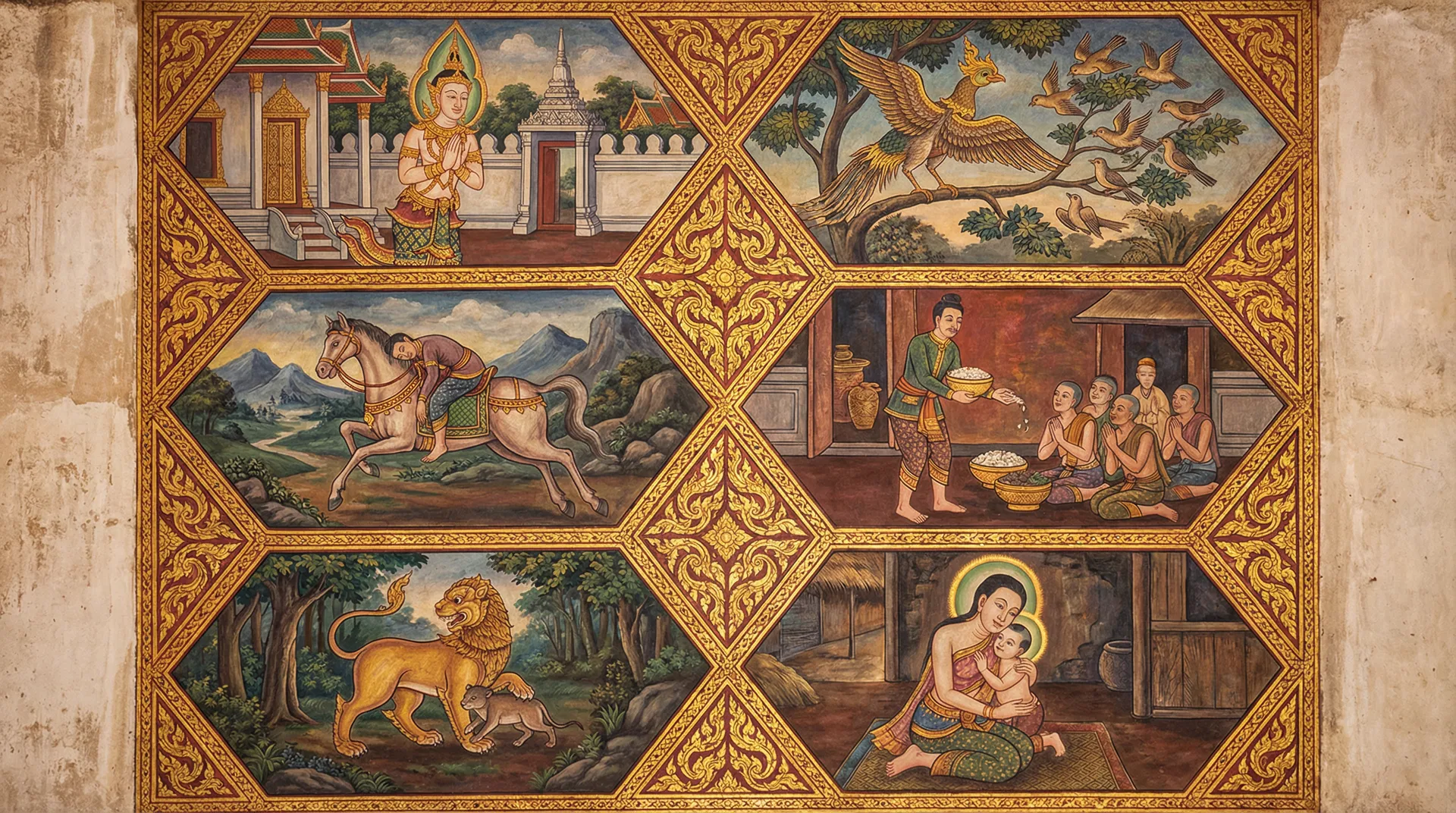
One day, a cunning crow, who was none other than the Bodhisatta in a past life, observed a peculiar sight. A pious Brahmin, known for his unwavering devotion and generosity, was performing a great charitable act. He was distributing food and alms to the poor and needy, his heart overflowing with compassion. The crow, perched on a nearby tree, watched with keen interest.
As the Brahmin distributed the last of his offerings, he turned to the assembled crowd and announced, "I have given all that I have. May my good deeds bring merit to all beings."
The crow, however, was not satisfied. He had seen something that troubled him. He noticed that as the Brahmin offered a particularly fine portion of rice to an old, destitute woman, a sly jackal had crept in and snatched it away when no one was looking. The Brahmin, oblivious to this theft, believed he had successfully completed his charitable act.
The crow, filled with a sense of righteous indignation, flew down and confronted the jackal. "You scoundrel!" he cawed. "How dare you steal from the Brahmin's offering? That food was meant for the needy, a blessing from a generous heart!"
The jackal, a creature of guile and selfishness, merely sneered. "And what concern is it of yours, feathered busybody? The Brahmin gave it, and I took it. Possession is nine-tenths of the law, as they say."
"But it was given with the intention of charity!" the crow retorted. "Your act negates the Brahmin's good intentions and deprives the truly deserving."
The jackal laughed, a dry, rasping sound. "Intentions? My dear crow, what matters is the outcome. The food is in my belly, not theirs. That is the reality."
The crow, realizing the futility of arguing with such a base creature, decided to take a different approach. He flew back to the Brahmin, who was now resting after his arduous task. "Brahmin," the crow cawed, his voice clear and distinct. "Your charity was noble, but it was marred by deceit."
The Brahmin looked up, surprised. "Deceit? What do you mean, good bird? I gave all that I had."
"Indeed, you did," the crow replied. "But as you offered the last, finest portion to an old woman, a wicked jackal stole it away. Your act of generosity was thus tainted, and the intended recipient was denied her due."
The Brahmin was shocked and dismayed. He had truly believed his act was pure. He looked at the crow, his eyes searching for sincerity. "Are you telling me the truth, wise bird?"
"I witnessed it with my own eyes," the crow affirmed. "The jackal's greed has undone your compassion."
The Brahmin, though saddened, was a man of great integrity. He understood the significance of intention and outcome. He knew that true charity required not just giving, but ensuring that the giving reached its intended purpose. He immediately summoned his servants and instructed them to prepare another meal, even more substantial than the last, and to find the old woman and ensure she received it with his blessings.
As the servants set out, the crow continued to speak to the Brahmin. "Brahmin, you have shown great understanding. It is not enough to merely give; one must also ensure the sincerity and purity of the act. The jackal, in his greed, sought only his own gain, devoid of any thought for the spirit of generosity."
The crow then recounted how he, in his past lives, had encountered many such creatures driven by self-interest, and how true merit comes from selfless giving and the sincere intention behind it. He explained that the jackal's act, though it resulted in food being consumed, was devoid of merit because it was born of theft and selfishness. The Brahmin's renewed act of charity, however, born from a desire to correct the error and ensure the true recipient was blessed, would bring him immense merit.
The Brahmin listened with profound respect. He realized the depth of the crow's wisdom and the importance of vigilance in acts of kindness. He understood that true generosity was not just a gesture, but a commitment to the well-being of others.
From that day on, the Brahmin became even more meticulous in his charitable endeavors, always ensuring that his gifts reached those who truly needed them, and always with a pure and selfless heart. The crow, having fulfilled his duty, flew away, content in the knowledge that he had helped to uphold the true spirit of compassion and generosity.
— In-Article Ad —
💡Moral of the Story
True charity requires not only the act of giving but also ensuring the sincerity and purity of the intention and the outcome.
Perfection: Wisdom (Panna)
— Ad Space (728x90) —
More Jataka Tales You May Enjoy
 387Chakkanipāta
Sutasoma Jataka
Sutasoma JatakaIn a kingdom nestled between whispering mountains and a shimmering sea, there lived a...
💡 Wisdom and compassion are more powerful than brute force. True liberation comes from understanding and overcoming ignorance.
 278Tikanipāta
Kacchapa Jataka
The Tale of the Wise Tortoise and the Foolish Swans In the heart of a lush, verdant land, where life...
💡 Pride and the desire to respond to foolish taunts can lead to downfall. It is wise to choose silence and hold firm to one's purpose, especially when in a precarious situation.
 66Ekanipāta
The Great Crane Jataka
Long ago, in an age when the Buddha had not yet appeared, in a time immeasurably distant, the Bodhis...
💡 True wealth is measured not by the abundance of possessions, but by the happiness and prosperity of one's people. Greed leads to suffering, while generosity and compassion bring true prosperity.
106EkanipātaBhaddasala Jataka
The Tale of the Wise Elephant and the Foolish King In the ancient kingdom of Mithila, ruled a king n...
💡 True wisdom often comes from unexpected sources. A leader's true strength is shown not in anger or pride, but in humility, compassion, and the willingness to serve their people.
88EkanipātaThe Great Dream Jataka
In ages past, when the Bodhisatta was cultivating his perfections, he was born as King Brahmattat, a...
💡 Blind suspicion and unfounded jealousy, fueled by deceit, can lead to great injustice. Truth and righteousness, patiently sought and revealed, are the only paths to healing and true reconciliation.
89EkanipātaThe Tale of Añjana the Ascetic
In the ancient city of Benares, during a time long past, the Bodhisatta took birth as the venerable ...
💡 True lasting value is not found in the accumulation of wealth or the display of possessions, but in the merit created through acts of kindness, generosity, and wisdom. Inner virtues are treasures that cannot be lost.
— Multiplex Ad —