
Sālūka Jātaka
Sālūka Jātaka
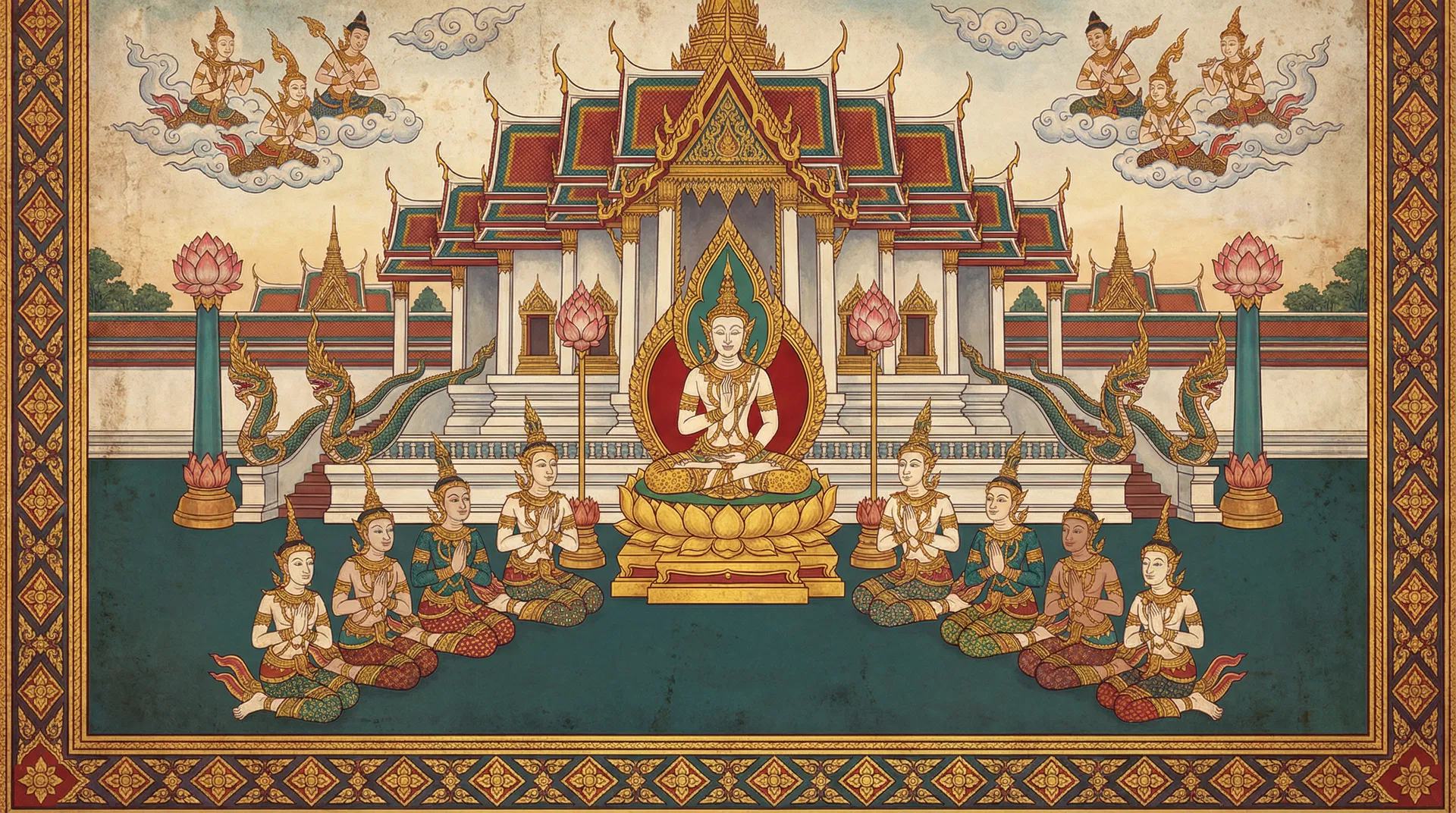
Nestled beside a vast, tranquil lake, where lotus flowers bloomed in vibrant hues and the water teemed with fish, there stood a magnificent banyan tree. This tree was the home of a wise old tortoise named Bodhisatta. He was ancient, his shell weathered and patterned like a map of time, and his movements were slow and deliberate, reflecting a profound inner stillness. He had seen centuries pass, witnessed the rise and fall of seasons, and observed the countless dramas of life unfolding around him.
One day, a group of boisterous young monkeys, full of boundless energy and mischief, arrived at the lake. They were captivated by the banyan tree, its sturdy branches offering endless opportunities for play. They swung from limb to limb, chattered incessantly, and generally disturbed the peace of the serene environment. The old tortoise watched them with a patient, knowing gaze.
The monkeys, however, were not content with mere play. They began to notice the tortoise, his slow, steady existence a stark contrast to their own frenetic lives. “Look at him!” one monkey chattered, pointing a long finger. “He’s so slow! He can’t even climb a tree. What a useless creature!” Another monkey, bolder still, decided to tease the tortoise. He scrambled down the tree, snatched a ripe mango from the ground, and tossed it towards the tortoise, narrowly missing his shell.
The tortoise remained unperturbed. He simply retracted his head and limbs slightly, his ancient eyes observing the monkeys' antics with a quiet detachment. The monkeys, finding their teasing met with such calm indifference, grew even more audacious. They started throwing small pebbles, then larger fruits, at the tortoise, hoping to elicit a reaction. “Why don’t you move, old shell?” they jeered. “Are you stuck? Can’t you run away?”
The tortoise, seeing that their provocations were escalating and that their immature behavior was disturbing the harmony of the lake, decided it was time to impart a lesson. He slowly, deliberately, extended his neck. His voice, when he spoke, was a low, resonant rumble, carrying an unexpected weight of authority. “Young ones,” he began, his eyes fixed on the most boisterous of the monkeys, “You mock my slowness, but do you understand its purpose? You rush and tumble through life, yet what do you achieve? You disturb the peace, you waste your energy, and you gain no true understanding.”
He continued, “My slowness is my strength. It allows me to observe, to learn, to conserve my energy. While you leap and shout, I experience the world in its full depth. While you are exhausted by your frantic efforts, I remain calm and steady. Your speed brings you fleeting amusement, but my patience brings me enduring wisdom.” The monkeys fell silent, taken aback by the tortoise’s measured words and the quiet dignity with which he spoke. They had never considered that slowness could be a virtue.
The tortoise then gestured towards the lake. “See how the water is still and clear? It reflects the sky because it is not disturbed by constant turmoil. So too, the mind that is calm and patient can perceive the truth more clearly. Your constant motion is like a muddy pond; it obscures all that is beautiful and real.” The monkeys looked at each other, a sense of shame washing over them. They saw the wisdom in the tortoise’s words, the quiet power of his stillness.
From that day on, the young monkeys’ behavior changed. They still played, but with less boisterousness. They learned to appreciate the quiet moments, to observe the world around them, and to find joy not just in frantic activity, but in peaceful contemplation. They understood that there is a time for action and a time for stillness, and that true understanding comes not from rushing, but from patiently observing and reflecting. The wise old tortoise continued to live by the tranquil lake, a silent testament to the profound power of patience and inner calm.
— In-Article Ad —
💡Moral of the Story
Patience and inner stillness are not weaknesses but strengths. They allow for deeper understanding, greater wisdom, and enduring peace.
Perfection: Patience (Khanti)
— Ad Space (728x90) —
More Jataka Tales You May Enjoy
 434Navakanipāta
Mahasutasoma Jataka
Mahasutasoma JatakaIn the prosperous city of Indapatta, nestled in the heart of a vast and ancient l...
💡 Non-violence (Ahimsa) is the highest form of strength and courage. True peace is achieved not through conquest, but through understanding, compassion, and adherence to righteous principles.
 124Ekanipāta
Sutasoma Jataka
Sutasoma Jataka In the glorious city of Indapatta, there reigned a king named Pindola, a monarch of ...
💡 True victory is achieved not through violence or force, but through the unwavering power of truth, compassion, and understanding, which can transform even the darkest of hearts.
141EkanipātaMugapakkha Jataka
The Tale of the Mute Prince In the ancient kingdom of Mithila, ruled a just king named Dhanañjaya. H...
💡 True leadership is demonstrated through actions, courage, and compassion, not merely through eloquent speech.
165DukanipātaMahasattva Jataka
The Bodhisatta's Compassion for the Hungry TigressIn the vast, untamed wilderness of the Himalayas, ...
💡 The highest form of compassion is selfless sacrifice, willing to give one's own life for the well-being of others, even for animals, to alleviate suffering and demonstrate ultimate love.
56EkanipātaThe Jataka of Dighavu, the Wrathful Prince
In the magnificent city of Savatthi, in days long past, there reigned a king named Koravya. He posse...
💡 Beware of those who speak with honeyed words but harbor venom in their hearts. True wisdom lies not in seeking external remedies but in cultivating inner truth and understanding.
40EkanipātaThe Parrot Jataka
In a time long past, when the Bodhisatta was reborn as a parrot, his plumage was the vibrant green o...
💡 Actions, driven by intention, have profound and lasting consequences, and a life of virtue leads to true happiness and liberation.
— Multiplex Ad —