
Nimi Jātaka
Nimi Jātaka
In the ancient and prosperous kingdom of Mithila, there reigned a virtuous king named Nimi. King Nimi was a man of great merit, known throughout the land for his unwavering adherence to the precepts, his generosity, and his deep compassion for all beings. He ruled his kingdom with justice, ensuring that his people lived in peace and prosperity. However, even a king as righteous as Nimi was not exempt from the teachings that come from unexpected quarters, especially from the celestial realms.
One day, as King Nimi sat in his royal court, discussing matters of state with his ministers, a dazzling chariot descended from the heavens. It was driven by Mātali, the charioteer of Sakka, the king of the gods. Mātali approached the king with great reverence and announced, "O King Nimi, Sakka, the Lord of the Devas, has sent me to escort you to the celestial realms. He wishes to bestow upon you the unique privilege of witnessing the glories of Tāvatiṃsa Heaven and understanding the fruits of true merit."
King Nimi, though astonished, felt a sense of deep honor. He had always strived to live a life of virtue, and this invitation was a testament to his good deeds. He readily agreed, and with Mātali's guidance, he ascended the celestial chariot and was whisked away to the heavens.
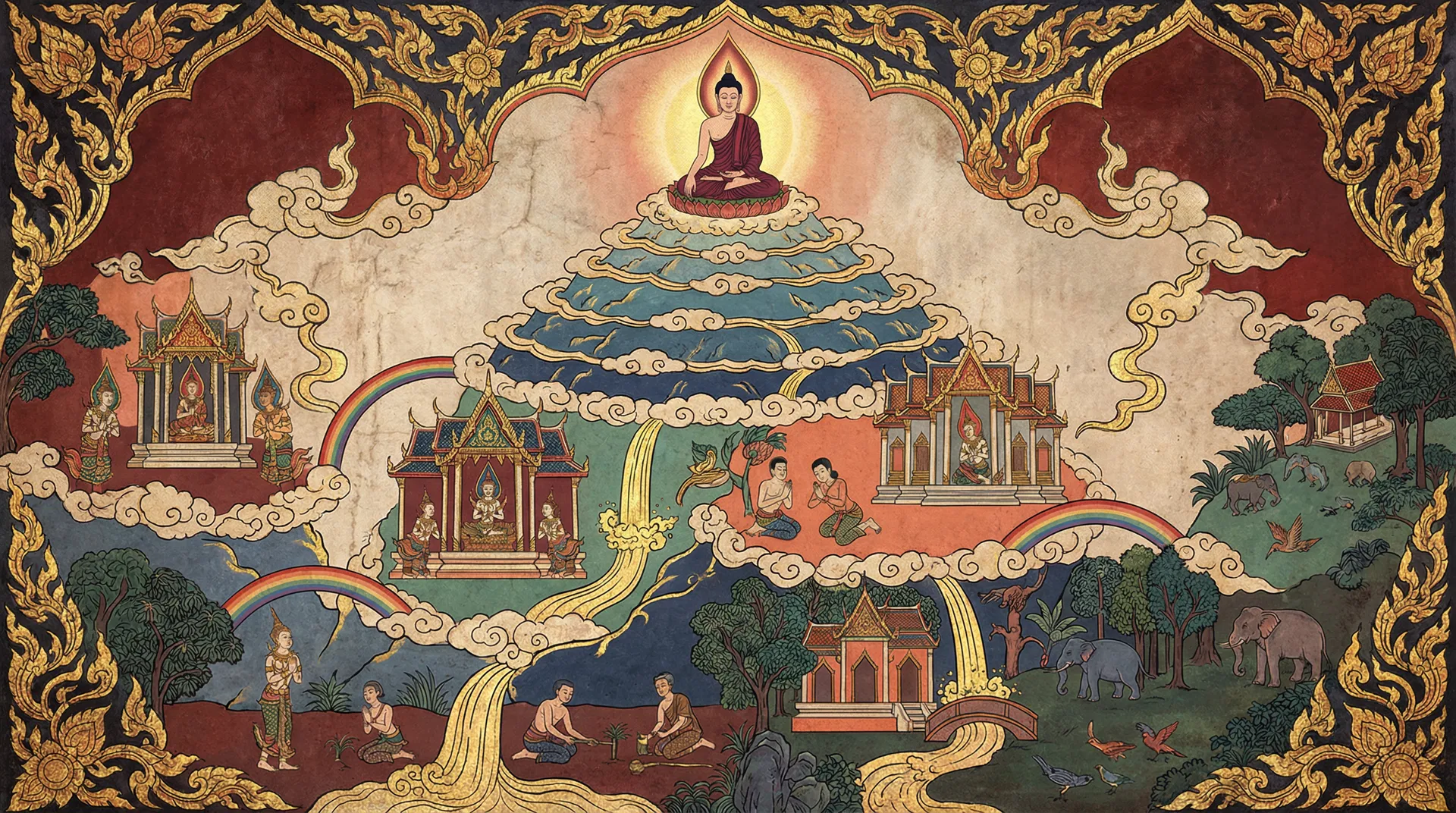
Upon arriving in Tāvatiṃsa, King Nimi was met with sights and sounds beyond his wildest imagination. Palaces of pure gold, gardens filled with celestial flowers, and beings of radiant beauty greeted him. Sakka himself welcomed him warmly, showering him with hospitality. Sakka then led King Nimi on a tour of his heavenly abode, not just to marvel at its splendor, but to understand the profound connection between actions in the mortal world and rewards in the divine.
As they journeyed through the heavens, Sakka pointed out various sights. He showed King Nimi the magnificent palaces and pleasure gardens, explaining that these were the rewards earned by virtuous beings through their good karma. He then led the king to a different section of the heavens, a place of less splendor, where beings enjoyed moderate comforts. "These," Sakka explained, "are the fruits of moderate merit, of those who have lived generally good lives but have not strived for the highest virtues."
But the most profound lesson came when Sakka led King Nimi to a place of great suffering. It was a realm of torment, filled with beings undergoing immense pain. King Nimi, his heart heavy with compassion, asked, "O Sakka, what actions have led these beings to such a terrible fate?"
Sakka’s expression turned somber. "These beings," he said, "have committed grave unwholesome deeds. They have acted with malice, greed, and delusion. They have harmed others, broken their vows, and indulged in wicked practices. This is the inevitable consequence of their negative karma."
Sakka then took King Nimi to witness specific realms of suffering. He showed him the hells where beings endured unimaginable torment for their cruelty and violence. He showed him realms where beings suffered due to their stinginess and attachment. He showed him realms where beings experienced the agony of broken promises and deceit.
King Nimi, witnessing this stark contrast between the rewards of virtue and the punishments of vice, was deeply moved. He saw with absolute clarity the direct correlation between one’s actions and one’s destiny, both in this life and in the lives to come.
Sakka, observing the king's profound understanding, said, "King Nimi, you have seen the fruits of both wholesome and unwholesome actions. Remember this lesson well. The path of virtue, though it may require sacrifice and effort in this world, leads to immeasurable happiness and liberation. The path of vice, though it may offer fleeting pleasures, inevitably leads to suffering."
After this enlightening tour, Sakka offered King Nimi a choice: he could remain in the heavens and enjoy the fruits of his merits, or he could return to Mithila to continue his reign and inspire his people towards righteous living. King Nimi, with his characteristic selflessness, chose to return. He understood that his purpose was not to enjoy celestial rewards alone, but to guide his kingdom towards the path of virtue.
Upon his return to Mithila, King Nimi was a changed man, not in his character, but in the depth of his conviction. He ruled with even greater wisdom and compassion, his understanding of karma and its consequences now deeply ingrained in his heart. He taught his subjects the importance of adhering to the five precepts, of practicing generosity, and of cultivating kindness towards all beings. He ensured that justice prevailed and that suffering was alleviated wherever possible.
King Nimi's reign became a golden age, a testament to the power of righteous living. His subjects, inspired by his example and the profound teachings he shared, followed the path of virtue, ensuring their own happiness in this life and sowing the seeds for future well-being, both in this world and beyond. The memory of his celestial journey served as a constant reminder that every action has a consequence, and that the pursuit of merit is the surest path to lasting happiness.
— In-Article Ad —
💡Moral of the Story
Actions have consequences, both in this life and in the next. Virtuous deeds lead to happiness and celestial rewards, while unwholesome actions result in suffering. Living a life of righteousness is the path to true and lasting fulfillment.
Perfection: Wisdom
— Ad Space (728x90) —
More Jataka Tales You May Enjoy
 487Pakiṇṇakanipāta
Sutasoma Jātaka
Sutasoma JātakaIn the heart of the ancient kingdom of Kampilya, a kingdom famed for its magnificent ...
💡 True strength lies not in violence or the taking of life, but in unwavering compassion, understanding, and the courage to break cycles of suffering through acts of profound kindness and non-violence.
 114Ekanipāta
Cūḷaka-Seṭṭhi Jātaka
Cūḷaka-Seṭṭhi Jātaka In the ancient city of Mithila, a bustling hub of trade and commerce, lived a w...
💡 True wealth is not measured by possessions, but by the generosity of spirit and the goodwill cultivated through acts of kindness. Giving with a pure heart brings greater abundance.
71EkanipātaThe Jataka of the Clenched Fist
In a time long past, in the prosperous city of Varanasi, the Bodhisatta was born as a young Brahmin ...
💡 True leadership lies in protecting the vulnerable, even at great personal risk.
78EkanipātaThe Jataka Tale of the Lion's Wisdom
The Jataka Tale of the Lion's Wisdom In the ancient city of Varanasi, a place renowned for its gran...
💡 Intelligence, the ability to see opportunities, and the courage to face risks can lead to wealth and benefit society.
102EkanipātaSattigumba Jātaka
The Story of the Spear-Bearing Tree In a time long past, when the world was wilder and the whispers ...
💡 Distrust and suspicion, while seemingly protective, ultimately lead to isolation and inner barrenness. True security and fulfillment come from cultivating trust, understanding, and genuine connection with others.
13EkanipātaThe Steadfast Brahmin
The Steadfast BrahminIn the ancient city of Varanasi, a beacon of spiritual learning, lived a devout...
💡 Unwavering steadfastness and a pure heart can inspire others and lead to rebuilding.
— Multiplex Ad —