
The Bodhisatta as a King of Deer
The Bodhisatta as a King of Deer
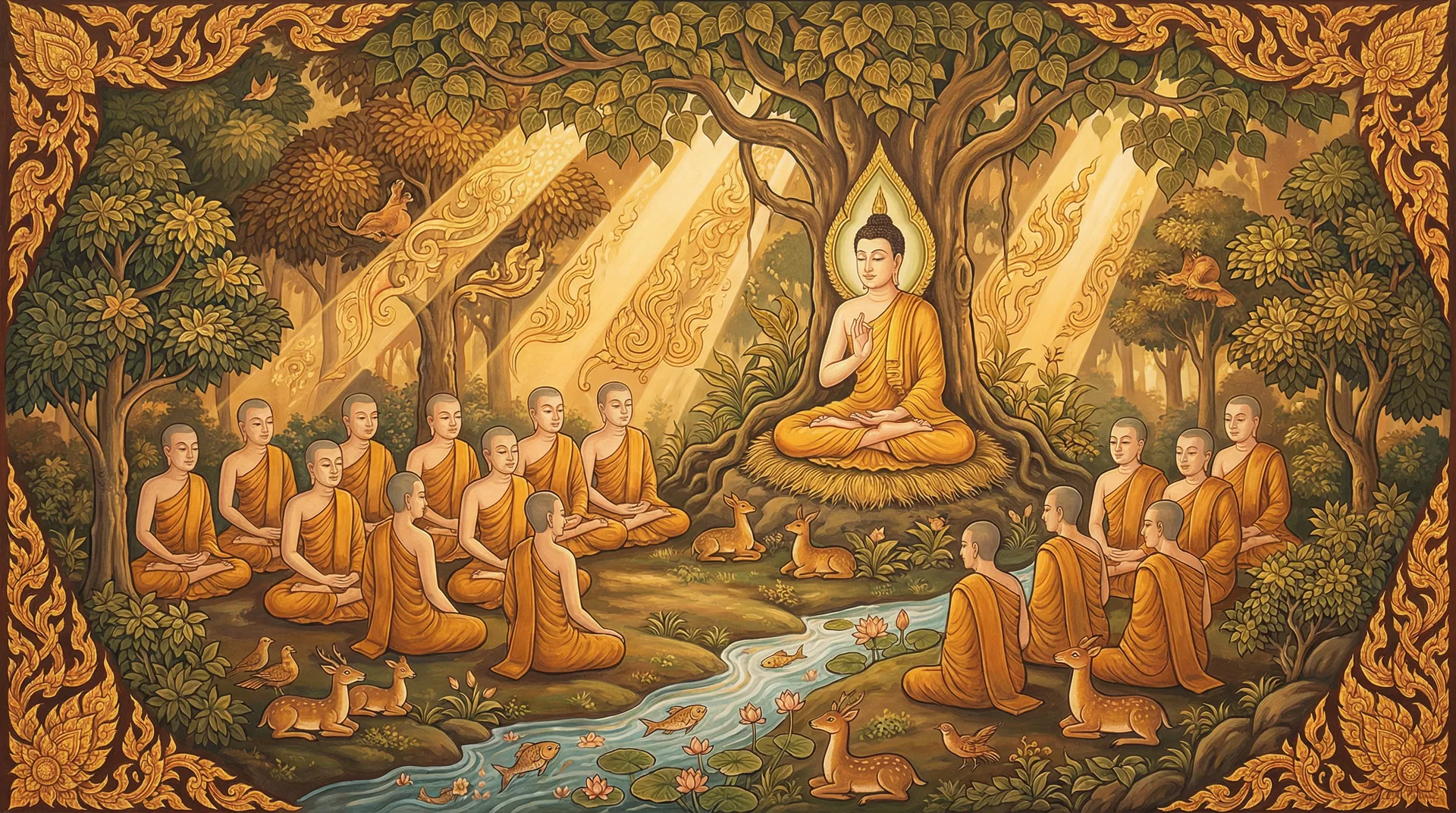
In the heart of a vast and ancient forest, where sunlight dappled through the thick canopy of trees and the air was alive with the symphony of nature, roamed a majestic herd of deer. Their king was a magnificent stag, his antlers like the branches of an ancient oak, his eyes radiating a profound gentleness. This stag, in a past life, was the Bodhisatta, his reign characterized by unwavering kindness and a deep sense of responsibility for his herd. The atmosphere of the forest was one of idyllic peace, broken only by the gentle rustling of leaves and the distant calls of birds.
One fateful day, the king's son, a young fawn named Aruna, ventured too far from the herd, lured by the allure of a distant meadow. In his youthful exuberance, he did not notice the hunters lurking in the shadows. A cruel arrow struck him, and he fell, his cries of pain echoing through the silent woods. The atmosphere of the forest, usually so serene, was now tainted by the sound of suffering.
When the Bodhisatta king learned of his son's plight, his heart was filled with an unbearable anguish. He knew that the hunters would soon discover his son and would not hesitate to kill him. The thought of his son, wounded and alone, in the hands of cruel men, was more than he could bear. He immediately set out, his powerful legs carrying him swiftly through the dense undergrowth. The atmosphere was one of desperate urgency, the king's love for his son propelling him forward.
He found his son, Aruna, bleeding profusely and trembling with fear. The hunters, their faces grim and determined, were closing in. The Bodhisatta king knew he had to act, not with aggression, but with a profound act of compassion. He positioned himself between his son and the hunters, his antlers held high, not in aggression, but as a shield.
The lead hunter, a hardened man with a cruel glint in his eye, raised his spear. "Stand aside, great stag!" he commanded. "We seek only the young one!" The Bodhisatta king, his voice resonating with a calm, unwavering authority, replied, "I will not let you harm my son. He is innocent, and I will protect him with my life." The hunters, surprised by the stag's defiance, hesitated for a moment. The atmosphere was charged with tension, the primal standoff between man and animal.
The Bodhisatta king, seeing their hesitation, made a bold and selfless decision. He lowered his head and, with a gentle nudge, pushed his son towards a hidden thicket. "Run, my son!" he urged. "Flee to safety!" Then, turning to face the hunters, he spoke again, his voice filled with a noble resignation. "Take me instead. My life is yours, but my son's life is precious." The hunters, witnessing this extraordinary act of parental sacrifice, were stunned. The sheer nobility and selflessness of the stag touched even their hardened hearts. The atmosphere, previously thick with the threat of violence, began to soften with awe.
The lead hunter, his voice now tinged with respect, said, "Great stag, your love for your son is unparalleled. We cannot bring ourselves to harm such a noble creature." He then lowered his spear. "We will spare your son, and we will leave this forest, for we have witnessed a greater truth here today." The hunters, humbled by the Bodhisatta's sacrifice, turned and left, their desire for the hunt extinguished. The atmosphere was one of profound relief and a dawning understanding of the deeper truths of existence.
The Bodhisatta king, his son safe and the danger averted, stood tall, his heart filled with gratitude. Aruna, emerging from the thicket, nuzzled his father, his fear replaced by love and admiration. The moral of this tale is that true leadership and profound love manifest not in aggression, but in selfless sacrifice, inspiring even the hardest hearts to recognize the value of life. The perfection practiced was Compassion, an boundless empathy for the suffering of others, leading to selfless sacrifice.
— In-Article Ad —
💡Moral of the Story
True leadership and love manifest in selfless sacrifice, inspiring even the hardest hearts.
Perfection: Compassion
— Ad Space (728x90) —
More Jataka Tales You May Enjoy
 527Mahānipāta
Mahā-susukajātaka
The Tale of the Contented Monkey In a lush, verdant forest teeming with life, where ancient trees sc...
💡 True happiness and contentment are found not in the abundance of external possessions, but in appreciating what one already has and choosing to find joy in the present moment.
73EkanipātaThe Tale of the Elephant Prince
In a time long past, when the Bodhisatta was yet to attain full Buddhahood and was circulating throu...
💡 True loyalty and devotion can overcome deception and protect the innocent.
78EkanipātaThe Jataka Tale of the Lion's Wisdom
The Jataka Tale of the Lion's Wisdom In the ancient city of Varanasi, a place renowned for its gran...
💡 Intelligence, the ability to see opportunities, and the courage to face risks can lead to wealth and benefit society.
 218Dukanipāta
Masa Jataka
Masa JatakaIn a serene monastery nestled amidst rolling hills, lived a devout monk named Bodhisattva...
💡 Attachment to desires and possessions leads to suffering. True contentment comes from inner peace and detachment, not from external things.
81EkanipātaMāhāsukha Jātaka
Māhāsukha Jātaka Long ago, in the bustling city of Mithila, lived a king named Brahmadatta. He was a...
💡 True happiness is found not in external possessions or status, but in inner peace, detachment, and boundless compassion.
95EkanipātaMahasattva Jataka
Mahasattva JatakaIn the heart of ancient India, amidst the lush greenery and the symphony of chirpin...
💡 The highest form of love and compassion is self-sacrifice for the well-being of others. True greatness is demonstrated through selfless acts that bring life and salvation.
— Multiplex Ad —