
Mūtapāda Jātaka
The Tale of the Muddy-Footed Elephant
In the ancient kingdom of Mithila, there once lived a wise and benevolent king named King Vedeha. His reign was marked by justice and prosperity, and his people loved him dearly. However, like all beings, even a king faced trials and tribulations. One day, a fearsome drought gripped the land. The rivers dwindled to trickles, the fields turned to dust, and the lush forests began to wither. The king, deeply concerned for his subjects, consulted his advisors and brahmins, seeking a way to appease the heavens and bring forth the much-needed rain.
Among his advisors was a man of great learning, but also of great ego. He suggested that the king himself perform a grand sacrifice, offering precious jewels and livestock to the gods. The king, though hesitant to waste such valuable resources, was desperate. He agreed, and the ceremony was prepared with much fanfare. Yet, the skies remained stubbornly clear, and the drought deepened.
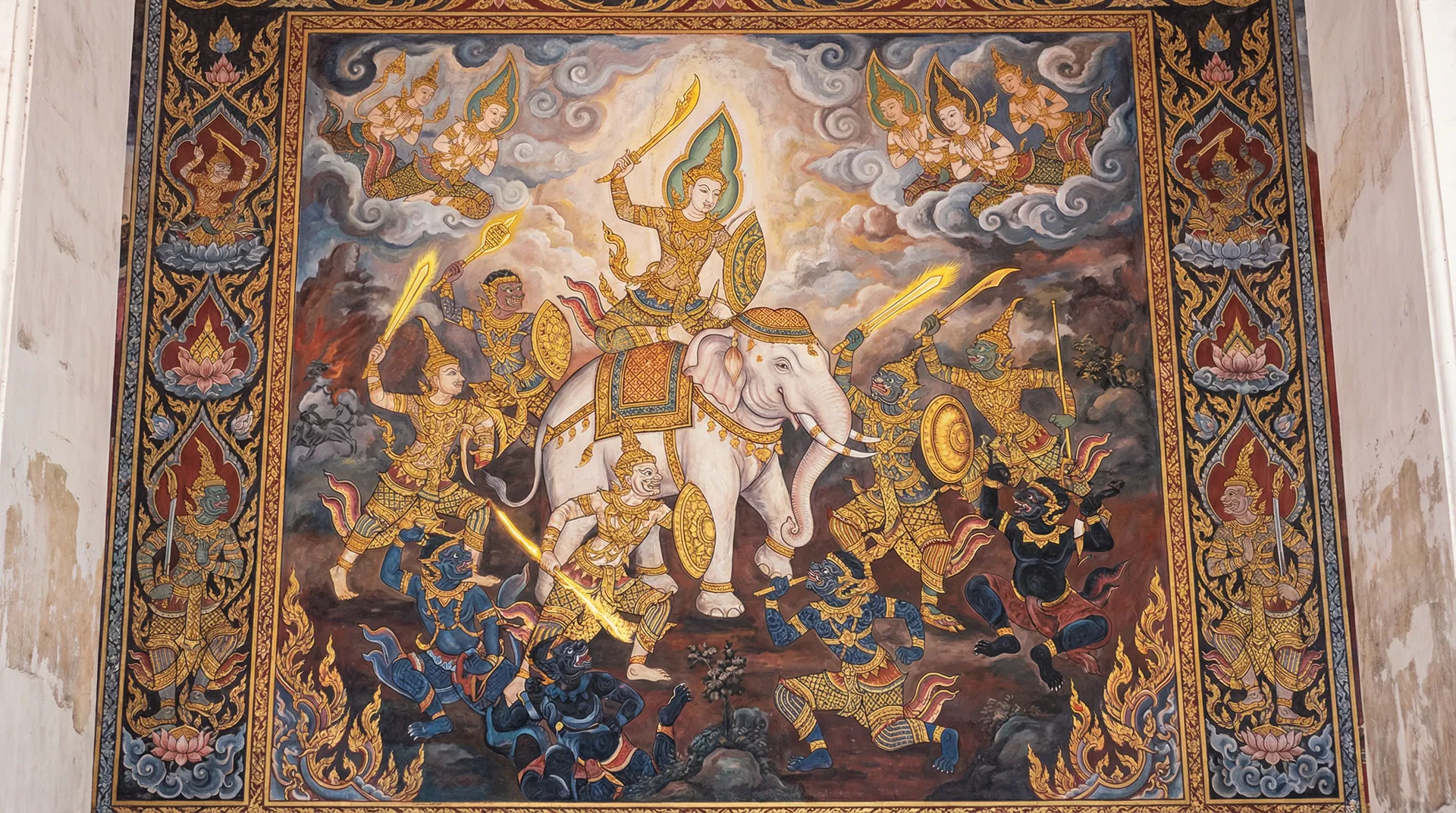
Meanwhile, in the royal stables, lived a magnificent elephant named Mūtapāda, meaning 'muddy-footed'. This elephant was no ordinary creature; he possessed immense strength, a gentle disposition, and a heart filled with compassion. He often observed the suffering of the people and the animals during the drought, his great heart aching for them.
One day, Mūtapāda overheard the king discussing the failed sacrifice with his ministers. He saw the despair in the king's eyes and the suffering etched on the faces of his people. Driven by an overwhelming desire to help, Mūtapāda decided he must do something. He remembered the old legends of how elephants, with their connection to the earth and water, could sometimes influence the weather.
The next morning, as the sun began to rise, Mūtapāda, with a determined glint in his wise eyes, walked out of the royal stables. He headed towards the parched riverbed, his massive feet kicking up clouds of dust. He found a spot where the mud was still somewhat moist, a testament to the river's former glory. With deliberate movements, he began to stomp and churn the mud, creating a large, muddy pool. He continued this for hours, his body coated in thick, brown mud, his feet thoroughly submerged.
As he worked, he thought of the thirsty villagers, the wilting crops, and the suffering creatures. He wished with all his might for the rain to fall, for the river to flow again, and for his kingdom to be saved. His pure intention and unwavering compassion resonated through the earth and sky.
The wise old king, Vedeha, was making his rounds, observing the desolation, when he saw the extraordinary sight of Mūtapāda in the riverbed. He was initially perplexed, then curious. He approached the mud-covered elephant. Mūtapāda, sensing the king's presence, paused his efforts and looked at him with his large, soulful eyes.
King Vedeha, a king who understood the language of the heart and the subtle signs of nature, saw not just a muddy elephant, but a creature of immense spirit and sacrifice. He understood that Mūtapāda's actions were not born of vanity or a desire for reward, but from a deep, selfless love for his kingdom.
As the king stood there, contemplating the elephant's noble deed, a rumble echoed in the distance. Dark clouds began to gather overhead, a sight unseen for many weeks. A gentle breeze stirred, carrying the scent of rain. And then, it began. First, a few drops, then a steady downpour, and finally, a torrential rain that drenched the thirsty land.
The people rejoiced. The rivers swelled, the fields turned green, and life returned to the kingdom. King Vedeha, overwhelmed with gratitude, returned to Mūtapāda. He bowed before the mud-covered elephant, acknowledging his profound wisdom and selfless act.
From that day on, King Vedeha understood that true wisdom and power do not always lie in grand ceremonies or material wealth, but in selfless action and a compassionate heart. He declared Mūtapāda a hero and ensured that the elephant was cared for with the utmost respect. The story of the muddy-footed elephant became a legend, a reminder that even the humblest beings, driven by pure intention, can bring about miraculous change.
— In-Article Ad —
💡Moral of the Story
True wisdom and the power to bring about positive change often come from selfless action and a compassionate heart, rather than from outward displays or material offerings.
Perfection: Compassion (Karuna Paramita)
— Ad Space (728x90) —
More Jataka Tales You May Enjoy
 523Mahānipāta
Sutasoma Jataka
Sutasoma JatakaIn the ancient city of Indapatta, ruled a benevolent king named Sutasoma. He was know...
💡 Boundless compassion and selfless sacrifice have the power to transform even the most fearsome beings and to end cycles of suffering, offering a path to redemption for all.
183DukanipātaMuḷapariyāya Jātaka
The Tale of the Root of All EvilIn the ancient and prosperous city of Varanasi, ruled a king named B...
💡 The root of all suffering and evil lies within the human mind, stemming from craving, attachment, and ignorance. True peace is found by understanding and overcoming these internal afflictions.
 20Ekanipāta
The Elephant King's Wisdom
The Elephant King's WisdomIn the heart of a lush, ancient forest, where towering trees reached towar...
💡 Wise leadership, determination, and the ability to inspire trust can guide a community through perilous journeys to safety.
13EkanipātaThe Steadfast Brahmin
The Steadfast BrahminIn the ancient city of Varanasi, a beacon of spiritual learning, lived a devout...
💡 Unwavering steadfastness and a pure heart can inspire others and lead to rebuilding.
179DukanipātaMahāpuṇṇa Jātaka
Mahāpuṇṇa JātakaIn the heart of the kingdom of Kasi, a land blessed with fertile soil and a prospero...
💡 By consciously pausing and reflecting when anger arises, one can gain control over impulsive reactions, leading to wiser decisions, improved relationships, and inner peace. Cultivating patience and understanding is a path to great merit.
149EkanipātaTemiya Jataka
Temiya JatakaIn the opulent kingdom of Sankhapura, a kingdom renowned for its splendor and its flour...
💡 True freedom and peace are found not in worldly possessions or power, but in detachment from impermanence and the realization of the true, eternal nature of the self.
— Multiplex Ad —