
Mahosadha Jātaka
The Tale of the Brilliant Sage Mahosadha
In the magnificent city of Mithila, there lived a Bodhisattva named Mahosadha, renowned throughout the land for his extraordinary intelligence and profound wisdom. He was not a king or a warrior, but a humble advisor to King Vedeha, yet his counsel was sought by all, from the highest officials to the common folk. His mind was a labyrinth of logic, his understanding of human nature unparalleled, and his solutions to problems always just and ingenious.
One day, a dispute arose between two wealthy merchants, Kosiya and Godha, concerning the ownership of a beautiful and valuable horse. Each claimed the horse was theirs, and neither would back down. The case was brought before King Vedeha, who, knowing Mahosadha's brilliance, summoned him to preside over the judgment.
Mahosadha listened intently as both merchants presented their arguments, each vehemently asserting their claim with witnesses and documents. The horse, a magnificent creature with a flowing mane and intelligent eyes, stood patiently between them, seemingly aware of the tension.
After hearing both sides, Mahosadha did not immediately declare a winner. Instead, he smiled and asked for the horse to be brought to him. He then addressed the merchants, "This horse is indeed valuable, and its true owner deserves to be recognized. However, mere words and claims are not enough. We must test the bond between the horse and its rightful master."
He instructed his servants to lead the horse to a nearby stable and to give it fresh water and hay. Then, he turned to the merchants and said, "Tomorrow, at sunrise, you will both stand outside this stable. The one who truly owns the horse will be able to call it forth. If the horse willingly comes to you, then you are its owner."
The merchants, confident in their claims, agreed. The next morning, as the first rays of dawn painted the sky, Kosiya and Godha stood before the stable. Mahosadha and the King watched from a distance. Kosiya called out, "Come, my horse! Come to your master!" But the horse remained inside. Godha then called, "My noble steed, come forth!" Still, the horse did not move.
Both merchants grew frustrated, their confidence wavering. They had expected a simple declaration based on their word. Mahosadha, seeing their predicament, approached the stable himself. He gently opened the door and spoke to the horse in a soft, soothing voice, not with commands, but with affection. He then called out to the merchants, "Which of you, when you brought this horse home, did you groom it with your own hands, feed it the finest grain, and speak to it with kindness?"
Both merchants faltered. They admitted that they had servants do most of the work, and their interactions with the horse had been primarily for business transactions.
Mahosadha then turned to Kosiya. "You claimed this horse is yours. Yet, when it fell ill last month, did you not dismiss it as a minor ailment, leaving your servants to tend to it?" Kosiya's face turned pale.
He then turned to Godha. "And you, sir, when this horse was injured in the marketplace, did you not worry more about its market value than its pain?" Godha hung his head in shame.
Mahosadha concluded, "A true owner loves and cares for their possession, not just for its worth, but for its well-being. This horse, though valuable, is not merely a commodity. It is a living being." He then asked the stable master, "Who has shown the most genuine affection and care towards this horse, even when no profit was immediately in sight?"
The stable master, who had observed all interactions, pointed to Kosiya. "Sir," he said, "though Kosiya does not often groom it himself, he is the one who ensures the horse receives the best care, the finest food, and immediate attention when it is unwell or injured. His concern, while business-like, is for the horse's welfare. Godha, on the other hand, often neglects its needs when he believes it is not directly profitable."
Mahosadha nodded. "Therefore, the true owner is Kosiya, not because he possesses the horse, but because he has demonstrated a greater, albeit still imperfect, sense of responsibility and care for its well-being." He then explained that the horse, sensing genuine care and consistent provision for its needs, would have responded to the person it felt most secure with, even if that person was not always physically present.
King Vedeha, impressed by Mahosadha's insightful judgment, awarded the horse to Kosiya, but also instructed him to be more personally involved in its care. Mahosadha's method of discerning the truth by understanding the underlying relationship and genuine care, rather than mere assertion, became another legendary example of his unparalleled wisdom.
— In-Article Ad —
💡Moral of the Story
True ownership is demonstrated through genuine care, responsibility, and concern for the well-being of what one possesses, rather than mere assertion of claim or possession.
Perfection: Wisdom (Prajna Paramita)
— Ad Space (728x90) —
More Jataka Tales You May Enjoy
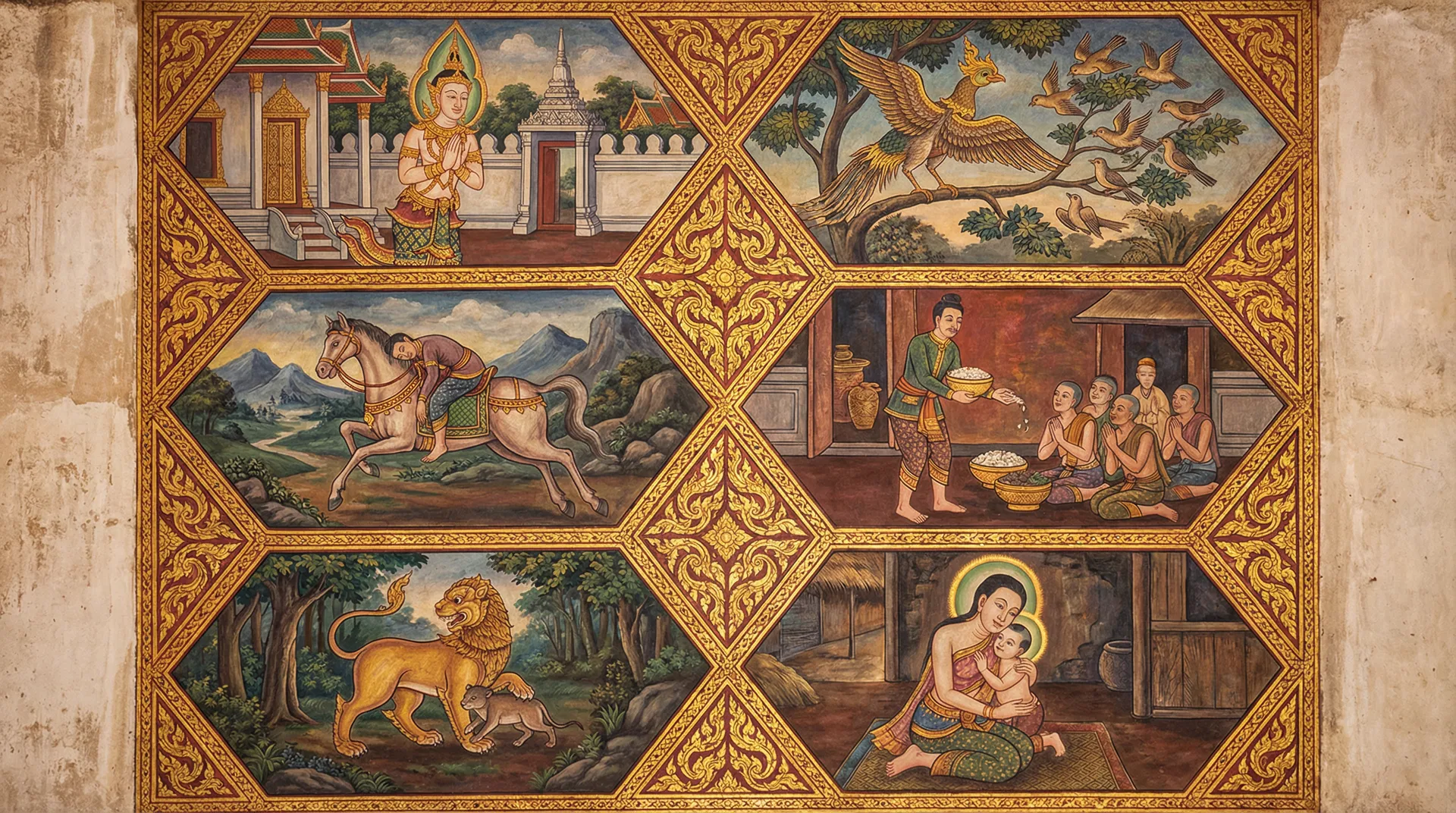 382Chakkanipāta
Sutasoma Jātaka
Sutasoma Jātaka Long ago, in the vibrant city of Indapatta, ruled a king named Piliya, a monarch who...
💡 True victory is achieved not through violence and conquest, but through wisdom, compassion, and the ability to show mercy.
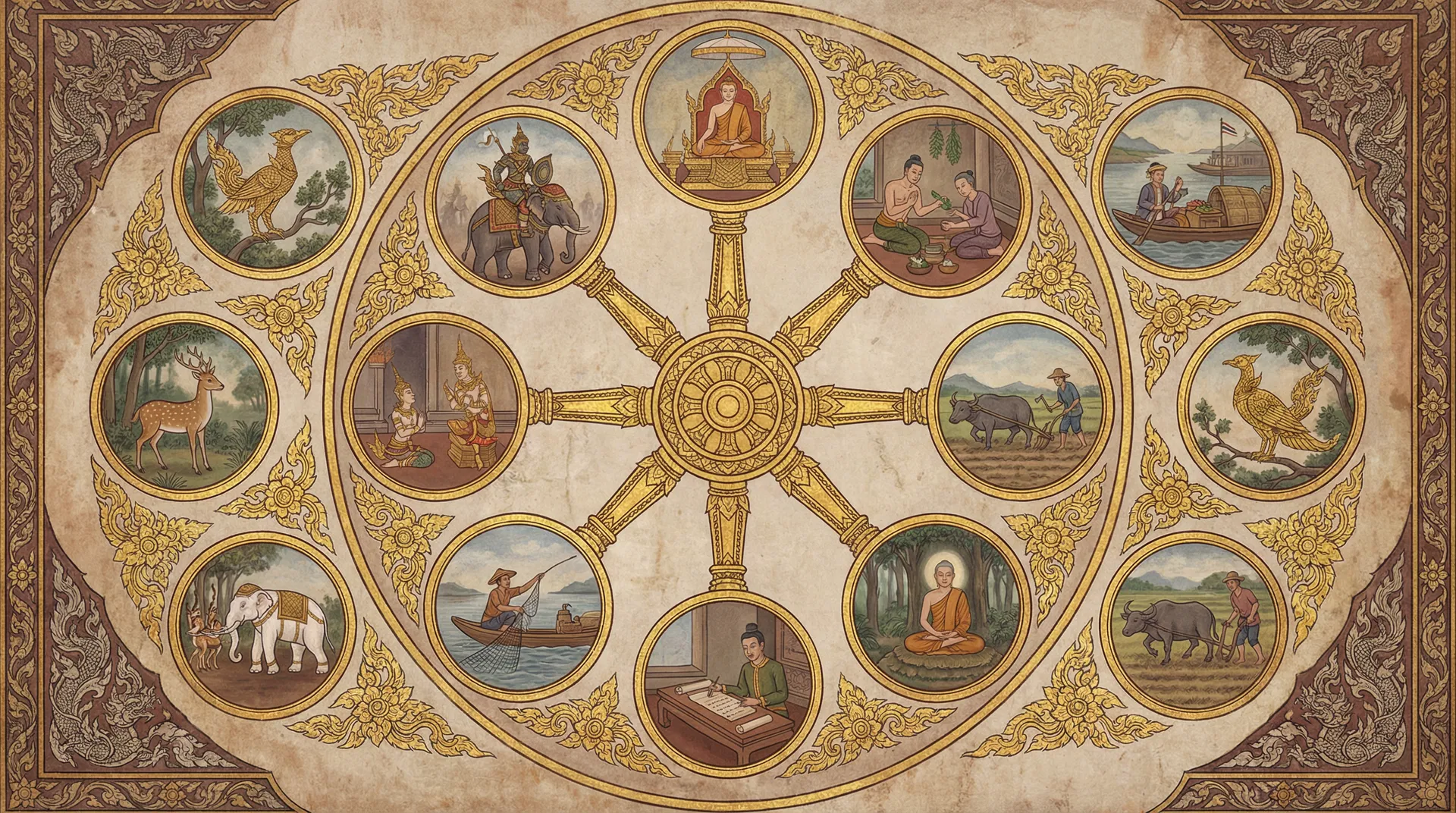 453Dasakanipāta
Mora Jātaka
The Peacock Jātaka (Mora Jātaka) In the heart of a verdant forest, where ancient trees reached towar...
💡 True beauty resides in virtue, wisdom, and compassion, not in outward appearance or possession. Greed and violence lead to suffering, while respect for life and adherence to moral principles bring inner peace and true fulfillment.
 319Catukkanipāta
Maha-Ummagga Jataka
Maha-Ummagga JatakaIn the heart of the ancient kingdom of Mithila, under the reign of the wise King ...
💡 Profound intelligence, foresight, and logical reasoning are essential for effective leadership, capable of overcoming even the most daunting challenges and ensuring the prosperity and well-being of a kingdom.
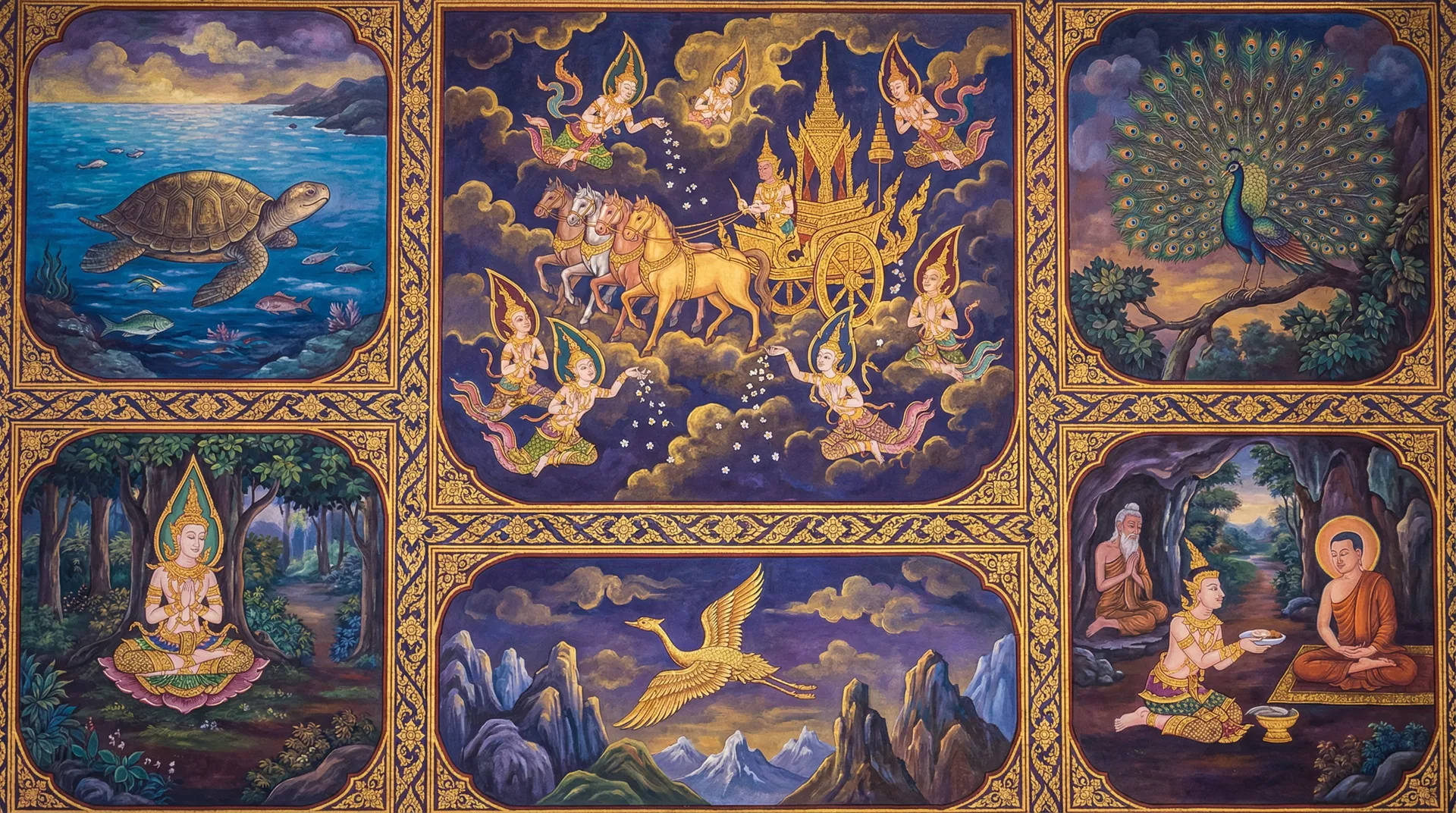 409Sattakanipāta
Sutasoma Jataka
Sutasoma Jataka In the ancient kingdom of Pancala, nestled beside the serene river of Candrabhaga, l...
💡 True strength is not found in power over others or in the indulgence of base desires, but in inner fortitude, self-control, compassion, and the courage to face adversity with equanimity. By transforming one's own heart and extending kindness, one can overcome even the darkest of forces.
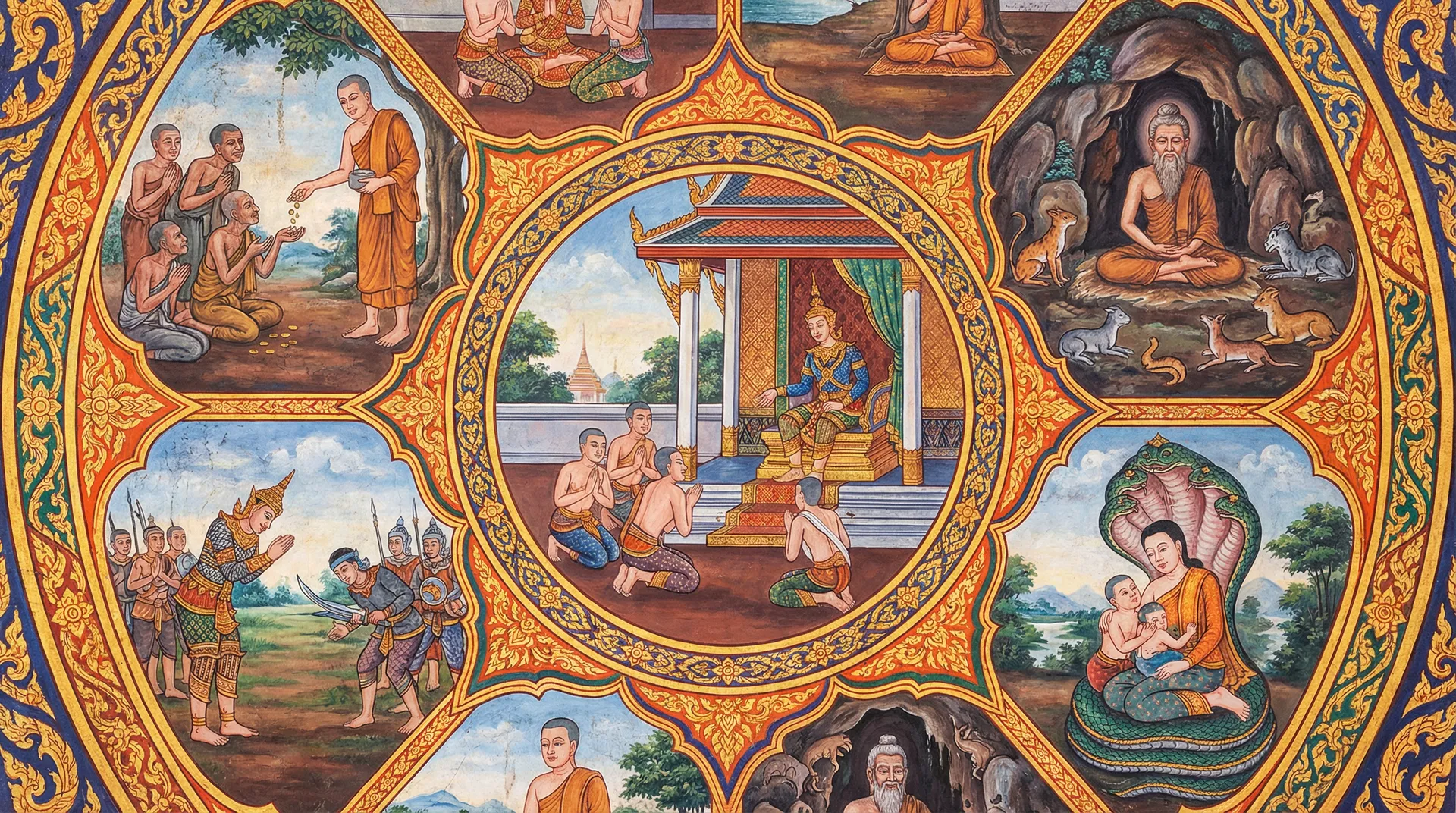 369Pañcakanipāta
MULAKAPAKSIYA JATAKA
MULAKAPAKSIYA JATAKAIn the vast and verdant forests of India, where ancient trees whispered secrets ...
💡 Pride and overconfidence can lead to great danger. True strength lies in wisdom, caution, humility, and collective effort. Learning from mistakes and cooperating with others are essential for survival and well-being.
 279Tikanipāta
Assaka Jataka
The Tale of the Noble Prince and the Impatient Camel In a kingdom renowned for its lush landscapes a...
💡 Impatience leads to folly and suffering. True strength lies in patience, understanding the limits of oneself and others, and respecting the journey, not just the destination.
— Multiplex Ad —