
Mahosadha Jataka
Mahosadha Jataka
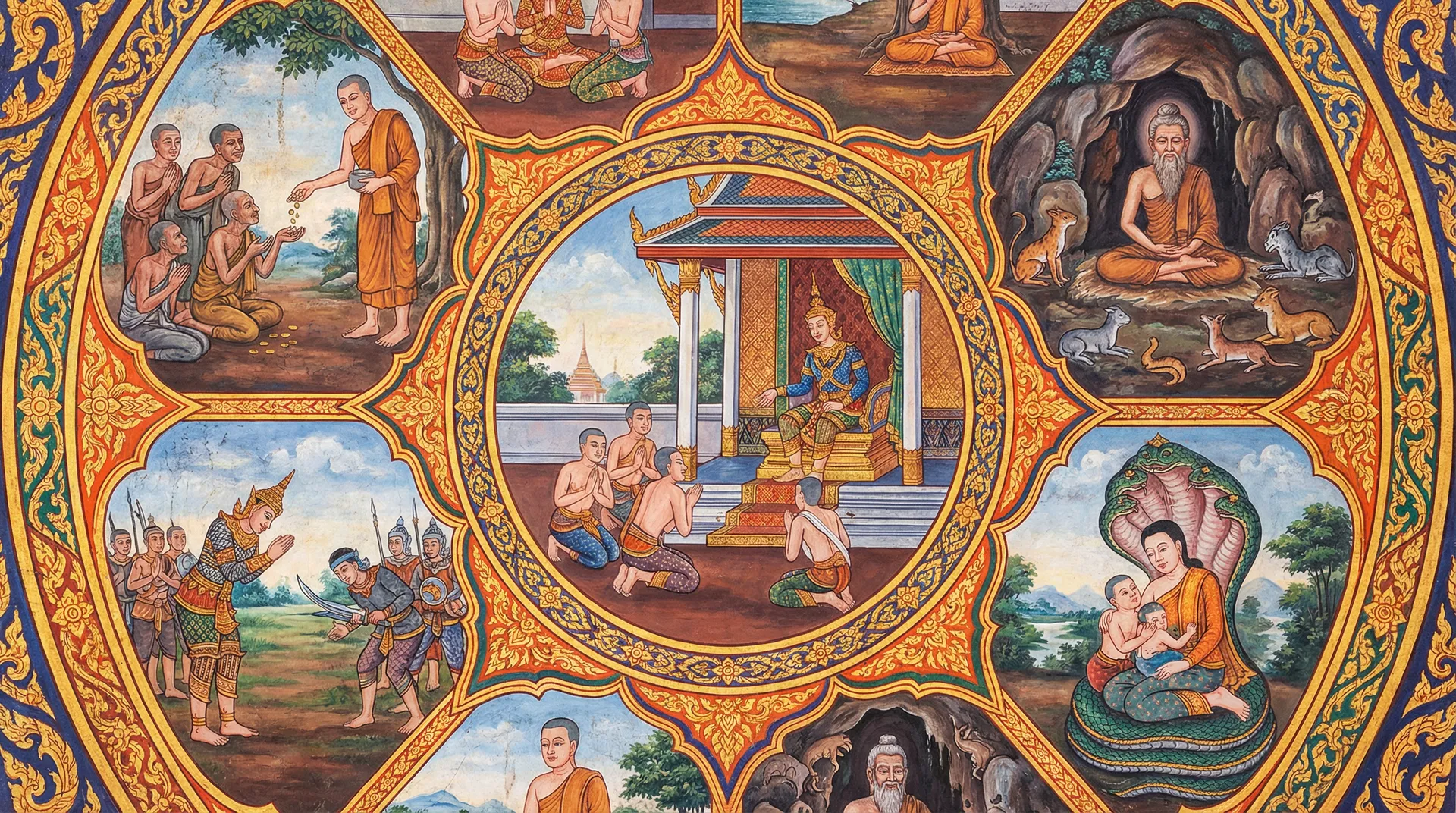
In the ancient city of Mithila, capital of the prosperous kingdom of Videha, lived a man whose intellect shone brighter than any jewel: Mahosadha. He was not a king, nor a prince, but a simple advisor whose mind was a boundless ocean of wisdom, foresight, and ingenious solutions. From his youth, he possessed an uncanny ability to understand the intricacies of life and to devise plans that were both brilliant and benevolent. His reputation for wisdom spread far and wide, reaching the ears of King Cetiya, a ruler who valued intelligence above all else.
King Cetiya, though wise in his own right, often found himself entangled in complex dilemmas, both within his court and in his dealings with neighboring kingdoms. He recognized Mahosadha's unparalleled talent and appointed him as his chief advisor, entrusting him with the most challenging problems. Mahosadha, in turn, served the king with unwavering loyalty and dedication, his mind always working tirelessly for the welfare of the kingdom.
One of the most significant challenges faced by King Cetiya was the constant threat from the neighboring kingdom of Kalinga, ruled by the cunning and ambitious King Kalinda. Kalinda, envious of Videha's prosperity and Cetiya's wisdom, constantly sought ways to undermine Mithila. He would send spies, spread rumors, and even provoke border skirmishes, hoping to destabilize the kingdom.
On one occasion, King Kalinda devised a particularly devious plot. He sent an envoy to King Cetiya, presenting him with a gift: a massive, intricately carved wooden bull. The envoy declared, "Your Majesty, our king sends this token of friendship. He wishes to know if your famed Mithila bulls can match its magnificence." The bull was a marvel to behold, but Mahosadha, with his keen eye, noticed a subtle detail: the bull's tail was unusually short and stiff. He suspected a hidden motive.
King Cetiya, flattered by the gift, was inclined to accept the challenge. But Mahosadha gently intervened. "Your Majesty," he said, "this is a test. King Kalinda seeks to humiliate us. If we claim our bulls are superior, he will demand proof, and our bulls, though strong, may not possess such artistic detail. If we admit inferiority, he will claim victory in diplomacy."
Mahosadha then devised a brilliant counter-plan. He instructed the royal craftsmen to carve another wooden bull, identical in size and artistry to the one sent by Kalinda. However, he ordered them to make its tail long, flexible, and made of a strong, yet pliable, material. When the Kalingan envoy returned, Mahosadha presented their bull, now enhanced with the new tail. "Indeed," Mahosadha declared to the envoy, "our bulls are magnificent!"
The envoy, confused and disappointed, returned to King Kalinda. Kalinda, furious that his trick had been foiled, then attempted another ploy. He sent a large number of soldiers disguised as merchants to approach the city gates and demand entry, claiming they were bringing rare goods. King Cetiya, fearing an invasion, was ready to mobilize his army.
But Mahosadha, ever vigilant, had anticipated this. He had observed the 'merchants' from a distance and noticed their unusually stern demeanors and the hidden weapons beneath their cloaks. He calmly advised the king, "Your Majesty, these are not merchants, but soldiers in disguise. If we open the gates, they will seize the city. If we refuse, they will claim we are hostile."
Mahosadha's solution was elegant. He ordered the city gates to be opened, but only a crack, just wide enough for one person to pass through at a time. He then had the city's strongest archers positioned on the walls, their arrows aimed not at the 'merchants', but at the ground just in front of them. As the disguised soldiers attempted to force their way through the narrow opening, the archers shot arrows, creating a hail of projectiles that struck the ground around them, making it impossible for them to advance without being exposed or injured. The Kalingan soldiers, realizing their ruse was discovered and facing an insurmountable obstacle, retreated in disarray.
Time and again, Mahosadha's wisdom saved Mithila from King Kalinda's machinations. He used his intellect to solve disputes, to foster prosperity, and to maintain peace, not through war, but through understanding and clever strategy. He demonstrated that true strength lies not in brute force, but in the power of a sharp and compassionate mind.
One of Mahosadha's most famous feats involved resolving a dispute over a mysterious, valuable pearl that had been brought to the king's court. Two individuals claimed ownership, each with a plausible story. Mahosadha, without physically examining the pearl, devised a simple test. He had the pearl placed in a bowl of water. One claimant watched intently, his anxiety palpable, while the other remained calm. Mahosadha declared, "The one who truly owns the pearl will feel no distress at its potential loss, for he knows its value is not in its possession but in its truth. The one who fears its submersion is the one who seeks to deceive." The anxious claimant, realizing his deceit was exposed, confessed. Mahosadha's ability to read the subtle cues of human behavior was as remarkable as his strategic thinking.
King Cetiya reigned for many years, his kingdom flourishing under the wise guidance of Mahosadha. The Bodhisattva, through his exceptional intelligence and his commitment to justice, showed the world that wisdom, when applied with compassion and foresight, is the most potent force for good, capable of navigating any challenge and ensuring the well-being of all.
— In-Article Ad —
💡Moral of the Story
Intellect and wisdom, when combined with foresight and compassion, are the most powerful tools for resolving conflicts, ensuring justice, and promoting the welfare of society.
Perfection: Wisdom Perfection (Panna Paramita)
— Ad Space (728x90) —
More Jataka Tales You May Enjoy
 105Ekanipāta
Sasa Jātaka
The Hare Who Gave His Life In the ancient times, when the moon was young and the stars shone brighte...
💡 Selfless generosity, even to the point of sacrificing one's own life, is the highest virtue. True compassion extends beyond oneself and seeks to alleviate the suffering of others at any cost.
 373Pañcakanipāta
Virochana Jātaka
Virochana JātakaIn the magnificent city of Mithila, ruled a king named Vidhura, a monarch whose reig...
💡 True power resides not in external possessions or magical artifacts, but in inner wisdom, self-control, and freedom from attachment.
16EkanipātaThe Monkey King's Courage
The Monkey King's CourageIn the heart of a verdant jungle, teeming with life and vibrant with the ch...
💡 True courage lies in facing fear and acting for the protection of others, regardless of the odds.
 189Dukanipāta
Sujana Jataka
The Tale of the Kindhearted KingIn the opulent kingdom of Mithila, a land blessed with fertile plain...
💡 True leadership and genuine kindness are demonstrated through selfless generosity and a profound commitment to the welfare of others, even at great personal cost.
66EkanipātaThe Great Crane Jataka
Long ago, in an age when the Buddha had not yet appeared, in a time immeasurably distant, the Bodhis...
💡 True wealth is measured not by the abundance of possessions, but by the happiness and prosperity of one's people. Greed leads to suffering, while generosity and compassion bring true prosperity.
102EkanipātaSattigumba Jātaka
The Story of the Spear-Bearing Tree In a time long past, when the world was wilder and the whispers ...
💡 Distrust and suspicion, while seemingly protective, ultimately lead to isolation and inner barrenness. True security and fulfillment come from cultivating trust, understanding, and genuine connection with others.
— Multiplex Ad —