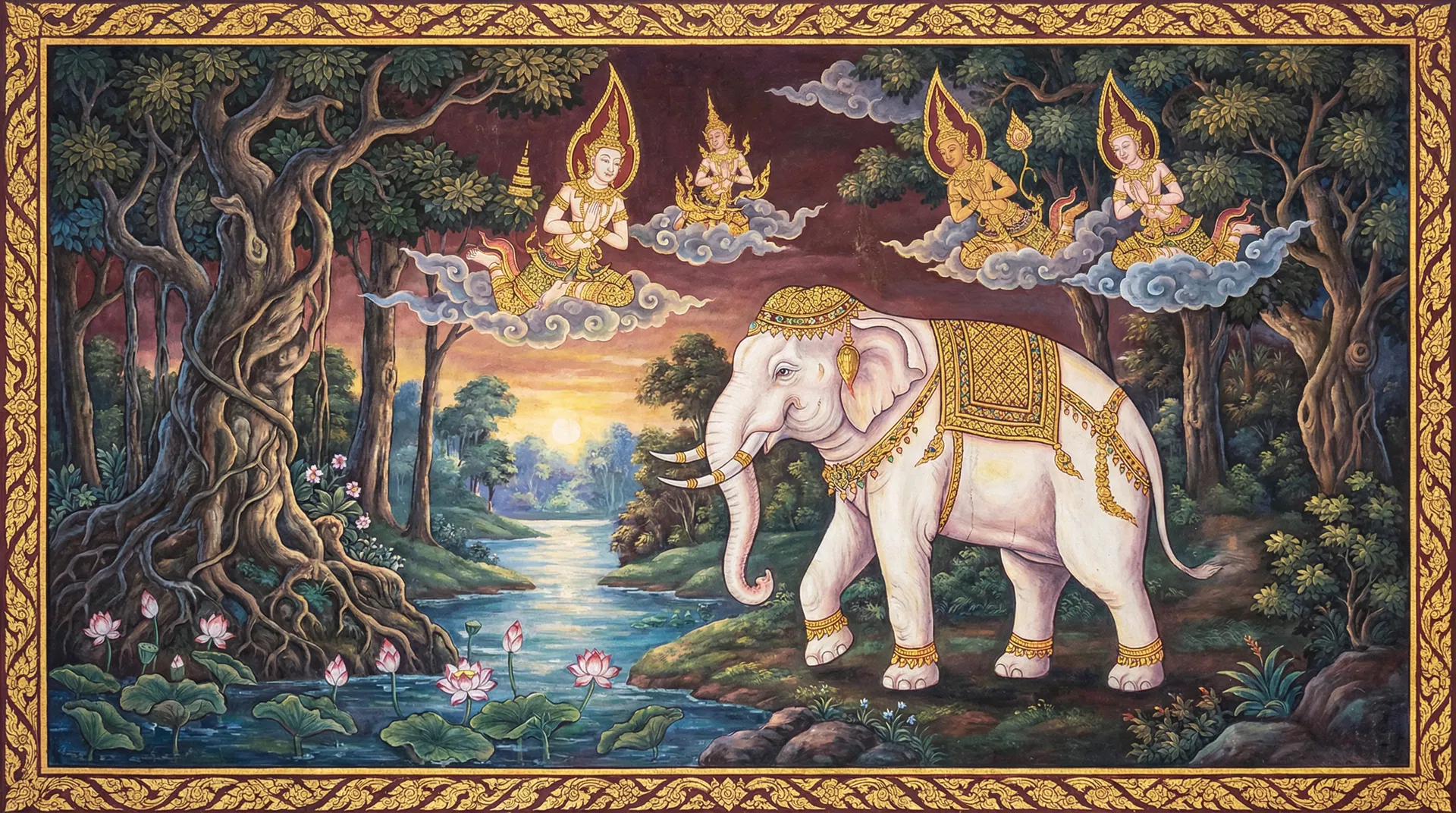
Titthira Jataka
Titthira Jataka
In the ancient forests of India, where colossal trees reached towards the heavens and the air was alive with the symphony of nature, lived a flock of partridges. Among them was a particularly wise and discerning bird named Titthira. Titthira was not like the other partridges, content with pecking at grains and flitting from branch to branch. He possessed a keen intellect and a profound understanding of the dangers that lurked in their idyllic home.
One day, as the sun dappled through the leaves, Titthira observed a group of hunters approaching. These were not ordinary hunters; they were cunning and cruel, their traps designed with meticulous cruelty to ensnare the unsuspecting birds. Titthira’s heart sank as he saw the familiar glint of nets and the ominous presence of cages.
He immediately gathered his flock. "My dear companions," he chirped, his voice filled with urgency, "danger approaches! I have seen the hunters, and their wicked intentions are clear. They have come to capture us."
The other partridges, however, were dismissive. "Titthira, you are always so worried," one of them scoffed. "The forest is vast, and the hunters are few. We can easily evade them."
"But their traps are cunning," Titthira insisted. "They are designed to look like harmless foliage, and their snares are almost invisible. We must be vigilant and work together."
The flock, however, was too complacent. They continued their daily routines, paying little heed to Titthira’s warnings. Titthira, saddened but undeterred, decided to take matters into his own wings.
He flew to the edge of the forest, where he encountered a group of monkeys known for their agility and mischievous nature. "O wise monkeys," Titthira began, bowing respectfully, "I seek your aid. Our flock is in grave danger from hunters. We need your help to overcome their traps."
The monkeys, intrigued, listened to Titthira’s tale. Their leader, a wise old primate named Kapi, stroked his chin thoughtfully. "Hunters’ traps are indeed a menace," Kapi mused. "But how can we, monkeys, help birds?"
Titthira explained his plan. "When the hunters set their traps, they often leave them unattended for a short while. If you could create a diversion, a loud commotion, perhaps by shaking the trees or throwing fruits, we could use that opportunity to disable the traps before the hunters return."
Kapi, impressed by Titthira’s foresight, agreed to help. The next day, as the hunters began their grim work, Titthira signaled to Kapi. The monkeys, true to their word, descended from the trees with a cacophony of screeches and howls. They shook the branches violently, showering the area with leaves and fruits, causing the hunters to abandon their traps momentarily to investigate the disturbance.
As soon as the hunters moved away, Titthira and his flock, who had been hiding nearby, swooped down. With their sharp beaks and strong claws, they began to dismantle the traps, breaking the nets and disarming the snares. They worked with incredible speed and efficiency, their small bodies a blur of motion.
When the hunters returned, they were bewildered to find their traps destroyed. They accused each other of carelessness, their frustration growing with each passing moment. Titthira, watching from a safe distance, felt a surge of relief.
However, the hunters were persistent. They returned the next day with even more elaborate traps. Titthira realized that he could not rely solely on the monkeys' diversions. He needed a more permanent solution.
He then approached a wise old tortoise who lived by the river. "Venerable tortoise," Titthira said, "you have seen many seasons and understand the ways of the earth. Can you offer me counsel?"
The tortoise, his ancient eyes blinking slowly, listened to Titthira’s plight. "The hunters' greed is their downfall, young bird," the tortoise rumbled. "They seek to take what is not theirs. Perhaps you can turn their own greed against them."
The tortoise explained a secret: a rare herb that, when its scent was released, induced extreme drowsiness in any creature that inhaled it. The herb grew in a hidden glade, guarded by thorny bushes.
Titthira, with renewed hope, thanked the tortoise and ventured into the dense thicket. He carefully navigated the thorns, his determination fueling his search. After much effort, he found the glade and the peculiar herb. He gathered a small amount, being careful not to disturb its essence too much.
That evening, as the hunters settled down near their traps, exhausted from their fruitless efforts, Titthira and his flock approached stealthily. Using a hollow reed, Titthira blew the fine powder of the herb towards the hunters’ camp. The scent, subtle yet potent, wafted through the air.
Within moments, the hunters began to yawn. Their eyelids grew heavy, and their heads drooped. Soon, they were all fast asleep, snoring loudly, their weapons scattered around them.
Titthira and his flock, along with the monkeys, seized this opportunity. They gathered all the hunters’ nets, cages, and weapons, and piled them high in a clearing. Then, with a mighty heave, they set the pile ablaze. The flames licked upwards, consuming the instruments of their oppression.
The next morning, the hunters awoke to find their camp in ruins and their tools gone. They were left with nothing but the clothes on their backs and the bitter taste of defeat. They looked at each other in disbelief and shame, realizing that their cruelty had been met with a force they could not comprehend.
From that day on, the hunters never returned to that forest. The partridges lived in peace, forever grateful to Titthira, their wise and courageous leader. Titthira, in turn, taught them that even the smallest creatures, when united and guided by wisdom, can overcome the greatest of dangers.
He also taught them the importance of foresight and preparation. "Do not wait for disaster to strike," he would say. "Observe, learn, and prepare. For in vigilance lies safety, and in unity lies strength." The flock learned to heed his words, and their lives in the forest were always filled with peace and security, a testament to the power of wisdom and cooperation.
— In-Article Ad —
💡Moral of the Story
Vigilance, foresight, and cooperation are essential for overcoming dangers. Even the smallest creatures can achieve great things when they unite and act with wisdom. It is better to prepare for potential threats than to be caught unaware.
Perfection: Wisdom (Prajna Paramita)
— Ad Space (728x90) —
More Jataka Tales You May Enjoy
 381Chakkanipāta
Mūkapacca Jātaka
Mūkapacca Jātaka In the ancient city of Mithila, nestled within the prosperous kingdom of Videha, li...
💡 Deceit and greed ultimately lead to downfall, while honesty and integrity are the true foundations of lasting prosperity.
 499Pakiṇṇakanipāta
Vessantara Jātaka
Vessantara JātakaIn the prosperous kingdom of Siwi, ruled the benevolent King Sanjaya. His queen, Ph...
💡 Perfect generosity, even when it involves the most difficult sacrifices, leads to the highest spiritual merit and liberation.
336CatukkanipātaMahosadha Jataka
Mahosadha Jataka In the bustling city of Mithila, a beacon of wisdom shone brightly in the person of...
💡 True wisdom lies not only in sharp intellect but also in compassion, keen observation, and a deep understanding of human nature and the world around us. Ingenuity and logical reasoning can solve complex problems more effectively than haste and force.
308CatukkanipātaKuñjara-Jātaka
The Elephant's WisdomIn the lush forests of the Himalayas, there roamed a magnificent elephant named...
💡 Unity and collective action, guided by wisdom and courage, are powerful tools to overcome even the most formidable threats. Each individual's unique strength, when combined with others, creates an insurmountable force for good.
 284Tikanipāta
Mahāpaduma Jātaka
Mahāpaduma JātakaIn the heart of a lush forest, far from the clamor of human settlements, lived a Bo...
💡 True beauty and value lie within the heart, not in external possessions or trophies. Greed and cruelty ultimately lead to sorrow and regret.
326CatukkanipātaPhra Sang Thong Jataka
Phra Sang Thong Jataka In the ancient kingdom of Suvarnabhumi, nestled between shimmering rivers and...
💡 True worth is found not in outward appearances or hidden identities, but in the courage, wisdom, and compassion one demonstrates through their actions.
— Multiplex Ad —