Kuṇāla Jātaka
Kuṇāla Jātaka
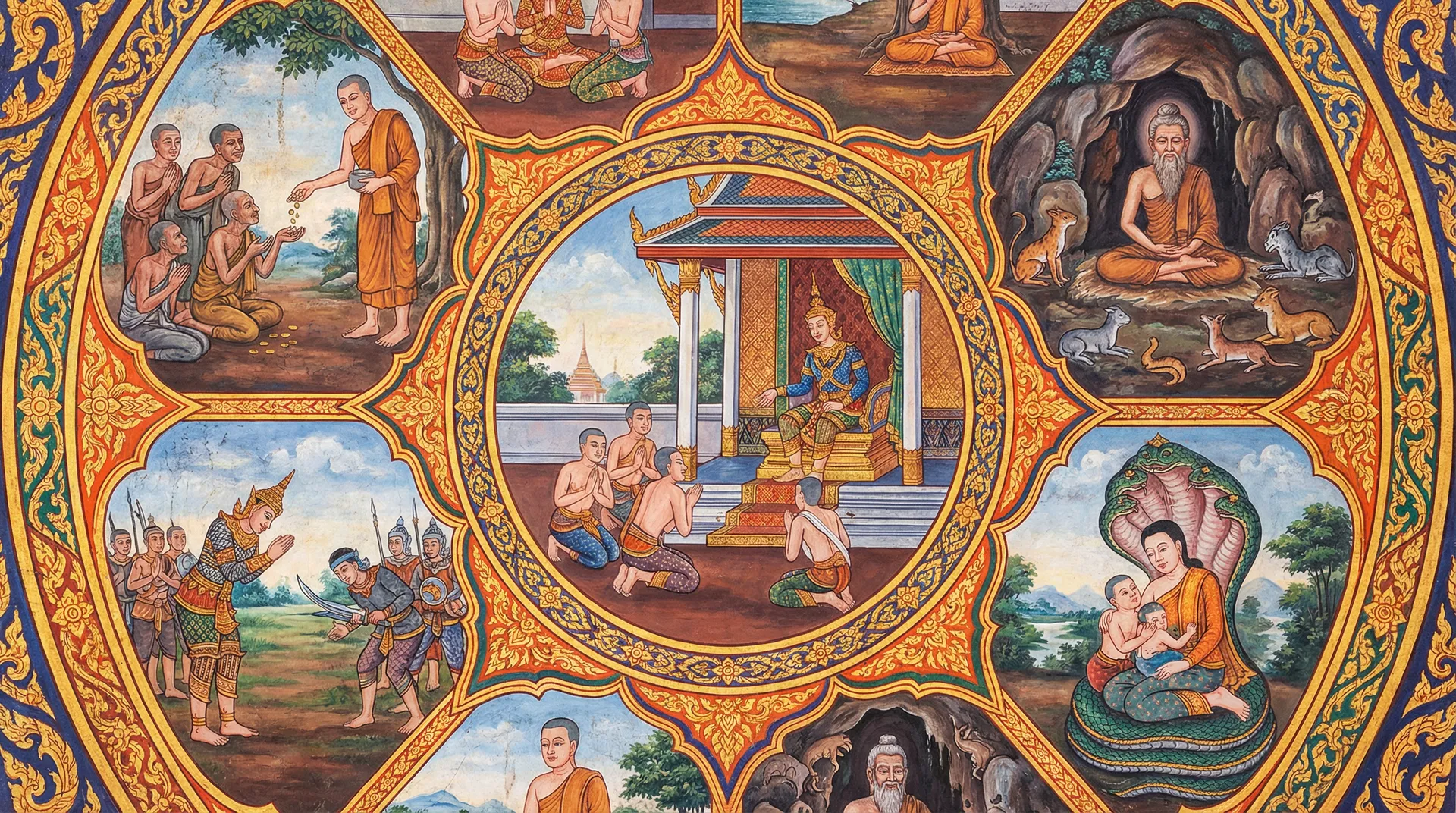
In the magnificent city of Sāvatthī, under the reign of a wise and just king, lived the Bodhisatta in his former life as Prince Kuṇāla. He was a prince of exceptional beauty, with eyes so captivating and luminous that they were said to rival the brilliance of the stars. His gaze was gentle, his heart filled with kindness, and his mind sharp with intelligence.
Prince Kuṇāla was deeply devoted to his father, the king, and his mother, the queen. He often spent his time in the royal gardens, contemplating the nature of impermanence and the duties of a virtuous ruler. However, his serene life was about to be shattered by the machinations of a wicked stepmother, Queen Candra, who harbored a deep-seated jealousy of Kuṇāla's beauty and the king's affection for him. She saw him as a threat to her own son's future claim to the throne.
Driven by envy and a lust for power, Queen Candra devised a sinister plan. She approached a wicked courtier, a man whose heart was as dark as his intentions, and bribed him with immense riches. "I want Prince Kuṇāla's eyes," she whispered, her voice dripping with venom. "Bring them to me. If you succeed, you will be rewarded beyond your wildest dreams. If you fail, your life will be forfeit." The courtier, blinded by greed, readily agreed.
The following day, the king was preparing for a journey. Kuṇāla, ever dutiful, accompanied his father to the city gates, bidding him farewell with a heavy heart. As the king's chariot disappeared in the distance, the wicked courtier, disguised as a messenger, approached the prince. "My Prince," he said with feigned urgency, "I have a message from the Queen. She requires your immediate presence. She claims to have a rare and potent medicine for your eyes, which she wishes to administer before your father's return."
Kuṇāla, trusting implicitly in his father's queen, did not suspect any foul play. He followed the courtier to a secluded chamber in the palace. As soon as they were alone, the courtier revealed his true colors. He drew a sharp dagger and threatened the prince. "The Queen demands your eyes, Prince Kuṇāla! Hand them over willingly, or I shall take them by force!"
Kuṇāla, though shocked and terrified, remembered the teachings of compassion and righteousness. He knew that resistance would only lead to further violence. He thought of his father and the kingdom, and he understood that his sacrifice, however painful, was for a greater cause. With a heavy heart, but with unwavering resolve, he said, "I will not resist. Take them, but do so with as little pain as possible. My eyes are but a small offering for the peace of my father's kingdom."
The cruel courtier, with a wicked grin, plunged his dagger into the prince's eyes, tearing them from their sockets. Kuṇāla cried out in agony, his world instantly plunged into darkness. Blood streamed down his face, and he collapsed, blinded and broken.
The wicked queen, upon receiving the prince's eyes, feigned distress and presented them to the king upon his return, claiming they had been lost due to an accident. The king, devastated by the loss of his son's sight, was consumed by grief. He suspected nothing of his wife's treachery, blinded by his own love and trust.
Prince Kuṇāla, though physically blind, was not spiritually defeated. He was filled with a profound sense of detachment and renunciation. He realized that the world of form and beauty had led to such suffering. He knew he could no longer stay in the palace, a constant reminder of his loss and the wickedness he had endured. He chose to become a wandering ascetic, dedicating his life to spiritual practice and the pursuit of truth.
He wandered through forests and mountains, his heart filled with the teachings of the Buddha. He meditated deeply, seeking solace and enlightenment. Though he could no longer see the physical world, his inner vision became extraordinarily clear. He saw the impermanence of all things, the illusory nature of beauty, and the suffering that arises from attachment to the senses. He found peace in detachment and liberation in understanding.
Years passed. The king, still mourning his son, often visited the royal gardens, his heart heavy. One day, he heard a beautiful, melancholic song emanating from a distant grove. The voice was hauntingly familiar, filled with a profound wisdom and sorrow. Intrigued, the king followed the sound. He found a wandering ascetic, his face serene despite his blindness, singing a song of truth and renunciation.
As the ascetic sang, the king was overcome with emotion. The voice, the melody, the profound wisdom – it all spoke to him of his lost son. He approached the ascetic and asked, "Who are you, holy one, who sings with such sorrow and such wisdom?"
The ascetic, turning his sightless face towards the king, replied, "I am Kuṇāla, your son, who once possessed eyes as bright as the stars, but who willingly gave them up for the sake of truth and peace."
The king was utterly shocked and heartbroken. He realized the depth of his wife's treachery and his own blindness. He wept uncontrollably, not just for his son's suffering, but for his own ignorance.
The Bodhisatta, Prince Kuṇāla, seeing his father's genuine remorse, forgave him and his wicked stepmother. He explained that his blindness had led him to a greater truth, a deeper understanding of the Dhamma. He taught his father about the impermanence of physical beauty, the dangers of attachment, and the liberating power of detachment.
The king, deeply moved and enlightened by his son's wisdom, returned to the palace. He exposed Queen Candra's wickedness, and she was banished from the kingdom. The king, filled with remorse and respect for his son, abdicated the throne and joined Prince Kuṇāla in his ascetic life, dedicating the remainder of his days to spiritual practice.
Prince Kuṇāla, having attained profound inner vision and enlightenment through his sacrifice, continued to live a life of purity and wisdom, a beacon of hope and understanding for all who sought the truth beyond the illusions of the physical world.
— In-Article Ad —
💡Moral of the Story
True beauty resides not in physical appearance, but in inner purity, wisdom, and virtue. Sacrifice made for the sake of righteousness and truth can lead to profound spiritual insight and liberation, transcending physical limitations and worldly suffering.
Perfection: Patience (Khanti Pāramī)
— Ad Space (728x90) —
More Jataka Tales You May Enjoy
 78Ekanipāta
The Jataka Tale of the Lion's Wisdom
The Jataka Tale of the Lion's Wisdom In the ancient city of Varanasi, a place renowned for its gran...
💡 Intelligence, the ability to see opportunities, and the courage to face risks can lead to wealth and benefit society.
62EkanipātaThe Bodhisatta as the Grain-Seller's Son
The Bodhisatta as the Grain-Seller's Son In the ancient city of Savatthi, where the air hummed with...
💡 Observing moral precepts and vows leads to true happiness. Allowing desires to dominate will bring suffering.
18EkanipātaThe Bodhisatta as a King of Deer
The Bodhisatta as a King of DeerIn the heart of a vast and ancient forest, where sunlight dappled th...
💡 True leadership and love manifest in selfless sacrifice, inspiring even the hardest hearts.
 406Sattakanipāta
Kacchapa Jataka
Kacchapa Jataka In the ancient land of Mithila, nestled beside the shimmering Ganges River, lived a ...
💡 True abundance and prosperity are not found in material wealth alone, but in the boundless compassion and generosity extended to all beings. When a leader embodies these virtues, they inspire a transformation that can bring forth healing and renewal, both for the land and its people.
 185Dukanipāta
Kusa Jātaka
The Tale of the Excellent Kusa GrassIn the ancient kingdom of Kuru, on the banks of the sacred River...
💡 Acts of courage, compassion, and unwavering devotion, undertaken with pure intention, can overcome great obstacles and bring about renewal and hope, even in times of severe hardship.
163DukanipātaMaha-Ummagga Jataka
The Great Wisdom of Prince Vessantara (The King of Wisdom)In the magnificent city of Jetuttara, rule...
💡 True generosity lies in selfless giving, not for recognition or reward, but for the alleviation of suffering and the pursuit of peace. Wisdom is found in understanding the impermanence of possessions and transcending attachment.
— Multiplex Ad —