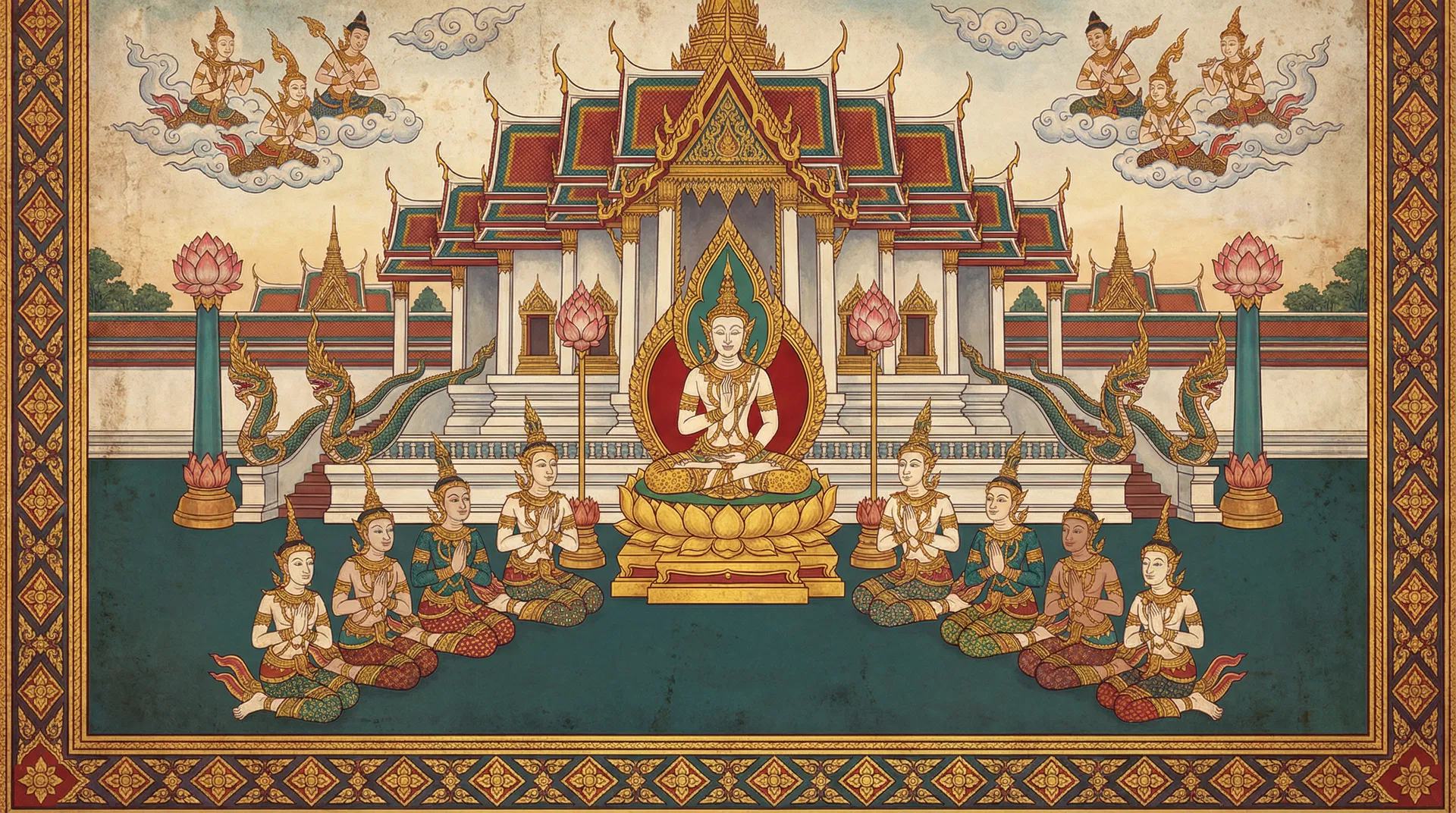
Saddanta Jataka
Saddanta Jataka
In the magnificent city of Pupphavati, renowned for its vibrant marketplaces and perfumed gardens, lived a wise and benevolent king. But the true jewel of the kingdom was not the king himself, but a magnificent white elephant, whose purity and strength were unmatched. This elephant, known as Saddanta, was the Bodhisatta in this life, a being of immense virtue and power, radiating an aura of peace and wisdom.
Saddanta possessed six tusks, each one gleaming like polished ivory, a testament to his extraordinary nature. He lived in a beautiful, tranquil forest clearing, where his presence brought peace to all the creatures that dwelled there. Birds sang sweeter melodies, and even the fiercest predators showed him reverence, their natural animosity softened by his gentle aura.
One day, a greedy and envious Brahman, consumed by a desire for wealth and recognition, heard tales of the magnificent white elephant. He learned of the immense value placed upon the elephant's tusks, believed to hold magical properties and bring great fortune to their possessor. Driven by avarice, the Brahman conceived a wicked plan: he would obtain those tusks for himself.
He journeyed to the elephant's forest, his heart filled with dark intentions. He found Saddanta resting peacefully, his white form a stark contrast against the verdant foliage. The Brahman, a skilled hunter, approached cautiously, his bowstring taut. He knew that a direct confrontation would be foolish; the elephant's power was legendary.
With a silent prayer to his own selfish gods, the Brahman drew his bow and loosed an arrow. The shaft, tipped with a deadly poison, found its mark, striking Saddanta in the side. The mighty elephant, though wounded, did not lash out in anger. His divine nature prevented him from succumbing to rage. Instead, a profound sorrow washed over him, not for himself, but for the misguided soul who would commit such a heinous act.
As Saddanta lay weakened, the Brahman, emboldened by his success, approached the injured elephant. He drew a sharp, cruel sword, intending to sever the tusks. But as he drew near, Saddanta, with a voice that resonated with ancient wisdom and boundless compassion, spoke. "Brahman," he said, his voice calm despite the pain, "why do you seek to harm me? What drives this insatiable greed within you?"
The Brahman, startled that the elephant could speak, stammered, "I... I desire your tusks. They are said to bring great wealth and power. I wish to possess them."
Saddanta looked at the Brahman with eyes filled with pity. "You seek fleeting worldly gains, Brahman, but true wealth lies not in possessions, but in virtue. These tusks, though precious, are but a part of me. If you truly desire them, and if it will satisfy your craving, I will give them to you willingly."
With these words, Saddanta, with a mighty effort, shook his head. The six gleaming tusks, released from their roots, fell gently to the ground before the astonished Brahman. The elephant, having made this ultimate sacrifice, felt a sense of peace, knowing he had fulfilled his compassionate purpose.
The Brahman, overwhelmed by the elephant's boundless generosity and the sheer magnitude of his sacrifice, was struck to the core of his being. He had come seeking material wealth, but he found himself confronted with a spiritual wealth that far surpassed anything he could have imagined. The act of selfless giving, the complete lack of anger or resentment, shattered his greed and envy.
He looked at the fallen tusks, then at the noble elephant, now bleeding but serene. Tears welled up in his eyes. He realized the depth of his own depravity and the profound virtue of the creature he had tried to exploit. He knelt before Saddanta, his heart filled with remorse. "Oh, noble elephant," he cried, his voice choked with emotion, "I have been a fool! Your generosity is beyond measure. You have given me not just your tusks, but a lesson that will change my life forever. I have wronged you grievously, and I beg for your forgiveness."
Saddanta, ever compassionate, nodded gently. "Go, Brahman," he said. "Let this experience purify your heart. Let it be the beginning of your transformation. Seek virtue, practice generosity, and cultivate wisdom. True happiness comes from giving, not from taking."
The Brahman, forever changed by his encounter with Saddanta, took the tusks and left the forest. He renounced his greedy ways and dedicated his life to acts of charity and spiritual practice. He shared the story of the great white elephant, inspiring countless others to embrace generosity and compassion, and to understand that the greatest treasures are not those we hoard, but those we give away.
And so, the legend of Saddanta, the six-tusked elephant, lived on, a timeless testament to the power of selfless giving, boundless compassion, and the transformative nature of true virtue.
— In-Article Ad —
💡Moral of the Story
True generosity lies in selfless giving, even at great personal cost. Compassion and forgiveness can transform even the most greedy and envious hearts, leading to spiritual awakening.
Perfection: Generosity (Dana), Compassion (Karuna), Patience (Khanti)
— Ad Space (728x90) —
More Jataka Tales You May Enjoy
 197Dukanipāta
Kaccāpāna Jātaka
The Tale of the Wise TortoiseIn a verdant forest beside a clear, flowing river, lived a community of...
💡 True leadership is built on wisdom, justice, and compassion for all subjects, not on fear or brute force. Cooperation and foresight are more valuable than empty promises.
 425Aṭṭhakanipāta
Nimi Jātaka
Nimi JātakaIn the prosperous kingdom of Mithila, there once ruled a virtuous king named Nimi. King N...
💡 True happiness and lasting peace are found not in temporary pleasures, however grand, but in the unwavering pursuit of wisdom and liberation from the cycle of suffering. Understanding impermanence is key to making wise choices.
 348Catukkanipāta
Dhammapāla Jātaka
The Bodhisatta as a Serpent Guardian JātakaIn the heart of a sun-drenched forest, where ancient tree...
💡 True power comes from selfless compassion and spiritual devotion, capable of overcoming even the most severe challenges and restoring life and balance.
318CatukkanipātaMahosadha Jataka
Mahosadha JatakaIn the ancient city of Mithila, capital of the prosperous kingdom of Videha, lived a...
💡 Intellect and wisdom, when combined with foresight and compassion, are the most powerful tools for resolving conflicts, ensuring justice, and promoting the welfare of society.
421AṭṭhakanipātaMūgapakkha Jātaka
Mūgapakkha JātakaIn the heart of the Kosala kingdom, where golden fields stretched to the horizon an...
💡 True strength lies not in the ability to speak or exert force, but in the power of selfless compassion and unwavering sacrifice. Actions, especially those born of immense kindness, speak louder than words.
341CatukkanipātaMātanga Jātaka
Mātanga Jātaka In the ancient city of Varanasi, nestled beside the sacred River Ganges, there lived ...
💡 True renunciation and humility are more powerful than any material offering or ritual in overcoming adversity and bringing about true prosperity.
— Multiplex Ad —