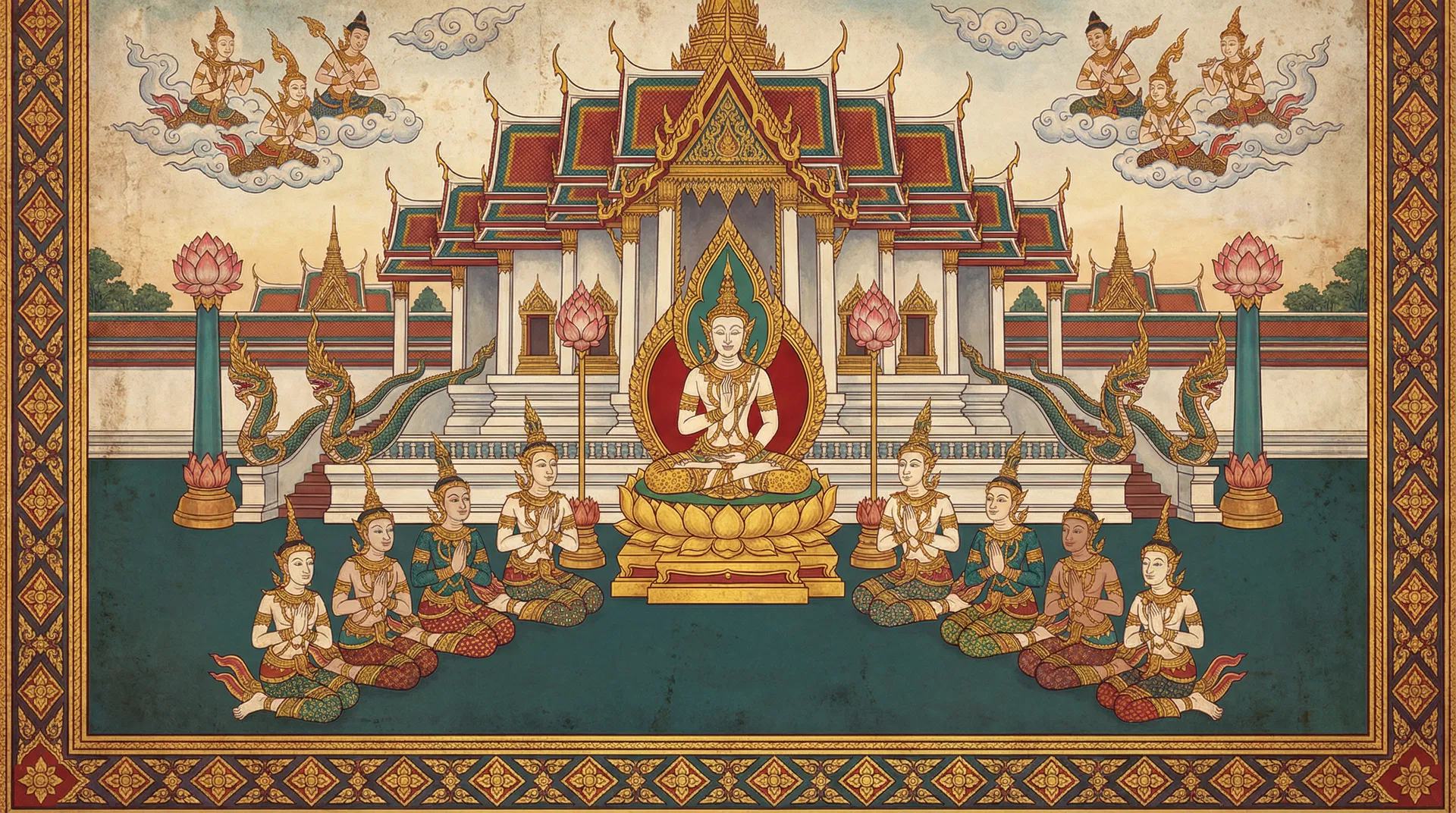
Mugapakkha Jataka
The Tale of the Mute Prince
In the ancient city of Mithila, ruled a just and benevolent king named Vidura. He and his queen were blessed with a son, Prince Bodhi, whose arrival was heralded by auspicious signs. However, as the prince grew, a peculiar affliction befell him – he was born mute. Despite his inability to speak, Prince Bodhi possessed a sharp intellect, a kind heart, and a keen sense of observation. He understood everything said around him and communicated through gestures, expressions, and the occasional written word, which he learned with remarkable speed.
The King and Queen were deeply saddened by their son's silence, but they loved him dearly. They ensured he received the finest education, and he excelled in all his studies, particularly in the arts of governance and strategy. Yet, the people of Mithila, accustomed to the eloquent pronouncements of their rulers, whispered amongst themselves. Some feared the prince's silence was an ill omen, while others doubted his ability to rule effectively without a voice to command or persuade.
One day, a neighboring kingdom, ruled by a proud and ambitious king named Dhritarashtra, decided to test Mithila's strength. Dhritarashtra sent a messenger to King Vidura, demanding a hefty tribute and threatening invasion if it was not met. King Vidura, a man of peace, was troubled. He consulted his ministers, but none could devise a strategy that guaranteed peace without compromising their kingdom's honor.
Prince Bodhi, though silent, was privy to all discussions. He saw the worry etched on his father's face and the fear in the eyes of the court officials. He knew he had to act. That night, he took a piece of parchment and, with elegant calligraphy, wrote a message to his father. It read: 'Father, allow me to meet the envoy of King Dhritarashtra. I have a plan.'
King Vidura, though hesitant, trusted his son's wisdom. The next day, the envoy from Dhritarashtra arrived, arrogant and demanding. Prince Bodhi, accompanied by his royal guards, met him in the grand audience hall. The envoy, accustomed to intimidating others with his booming voice and haughty demeanor, was taken aback by the silent prince. He began to speak, his words dripping with disdain and threats.
Prince Bodhi listened intently, his gaze steady. When the envoy finished, the prince did not speak a word. Instead, he gestured for a scribe to bring a large, empty scroll. He then took a brush and, with slow, deliberate strokes, began to paint. He painted a picture of a fierce battle, with soldiers clashing, arrows flying, and the ground stained with blood. He depicted a vast army, overwhelming in its might, marching towards a small, undefended city. Then, with a final flourish, he painted a single, solitary figure standing before the approaching army, holding a shield, but with no weapon in hand.
The envoy watched, bewildered. He did not understand the meaning of the silent prince's art. Prince Bodhi then pointed to the solitary figure and then to himself. He then pointed to the approaching army and then made a gesture of offering, followed by a gesture of bowing low. He then pointed to the undefended city and then made a gesture of devastation, shaking his head sadly.
The envoy, though not entirely comprehending, felt a shiver run down his spine. He saw the unflinching courage in the prince's eyes, the solemnity of his gestures, and the stark depiction of destruction. He interpreted the painting as a warning: the prince was willing to stand alone and defend his kingdom, even if it meant his own demise, and the consequence of aggression would be utter ruin for both sides. The silent defiance was more potent than any spoken threat.
He returned to King Dhritarashtra and recounted the strange encounter. He described the mute prince's painting and his silent, yet powerful, message. King Dhritarashtra, a shrewd ruler, understood the implication. He realized that this silent prince, who could inspire such unwavering resolve in his people and such a potent display of defiance, was not to be underestimated. He saw that Prince Bodhi’s strength lay not in his voice, but in his wisdom, courage, and the deep love he held for his people, which was evident even in his silence. The threat of a silent, resolute defense was more daunting than any loud declaration of war.
Fearing a costly and potentially devastating conflict, King Dhritarashtra rescinded his demand for tribute. He sent a new envoy, this time with a message of peace and respect. He acknowledged Prince Bodhi's courage and declared his intention to forge an alliance rather than engage in warfare. King Vidura, overjoyed, accepted the proposal. Mithila was saved, not by armies or loud pronouncements, but by the silent wisdom and unwavering courage of its mute prince.
Prince Bodhi, though he never regained his voice, went on to become a wise and just ruler, beloved by his people. His reign was marked by peace, prosperity, and a profound understanding that true strength often resides not in the loudest voice, but in the quiet conviction of a courageous heart and an intelligent mind.
— In-Article Ad —
💡Moral of the Story
True strength and wisdom are not always expressed through words. Courage, intelligence, and unwavering resolve can speak volumes, even in silence. The ability to inspire and protect others transcends the need for a voice.
Perfection: Wisdom (Panna)
— Ad Space (728x90) —
More Jataka Tales You May Enjoy
 36Ekanipāta
The Tale of the Horse-Breeder
In a past aeon, in the flourishing city of Varanasi, the Bodhisatta was born as a young Brahmin, end...
💡 The highest form of virtue is selfless compassion, willing to sacrifice for the well-being of others.
 330Catukkanipāta
The Brave Hare Jataka
The Brave Hare Jataka In a sun-drenched land, where the earth was fertile and the trees bore abundan...
💡 Unfounded fear can lead to widespread delusion and panic. Courage and reason are essential to discern truth and overcome irrational anxieties.
 245Dukanipāta
Bhisa Jataka
Bhisa JatakaIn the ancient city of Kosala, nestled on the banks of the sacred river, lived a King na...
💡 True courage lies in understanding and facing our fears, recognizing that many of our anxieties are internal constructs rather than external threats.
 256Tikanipāta
Kaccābarāva Jātaka
Kaccābarāva JātakaIn the ancient land of Mithila, where rivers flowed like silver ribbons and forest...
💡 The greatest strength lies in selfless sacrifice for the well-being of others.
249DukanipātaSarabhanga Jataka
Sarabhanga JatakaIn the ancient land of Gandhara, amidst rolling hills and fertile valleys, lived a ...
💡 True strength lies not in external power or worldly achievements, but in the unwavering discipline and mastery of one's own mind.
232DukanipātaPhra Ong Khong Khon (The Bodhisatta as a King Who Values Honesty)
Phra Ong Khong Khon (The Bodhisatta as a King Who Values Honesty) In the bustling city of Varanasi, ...
💡 Honesty is the most valuable treasure, far surpassing any material wealth. True worth lies in integrity and truthfulness, which form the bedrock of a just and prosperous society.
— Multiplex Ad —