Maha-Ummagga Jataka
The Bodhisatta's Ten Thousand Illusions
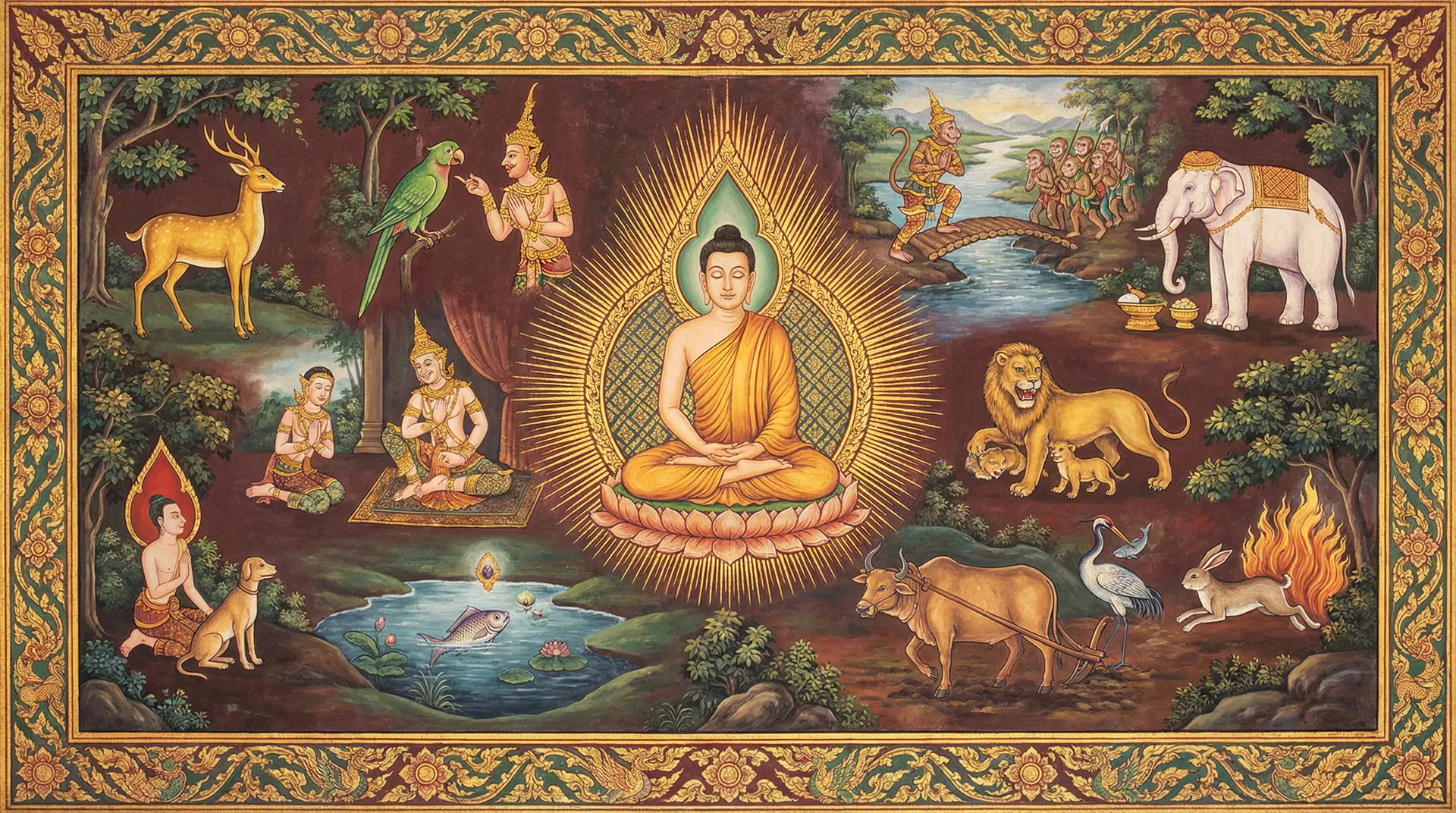
In the ancient city of Kusavati, ruled King Bhammadaja with fairness and wisdom. His queen, Subhadra, was equally virtuous. They were blessed with a son, Prince Vessantara, who was none other than the Bodhisatta himself, destined to achieve perfect enlightenment. From his earliest days, Prince Vessantara displayed extraordinary intelligence, compassion, and a profound understanding of the world. He was not merely a prince; he was a beacon of virtue, his heart overflowing with boundless generosity.
One day, a severe drought struck the kingdom. The land became parched, rivers dried up, and the people suffered immensely. The crops failed, and hunger began to stalk the land. King Bhammadaja, though wise, found himself unable to alleviate the suffering. His granaries were emptying, and the usual methods of irrigation proved futile against the relentless sun.
Prince Vessantara, witnessing the plight of his people, felt his heart ache. He knew that his father, though king, was limited by earthly resources. He also knew that true relief, the kind that could save his people from despair, often came from a source beyond mere material wealth. He decided to undertake a great act of generosity, an act that would require immense courage and a complete relinquishing of worldly possessions.
He approached his father. 'Father,' he said, his voice filled with compassion, 'the suffering of our people weighs heavily on my heart. I wish to make a great offering, to give away all that I possess, in the hope that it may bring relief and merit to our kingdom.'
King Bhammadaja, understanding his son's noble intentions, wept. 'My son,' he said, 'you are the jewel of this kingdom. Your generosity is unparalleled, but surely there are other ways to help our people without sacrificing everything you hold dear?'
Vessantara smiled gently. 'Father, true merit comes not from hoarding, but from giving. My possessions are fleeting, but the merit gained from a selfless act of charity can bring lasting blessings.'
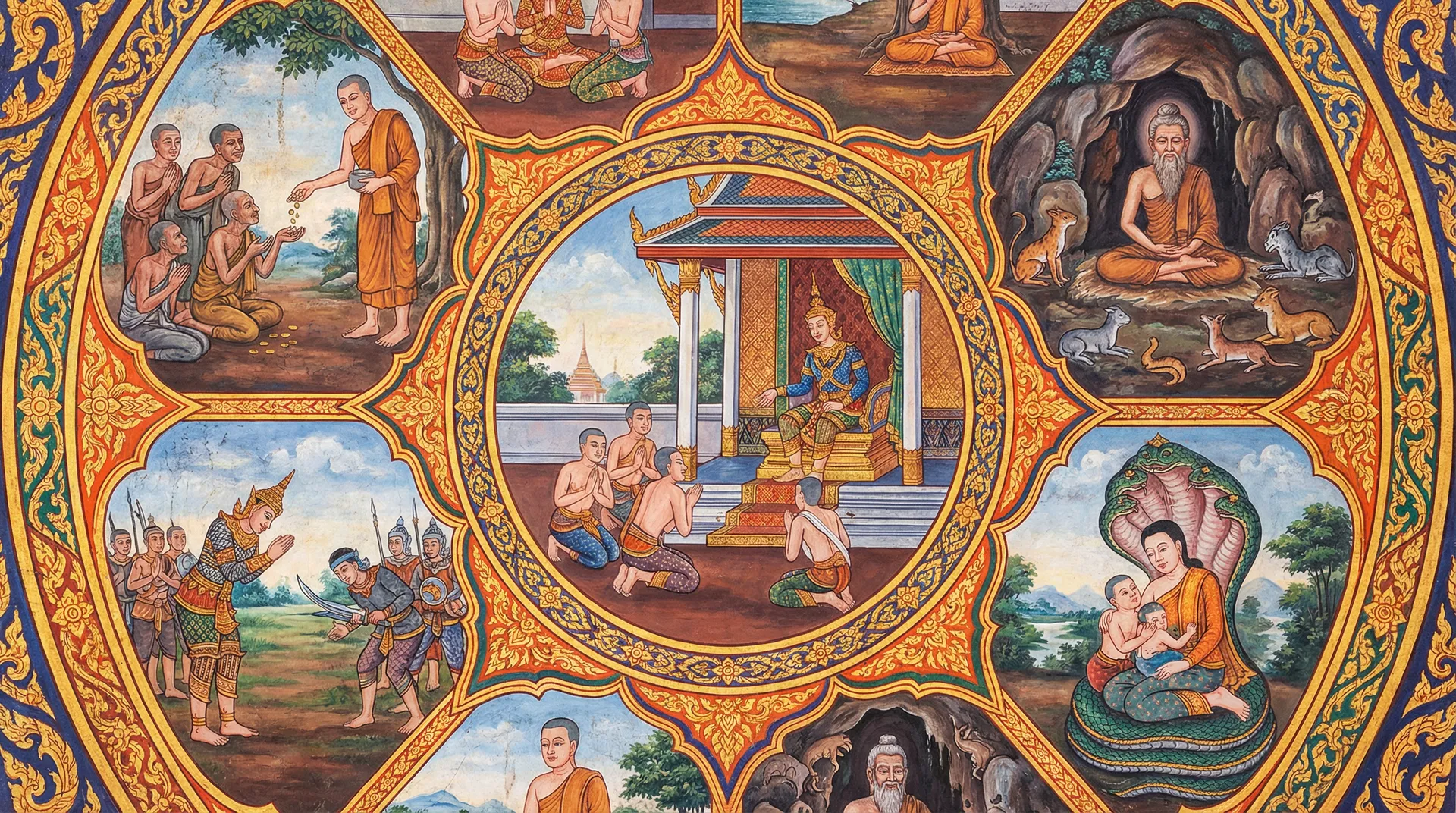
And so, Prince Vessantara began his great act of giving. First, he gave away his magnificent palace, the symbol of his royal status. He then distributed all his jewels, his gold, his fine horses, and his elephants. His attendants, his servants, even his chariots – all were given away to those in need. The people of Kusavati, initially bewildered, soon realized the immense virtue of their prince. They came in droves, their hearts filled with gratitude and awe.
The drought, however, persisted. Vessantara, having given away all his worldly possessions, found himself with nothing. Yet, his spirit remained undimmed. He continued to offer comfort, counsel, and solace to his people, sharing what little food he could find and inspiring hope with his unwavering faith. He knew that true generosity was not just about material gifts, but about giving oneself – one's time, one's compassion, one's very being.
One day, a holy ascetic, who had been meditating in the mountains for years, descended. He had heard of Prince Vessantara's extraordinary charity. He approached the prince, who was now living simply, helping to dig wells and tend to the sick. The ascetic said, 'Prince Vessantara, your generosity is legendary. But I have a request, a test of your virtue. I seek a gift that is most precious, a gift that embodies the ultimate act of giving.'
Vessantara looked at him, his eyes shining with understanding. 'Great ascetic,' he replied, 'I have nothing left of worldly value to give. But I can give you my life, if that is what you truly seek.'
The ascetic smiled, tears welling in his eyes. 'No, my prince. I do not seek your life. I seek the gift of your beloved wife, the princess, and your two devoted children. If you can give them to me willingly, with a pure heart, then your generosity will be complete, and your merit will be immeasurable.'
This was the ultimate test. Prince Vessantara loved his wife and children more than life itself. Yet, he saw in their eyes a reflection of his own compassionate spirit. He knew that true giving meant letting go of even the deepest attachments, for the sake of a greater good, for the welfare of all beings. With a heavy heart, but with unwavering resolve, he agreed.
He entrusted his wife and children to the care of Sakka, the king of the gods, who had appeared in disguise as the ascetic, testing the Bodhisatta's ultimate perfection. Sakka, deeply moved by Vessantara's selfless act, returned the princess and children to him, bestowing upon the kingdom the blessings of rain and prosperity. The drought ended, and Kusavati flourished once more.
Prince Vessantara's act of giving away his wife and children, though seemingly extreme, was a profound demonstration of the Bodhisatta's quest for supreme generosity. It was a lesson to the world that the highest form of charity involves transcending personal attachments and offering even the most precious things for the benefit of others, thereby cultivating immense merit and paving the path to enlightenment.
— In-Article Ad —
💡Moral of the Story
Supreme generosity is the ultimate form of charity, involving the willingness to give away even the most beloved possessions and relationships for the greater good. True giving transcends attachment and cultivates immeasurable merit.
Perfection: Generosity (Dana)
— Ad Space (728x90) —
More Jataka Tales You May Enjoy
 464Dvādasanipāta
Mugapakkha Jātaka
Mugapakkha JātakaIn the ancient land of Mithila, a realm renowned for its scholars and philosophers,...
💡 True strength and leadership are demonstrated through courageous actions and unwavering commitment, not necessarily through eloquent speech. Overcoming personal limitations and past karmic consequences requires inner strength and resolute will.
 494Pakiṇṇakanipāta
The Story of the Kind Merchant and the Fierce Tiger
The Story of the Kind Merchant and the Fierce Tiger In the bustling city of prosperity, there lived ...
💡 Compassion and kindness extended to those in need, even those who seem dangerous, can lead to unexpected gratitude and protection. True wealth is measured by our generosity and our ability to alleviate suffering.
445DasakanipātaTemiyavada Jataka
Temiyavada JatakaIn the kingdom of Supparaka, there was a prince named Temiya. From the moment of hi...
💡 True freedom and peace are found not in worldly possessions or status, but in detachment from suffering and the dedicated pursuit of spiritual liberation.
 435Navakanipāta
Saddanta Jataka
Saddanta JatakaIn the magnificent city of Pupphavati, renowned for its vibrant marketplaces and perf...
💡 True generosity lies in selfless giving, even at great personal cost. Compassion and forgiveness can transform even the most greedy and envious hearts, leading to spiritual awakening.
 354Pañcakanipāta
Phanasa Jataka
Phanasa Jataka In the ancient city of Ujjeni, lived a kind and virtuous Bodhisattva who was born as ...
💡 Integrity, unity, and perseverance are essential virtues, especially in times of hardship. Greed and selfishness lead to downfall.
 213Dukanipāta
Mahasutasoma Jataka
The Bodhisattva's Compassion for the King of the SerpentsIn a time long past, when the forests teeme...
💡 The greatest act of compassion is to willingly sacrifice oneself for the well-being of others, demonstrating that true strength lies in selfless love and universal kindness.
— Multiplex Ad —