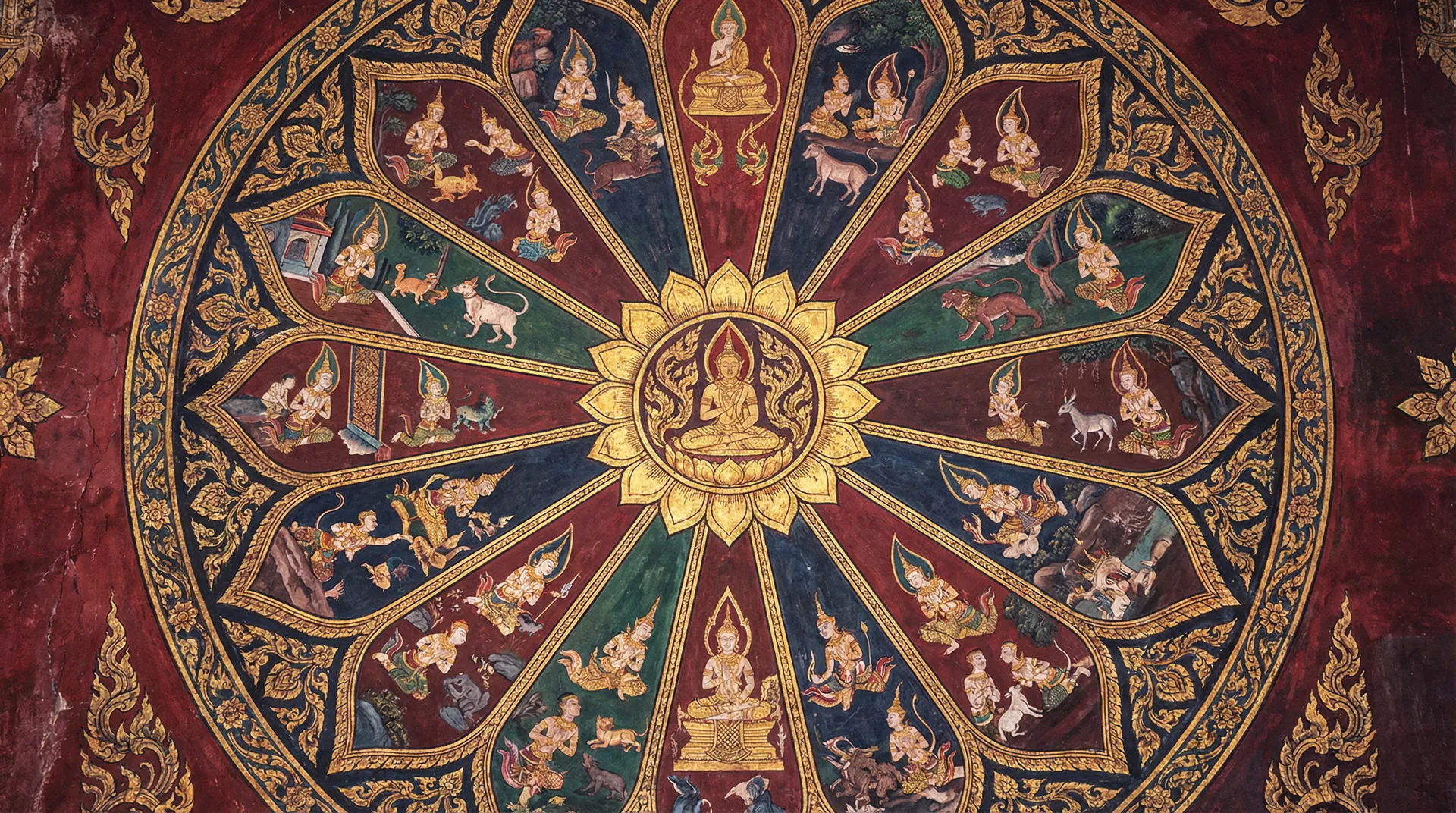
Sama Jataka
The Blind Ascetic and His Devoted Son
In the verdant land of Savatthi, there lived a venerable ascetic named Bodhisattva. He had renounced worldly pleasures and dedicated his life to spiritual pursuits, living a simple life in the forest with his wife and their only son, Sama. Sama was a devoted child, his heart filled with filial piety. He cared for his blind parents with unwavering love and diligence, fetching water, gathering fruits, and attending to their every need.
One day, while Sama was out gathering roots in the forest, the king of Savatthi, a keen hunter, was on a royal expedition. He was known for his skill with the bow and arrow, and his passion for the hunt. While traversing a dense part of the woods, the king spotted what he believed to be a deer. Without a second thought, he drew his bow and loosed an arrow.
The arrow, true to the king’s aim, struck its target. But instead of the expected thud of a deer carcass, a cry of pain echoed through the forest. The king, realizing his mistake, rushed to the scene and discovered, to his horror, that he had shot Sama, the devoted son of the blind ascetic. Sama lay bleeding, his life ebbing away.
The king, overwhelmed with grief and remorse, rushed to the ascetic’s hermitage to confess his terrible deed. He found the blind ascetic and his wife weeping, unaware of the cause of their son’s fatal injury. The king, his voice choked with emotion, explained what had happened. The ascetic, though blind, possessed a profound spiritual insight. He understood the king’s remorse but also felt the unbearable pain of losing his beloved son.
As Sama lay dying, he expressed his last wish: he did not want his parents to suffer from thirst. He asked the king to fetch water for them. The king, humbled and ashamed, readily agreed. He went to the stream, filled his quiver with water, and brought it back to the hermitage. The ascetic and his wife, unaware that the water was brought by the king, drank it gratefully.
However, the ascetic, through his spiritual power, sensed a change in the water. He realized that the king, in his remorse, had brought them water. 'My son is gone,' he lamented, 'but my prayers for my son’s well-being are answered. Though he is dead, his wish that we should not suffer from thirst has been fulfilled by the king, who has shown us compassion in our time of need. May the king be blessed for his actions, and may his conscience be eased.'
The king, deeply moved by the ascetic’s forgiveness and profound understanding, was struck by the immense virtue of both Sama and his parents. He realized the gravity of his impulsive act and the suffering it had caused. He vowed to dedicate himself to the welfare of the people, ensuring that such a tragedy would never befall anyone again.
From that day forward, the king ruled Savatthi with great compassion and justice. He established charitable institutions, provided for the needy, and made laws to prevent unnecessary harm. He often visited the hermitage, offering his support and respect to the grieving parents. The story of Sama’s devotion and the king’s remorse became a legend, reminding all of the importance of mindfulness, compassion, and the profound consequences of our actions.
The tale of Sama Jataka serves as a powerful reminder that even in the face of tragedy, forgiveness and compassion can pave the way for healing and redemption. It highlights the importance of filial piety, the virtues of a righteous ruler, and the profound impact of a single, thoughtless act.
— In-Article Ad —
💡Moral of the Story
Reckless actions, even unintentional ones, can have devastating consequences. True repentance involves not only acknowledging wrongdoing but also dedicating oneself to good deeds and compassion.
Perfection: Compassion, Forgiveness, Filial Piety
— Ad Space (728x90) —
More Jataka Tales You May Enjoy
 290Tikanipāta
The Bodhisatta as a Physician (Sutasoma Jātaka)
The Bodhisatta as a Physician (Sutasoma Jātaka) In the bustling city of Sāvatthī, a place renowned f...
💡 True compassion is shown through selfless action and unwavering dedication to alleviate suffering, even in the face of overwhelming adversity. The effort and intention are as important as the outcome.
 241Dukanipāta
Nimi Jataka
Nimi JatakaIn the celestial realm, where clouds of spun gold drifted lazily across a sky of perpetua...
💡 True bliss is found not just in the enjoyment of past merits, but in the continuous cultivation of virtue and wisdom in the present moment.
159DukanipātaNimi Jataka
Nimi JatakaIn the ancient land of Videha, there ruled a king named Nimi. King Nimi was a paragon of ...
💡 Understanding the law of karma and the consequences of one's actions is essential for cultivating virtue and progressing towards liberation.
179DukanipātaMahāpuṇṇa Jātaka
Mahāpuṇṇa JātakaIn the heart of the kingdom of Kasi, a land blessed with fertile soil and a prospero...
💡 By consciously pausing and reflecting when anger arises, one can gain control over impulsive reactions, leading to wiser decisions, improved relationships, and inner peace. Cultivating patience and understanding is a path to great merit.
 135Ekanipāta
Vessantara Jataka
The Tale of the Generous Prince Vessantara In the kingdom of Siwi, ruled a wise and benevolent king....
💡 True generosity extends beyond material possessions; it involves the willingness to sacrifice even the most cherished aspects of one's life for the sake of others and one's principles.
10EkanipātaThe Bodhisatta as a Tortoise
The Bodhisatta as a TortoiseIn the tranquil embrace of a sacred forest, where ancient trees formed a...
💡 The ultimate act of compassion, even at the cost of one's own life, can bring forth miraculous salvation.
— Multiplex Ad —