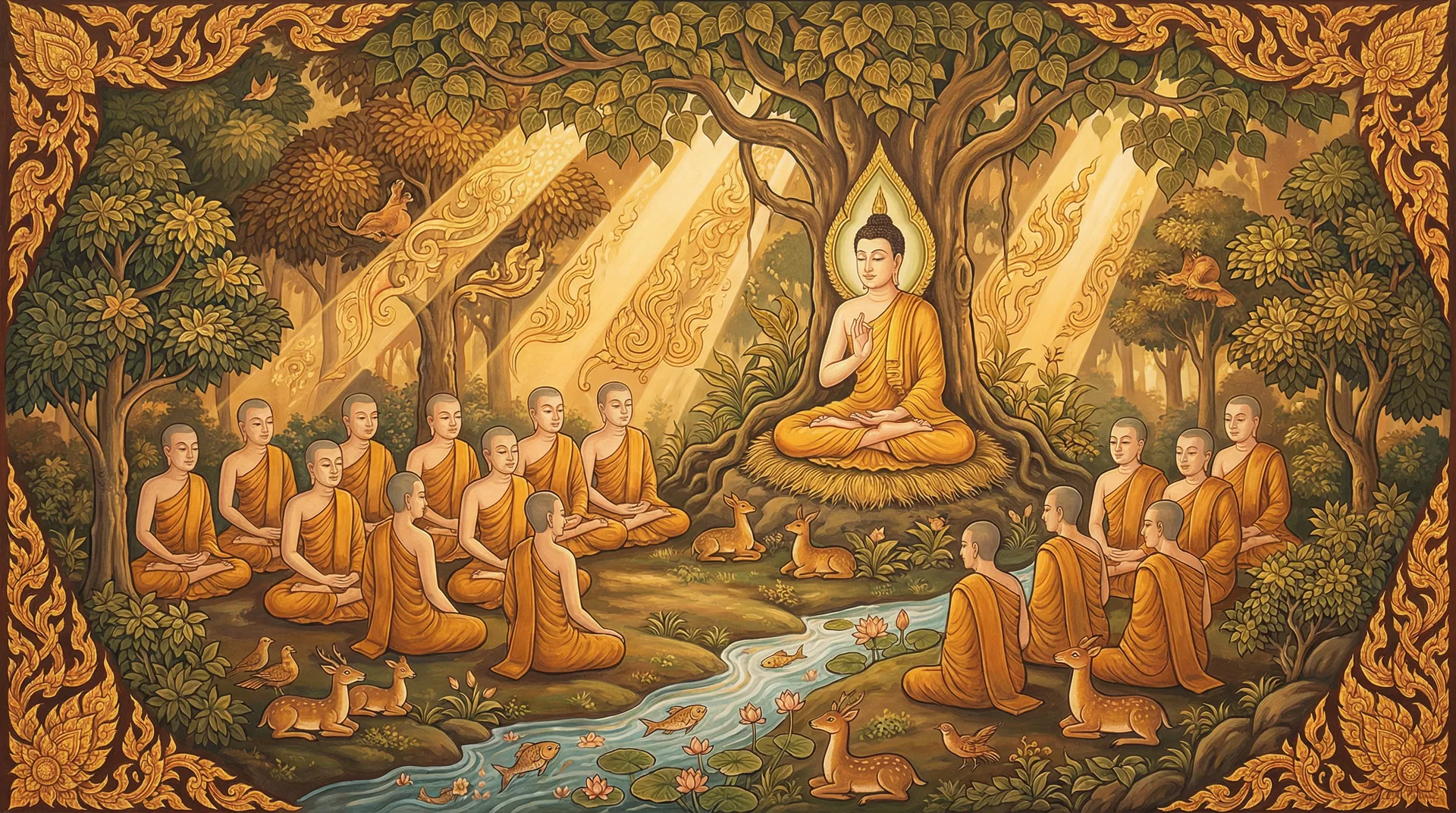
Mūga-pakkhajātaka
The Tale of the Silent Swan
In the ancient kingdom of Mithila, nestled amidst rolling hills and verdant plains, lived a king named Vidhuratha. He was a just and benevolent ruler, beloved by his subjects. Yet, despite his outward prosperity, a deep sadness often shadowed his heart. He longed for a son, an heir to carry on his lineage and his ideals of righteous governance. His queen, a woman of grace and wisdom, shared his yearning, but their prayers remained unanswered by the heavens. The royal court buzzed with whispers of impending succession, a hushed anxiety that settled over the once joyous palace.
One fateful night, the queen dreamt of a magnificent swan, its plumage as white as freshly fallen snow, its eyes like polished obsidian. The swan, with an ethereal glow, spoke to her in a voice like the gentle rustling of leaves, promising a child of unparalleled wisdom and virtue, but with a peculiar condition: the child would be born mute, unable to utter a single sound until the age of sixteen.
The queen awoke, her heart filled with a mixture of hope and trepidation. She shared her dream with the king, who, though initially perplexed by the prophecy of silence, embraced it with faith. Their hope blossomed, and soon, the queen bore a son, Prince Uddhava. As foretold, the prince was beautiful and healthy, but utterly silent. He communicated through gestures, his eyes conveying a depth of understanding that belied his inability to speak. He learned with astonishing speed, absorbing knowledge from his tutors like a sponge. He mastered the arts of warfare, diplomacy, and philosophy, his mind a fertile ground for wisdom.
Years passed, and Prince Uddhava grew into a young man of extraordinary character. He was kind, compassionate, and possessed a keen intellect. He observed the world around him with a quiet intensity, his silence allowing him to perceive nuances that others missed. The king and queen, though proud, felt a pang of sorrow whenever they considered the day their son would turn sixteen. Would he truly find his voice? And if so, what would he say?
As the prince’s sixteenth birthday approached, a grave crisis befell the kingdom of Mithila. A neighboring kingdom, ruled by the ambitious and ruthless King Kalasingha, launched a surprise invasion. King Kalasingha, envious of Mithila's peace and prosperity, sought to annex its fertile lands and subjugate its people. The king’s armies, though brave, were caught off guard. Panic rippled through the kingdom. Messengers, breathless and terrified, brought dire news of advancing enemy forces.
King Vidhuratha, a man of peace, found himself in a desperate situation. His advisors clamored for immediate action, suggesting various strategies, but fear and uncertainty clouded their judgment. The king, burdened by the weight of his kingdom's fate, paced the royal chambers, his brow furrowed with worry. He loved his son dearly and had always shielded him from the harsh realities of the world, but now, he saw the glint of steel in his son’s eyes. Prince Uddhava, for the first time, seemed to be urging him towards a decision, his gestures more forceful than usual.
On the morning of his sixteenth birthday, as the enemy’s war horns blared in the distance, Prince Uddhava stood before his father. He looked at the king with an unwavering gaze, a silent plea in his eyes. Then, he did something extraordinary. He picked up a piece of charcoal and, with a steady hand, began to draw on a smooth, polished stone tablet. He sketched the battlefield, the deployment of their own forces, and the enemy’s formations with astonishing accuracy. He then drew a strategic maneuver, a daring plan that involved a feigned retreat and a swift counter-attack on the enemy’s flank, a move that would exploit a weakness he had observed from his quiet vantage point.
The king and his advisors watched in stunned silence. The prince’s drawings were not just accurate; they were brilliant. They spoke of a strategic mind that far surpassed any they had encountered. As the last stroke of charcoal fell, Prince Uddhava looked at his father and, for the first time, opened his mouth. His voice, though soft, was clear and resonant, carrying the weight of sixteen years of unspoken thoughts. “Father,” he said, his voice a gentle melody, “this is how we shall win.”
The king, overcome with emotion, embraced his son. The advisors, humbled and inspired, immediately began to implement the prince's plan. Prince Uddhava, now endowed with his voice, personally led a contingent of soldiers, his strategic brilliance guiding them through the treacherous battlefield. His silent observation had given him an unparalleled understanding of the enemy’s movements, and his newfound voice allowed him to issue clear, decisive commands. The feigned retreat lured the enemy into a trap, and the swift counter-attack shattered their ranks. King Kalasingha's forces were routed, and Mithila was saved.
The kingdom rejoiced. Prince Uddhava, no longer the silent prince, became a celebrated hero. His wisdom, once expressed through silent observation and gesture, now flowed freely through his eloquent words. He continued to serve his kingdom, becoming a wise and respected ruler after his father's passing. His silence had not been a weakness, but a crucible that forged his extraordinary intellect and deep understanding of the world, a testament to the fact that true strength often lies not in what is spoken, but in what is understood.
— In-Article Ad —
💡Moral of the Story
True wisdom can be cultivated in silence, and the ability to observe and understand is a powerful weapon. Sometimes, the most profound insights come from those who listen more than they speak.
Perfection: Patience and Wisdom
— Ad Space (728x90) —
More Jataka Tales You May Enjoy
 533Mahānipāta
Kusa Jātaka
Kusa JātakaIn the ancient kingdom of Kampilla, ruled a just and virtuous king named Okkāka. His reig...
💡 Integrity and truth will always prevail over deceit and envy. True nobility lies not in birthright, but in character, compassion, and the unwavering commitment to justice, even when faced with personal adversity.
 249Dukanipāta
Sarabhanga Jataka
Sarabhanga JatakaIn the ancient land of Gandhara, amidst rolling hills and fertile valleys, lived a ...
💡 True strength lies not in external power or worldly achievements, but in the unwavering discipline and mastery of one's own mind.
178DukanipātaMūgapakkha Jātaka
Mūgapakkha JātakaIn the bustling city of Varanasi, renowned for its vibrant arts and thriving commer...
💡 True wisdom is not always expressed through eloquent words. Deep observation, keen discernment, and insightful actions can reveal truths that speech may conceal. Silence can be a powerful medium for conveying profound understanding.
163DukanipātaMaha-Ummagga Jataka
The Great Wisdom of Prince Vessantara (The King of Wisdom)In the magnificent city of Jetuttara, rule...
💡 True generosity lies in selfless giving, not for recognition or reward, but for the alleviation of suffering and the pursuit of peace. Wisdom is found in understanding the impermanence of possessions and transcending attachment.
213DukanipātaMahasutasoma Jataka
The Bodhisattva's Compassion for the King of the SerpentsIn a time long past, when the forests teeme...
💡 The greatest act of compassion is to willingly sacrifice oneself for the well-being of others, demonstrating that true strength lies in selfless love and universal kindness.
166DukanipātaMūga-pakka Jātaka
Mūga-pakka JātakaIn the heart of a lush, vibrant jungle, where ancient trees reached for the heavens...
💡 True wisdom and leadership can manifest in many forms, and understanding transcends spoken words. Trust and keen observation are vital in interpreting silent guidance.
— Multiplex Ad —