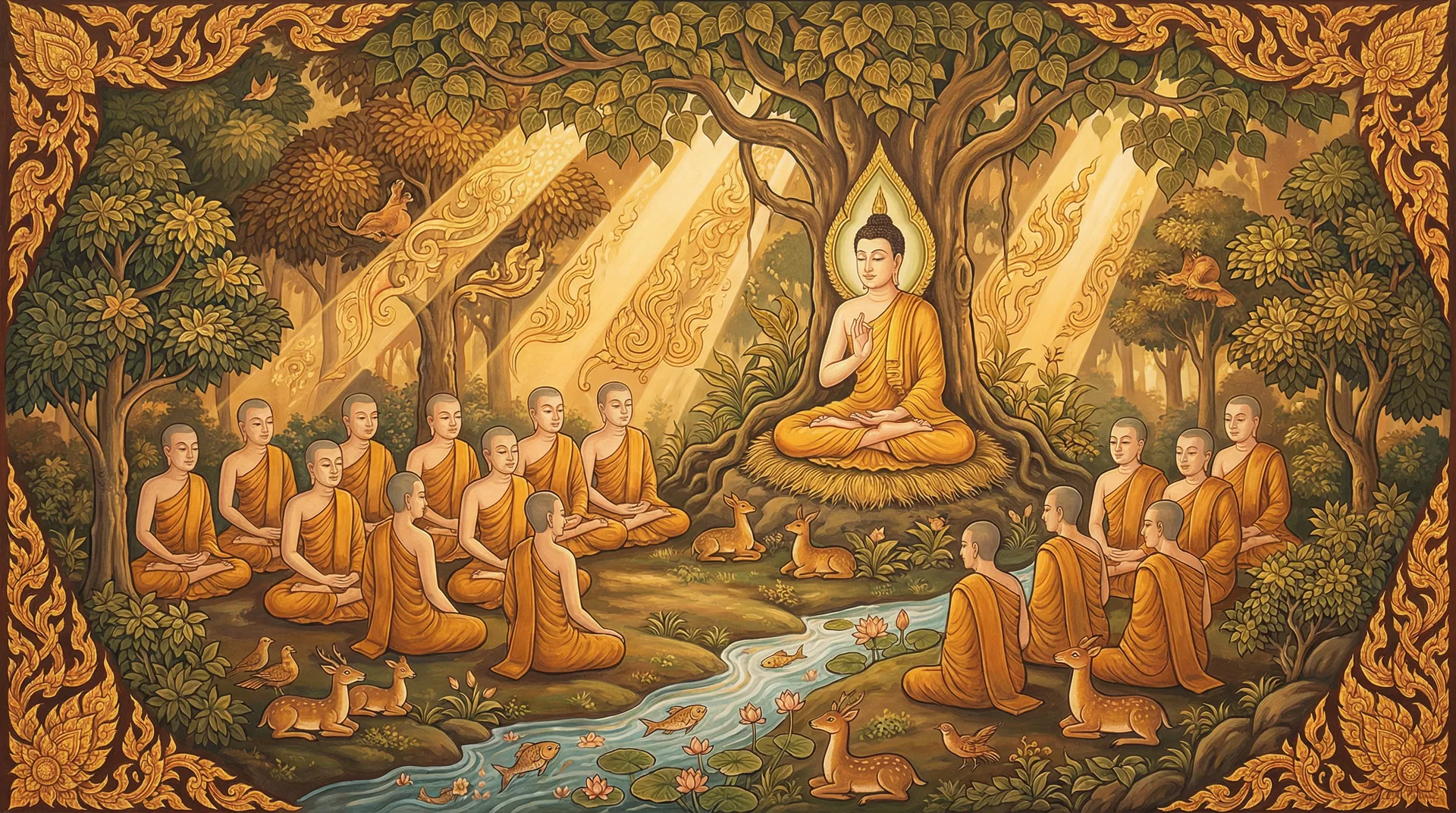
Mahā-pattakajātaka
The Tale of the Generous King
In the ancient land of Kalinga, renowned for its fertile fields and prosperous trade, ruled a king named Mahāpattaka. He was a ruler of immense wealth and power, his coffers overflowing with gold and jewels, his granaries filled to the brim. Yet, despite his vast riches, King Mahāpattaka harbored a secret desire: he yearned to be a truly generous king, to give so much that his name would be etched in history as the epitome of giving.
His queen, a woman of discerning taste and practical wisdom, often advised caution. “Your Majesty,” she would say, “while generosity is a noble virtue, one must also ensure the welfare of the kingdom. We must not deplete our resources entirely, lest we leave our people vulnerable.” But the king, swept up in the fervor of his ambition, rarely heeded her counsel.
King Mahāpattaka’s generosity knew no bounds. He distributed gold to the poor, gifted precious stones to visiting dignitaries, and ordered the construction of magnificent temples and charitable institutions. He even had his royal treasury opened, allowing anyone with a genuine need to approach and receive assistance. His palace was a constant hub of activity, filled with people seeking aid, and the king’s heart swelled with pride with each act of giving.
One day, a wise old ascetic, his body thin and his robes threadbare, approached the king. He did not ask for gold or jewels. Instead, he looked at the king with piercing eyes and said, “Your Majesty, you are known for your generosity. But I pose a question to you: what is the greatest gift one can bestow?”
The king, taken aback by the question, pondered for a moment. He thought of the vast wealth he had distributed. “Surely,” he declared, “the greatest gift is wealth. For with wealth, one can alleviate suffering, build great works, and fulfill many desires.”
The ascetic smiled faintly. “Wealth is indeed a significant gift, Your Majesty. But there is a gift that surpasses even the greatest wealth. It is the gift of oneself, the offering of one’s own life for a noble cause.” With these words, the ascetic vanished, leaving the king deeply contemplative.
The king’s mind was consumed by the ascetic’s words. He wrestled with the concept. Giving away his possessions was one thing, but giving away his life? It seemed an extreme, almost unthinkable, proposition. He discussed it with his advisors, who were horrified. “Your Majesty, this is madness!” they exclaimed. “A kingdom needs its king. To give away your life is to abandon your people.”
However, the king’s desire to embody the ultimate act of generosity grew stronger. He spent days in meditation and prayer, seeking clarity. He observed the suffering in the world, the injustices, and the pervasive fear, and he felt a growing conviction that a selfless act of ultimate sacrifice could bring about a profound transformation, not just for him, but for the world.
One evening, a great famine struck a neighboring kingdom. The land was parched, the crops withered, and people were starving. Reports reached King Mahāpattaka of widespread suffering and despair. He felt a pang of deep empathy. He knew that his kingdom’s resources, while plentiful, could not possibly alleviate the suffering of an entire neighboring nation.
He summoned his queen and his most trusted advisors. With a calm and resolute voice, he announced his decision. “I have come to understand the true meaning of generosity,” he said. “It is not merely about giving what we possess, but about giving what is most precious to us. For the sake of the suffering people of our neighboring kingdom, I have decided to offer my own life.”
The queen wept, pleading with him. His advisors protested vehemently. But the king’s resolve was unshakeable. He explained that he had arranged for his body to be offered as a sacrifice at a sacred shrine, believing that his selflessness would appease the heavens and bring an end to the famine. He entrusted the care of his kingdom and his queen to his most capable minister, ensuring that his people would be well-governed in his absence.
With a heavy heart but a clear conscience, King Mahāpattaka proceeded to the sacred shrine. He performed his final rituals, offered his last prayers, and then, with unwavering courage, laid down his life. The act was one of profound selflessness, driven by a deep compassion for the suffering of others.
Miraculously, as if the heavens themselves responded to his sacrifice, the famine in the neighboring kingdom began to recede. Rains fell, the land revived, and the people were saved. News of the king’s ultimate act of generosity spread far and wide, inspiring awe and reverence. His name became legendary, not for the wealth he gave away, but for the immeasurable gift of his own life.
The people of Kalinga mourned their king, but they also celebrated his noble spirit. His queen, though heartbroken, understood the depth of his conviction and the purity of his intentions. The king’s sacrifice became a cornerstone of the kingdom’s history, a powerful reminder that the greatest generosity stems from a selfless heart, willing to give even the most precious of all possessions – life itself – for the well-being of others.
— In-Article Ad —
💡Moral of the Story
The greatest act of generosity is the selfless offering of oneself for the well-being of others. True giving comes from the heart and involves sacrifice.
Perfection: Generosity and Selflessness
— Ad Space (728x90) —
More Jataka Tales You May Enjoy
 219Dukanipāta
Sujambara Jataka
Sujambara JatakaIn the heart of a vast and ancient forest, where towering trees formed a canopy that...
💡 Greed and the pursuit of material wealth can lead to one's downfall. True riches lie in living in harmony with nature and cultivating compassion.
 307Catukkanipāta
Sūci-Jātaka
The Needle's TaleIn the vibrant city of Kosambi, lived a king named Bhimasena. He was known for his ...
💡 True value is found not in the material itself, but in the skill, patience, and mindfulness with which it is used. Every action should be purposeful, flowing seamlessly into the next, minimizing waste and maximizing the impact of our efforts.
 461Ekādasanipāta
Mahāsutasoma Jātaka
Mahāsutasoma JātakaIn the heart of a lush, verdant kingdom, nestled beside the roaring currents of a...
💡 True liberation from suffering comes not from indulging desires, but from transcending them through selfless compassion and sacrifice. The consequences of past actions can be overcome by present acts of great merit.
182DukanipātaBhisa Jātaka
The Tale of the Water Lily SeedLong ago, in the vibrant kingdom of Kashi, there reigned a just and c...
💡 Sustainable prosperity and success are achieved through patience, meticulous care, and understanding the specific needs of a situation, much like nurturing a delicate plant. Hasty actions and neglect of fundamental conditions lead to failure.
 524Mahānipāta
Cullakapadaka Jataka
Cullakapadaka JatakaIn the flourishing city of Varanasi, the Bodhisatta was once born as a young asc...
💡 True wealth is not measured in material possessions but in inner contentment, wisdom, and detachment from greed. The greatest gift is the realization of one's own folly and the pursuit of inner peace.
 449Dasakanipāta
Kacchapa Jataka
Kacchapa Jataka In the ancient city of Savatthi, nestled beside a great river, lived a community of ...
💡 Respect for nature and ecological balance is paramount for survival and prosperity. Our actions have consequences, and neglecting our responsibility towards the environment will inevitably lead to suffering.
— Multiplex Ad —