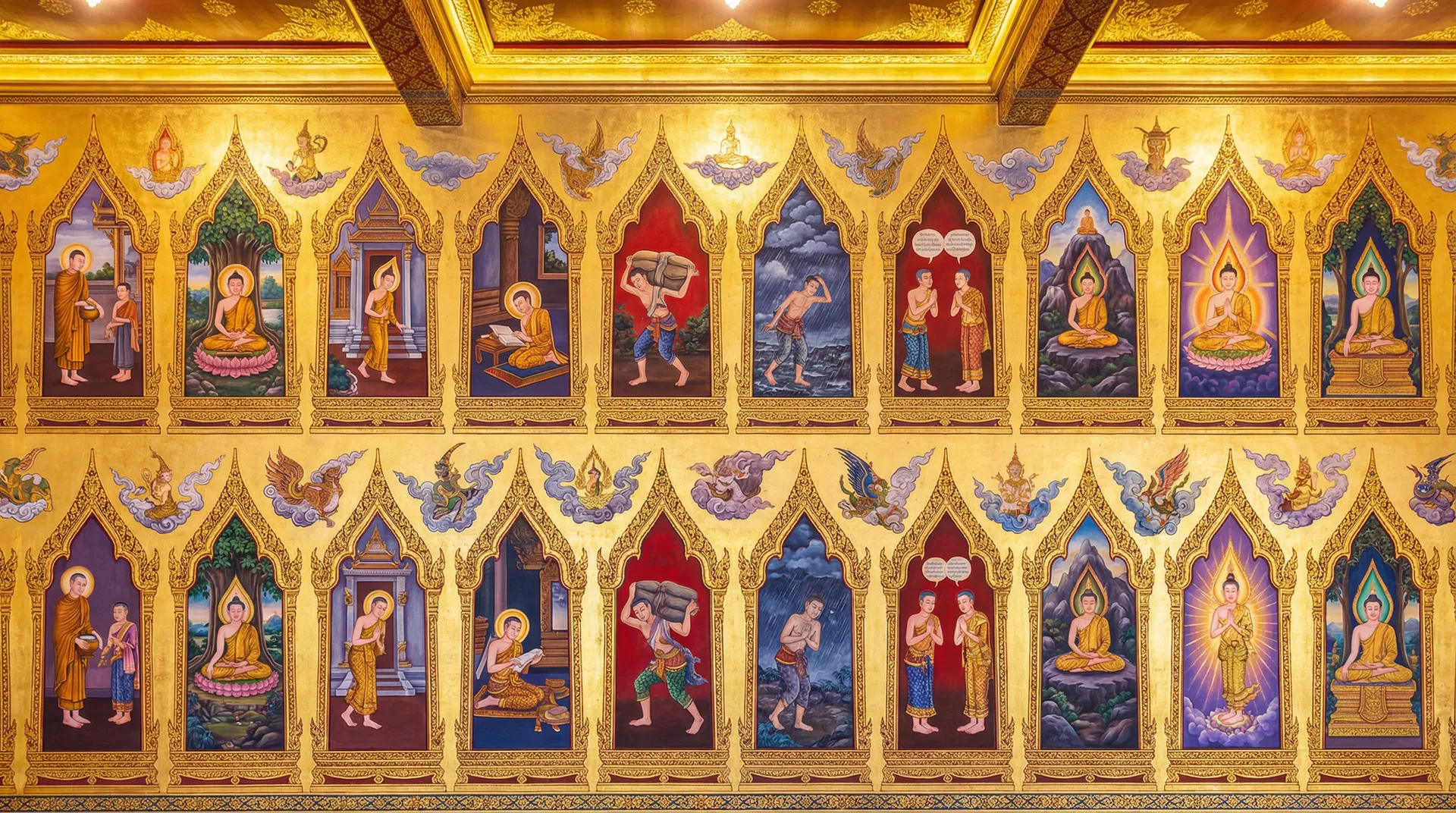
Mahājanaka Jātaka
Mahājanaka Jātaka
In the ancient kingdom of Mithila, nestled beside the great ocean, lived a wise and benevolent king named Suppāraka. His reign was marked by peace and prosperity, but a dark cloud loomed: the king had no heir. One fateful day, as the king meditated upon his kingdom's future, a celestial voice whispered a prophecy: his queen would soon bear a son, a prince destined for greatness, but one who would face immense trials before claiming his rightful throne.
True to the prophecy, Queen Maddī gave birth to a son, Prince Mahājanaka. The kingdom rejoiced, celebrating the arrival of their future king. Prince Mahājanaka grew into a young man of remarkable intellect and strength, trained in the arts of statecraft and warfare. However, the whispers of the prophecy, though unheard by most, weighed heavily on the young prince's mind. He felt an inexplicable pull towards the unknown, a sense of destiny that transcended the comfortable life of royalty.
One day, a desperate plea reached the palace. A neighboring kingdom, ruled by a tyrannical usurper, was on the brink of collapse. The rightful heir, a young princess, had been overthrown and was in hiding. The people, yearning for justice, sent emissaries to King Suppāraka, hoping for his intervention. Though King Suppāraka was old and weary, he saw in this plea a chance for his son to hone his leadership skills and fulfill his potential.
He summoned Prince Mahājanaka. 'My son,' the king began, his voice raspy with age, 'a grave injustice has befallen our neighbors. Their kingdom cries out for a righteous leader. I believe this is a path your destiny has laid before you. Will you answer their call?'
Prince Mahājanaka, though a prince, had always possessed a spirit of adventure and a deep sense of duty. He bowed his head. 'Father, I shall go. I will do all in my power to restore justice to their land.'
With a heavy heart, King Suppāraka blessed his son and dispatched him with a small contingent of his bravest warriors. As they journeyed towards the beleaguered kingdom, Prince Mahājanaka felt a growing sense of purpose. He knew this was not merely a political mission, but a test of his character, a crucible in which his true mettle would be forged.
Upon arriving at the border, they were met with a scene of desolation. Villages lay in ruins, and the faces of the people were etched with fear and despair. The usurper's reign had been one of cruelty and oppression. Prince Mahājanaka, seeing this suffering, was filled with righteous anger. He knew he had to act swiftly.
He rallied the downtrodden populace, his words a beacon of hope in their darkest hour. He spoke of courage, of unity, and of the enduring strength of a just cause. The people, inspired by his conviction and bravery, pledged their allegiance to him. They had found a leader they could believe in.
The ensuing campaign was fraught with peril. The usurper, a ruthless warlord named Kamsa, commanded a formidable army. Battles raged, and Prince Mahājanaka, leading from the front, displayed extraordinary courage and strategic brilliance. He fought not for glory, but for the liberation of the innocent. Many times, his life hung in the balance, but each time, he emerged victorious, his resolve only strengthened.
During one particularly fierce engagement, Prince Mahājanaka found himself surrounded by Kamsa's elite guards. His warriors had fallen, and he stood alone, his sword stained with the blood of his enemies. Kamsa himself, a hulking brute with a cruel sneer, advanced towards him. 'So, the little prince thinks he can defy me?' Kamsa taunted, his voice a low growl. 'You will soon learn the futility of your rebellion.'
Prince Mahājanaka, though weary, stood tall. 'Tyranny will never triumph over justice, Kamsa. Your reign of terror ends today!' he declared, his voice ringing with authority. A fierce duel ensued. Kamsa fought with brute force, but Prince Mahājanaka countered with agility and skill, his movements precise and deadly. The fate of the kingdom hung in the balance, the clash of their swords echoing through the battlefield.
In the end, Prince Mahājanaka, through sheer determination and a well-timed maneuver, disarmed Kamsa and stood over him, his sword at the tyrant's throat. Kamsa, defeated and disgraced, begged for his life. Prince Mahājanaka, though tempted by vengeance, remembered his teachings of compassion. He spared Kamsa, but banished him from the kingdom, stripping him of all power and influence.
With Kamsa gone, Prince Mahājanaka restored order to the land. He brought justice to the people, rebuilt the destroyed villages, and reinstated the rightful princess to her throne. The kingdom rejoiced, showering Prince Mahājanaka with gratitude and praise. They offered him the crown, but he humbly refused, stating that his duty was fulfilled, and his heart belonged to his own kingdom.
Upon his return to Mithila, King Suppāraka was overjoyed to see his son safe and victorious. Prince Mahājanaka had not only proven himself a capable leader but had also demonstrated the qualities of a true king: courage, compassion, and unwavering integrity. He had faced his trials and emerged stronger, wiser, and more resolute than ever before. The prophecy was fulfilled, not through destiny alone, but through his own unwavering efforts and virtuous actions.
— In-Article Ad —
💡Moral of the Story
True leadership is not about claiming power, but about serving others with courage, compassion, and unwavering integrity. Even in the face of overwhelming adversity, one's determination and virtuous actions can lead to victory and justice.
Perfection: Courage (Virya), Generosity (Dana), Wisdom (Prajna)
— Ad Space (728x90) —
More Jataka Tales You May Enjoy
 312Catukkanipāta
Mahosadha Jataka
Mahosadha JatakaIn the ancient city of Mithila, renowned for its bustling marketplaces and magnifice...
💡 True wisdom lies in understanding the heart of matters and the nature of beings, leading to just and insightful solutions.
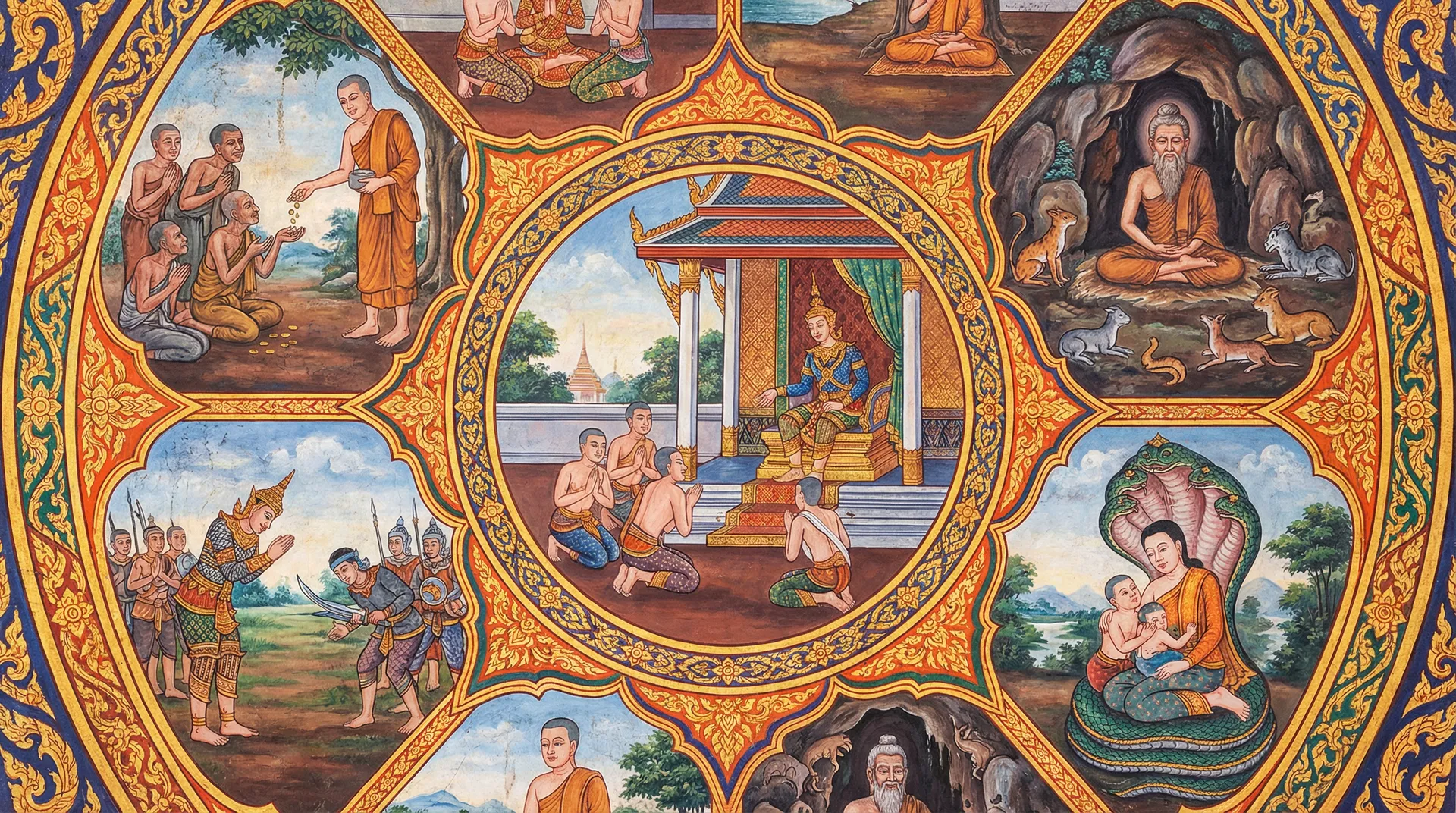 368Pañcakanipāta
MAHAPADUMA JATAKA
MAHAPADUMA JATAKAIn the ancient Kingdom of Mithila, ruled a king named Dighiti, a benevolent monarch...
💡 Envy and ambition are destructive forces that lead to heinous crimes and immense suffering. Truth and justice, though sometimes delayed, will ultimately prevail. True royalty is characterized by wisdom, compassion, and the ability to admit and atone for one's mistakes.
 283Tikanipāta
Sādhina Jātaka
Sādhina JātakaIn the sun-drenched kingdom of Kalinga, ruled a king named Sādhina, whose reign was ma...
💡 True wealth is not measured by material possessions, but by the well-being of one's people and the purity of one's heart. Greed leads to suffering and the decline of prosperity.
284TikanipātaMahāpaduma Jātaka
Mahāpaduma JātakaIn the heart of a lush forest, far from the clamor of human settlements, lived a Bo...
💡 True beauty and value lie within the heart, not in external possessions or trophies. Greed and cruelty ultimately lead to sorrow and regret.
315CatukkanipātaTemiya Jataka
Temiya JatakaIn the grand city of Varanasi, nestled beside the sacred Ganges, ruled a wise and just ...
💡 True liberation comes from understanding the impermanence of worldly life and the suffering it entails, leading to detachment and the pursuit of spiritual freedom.
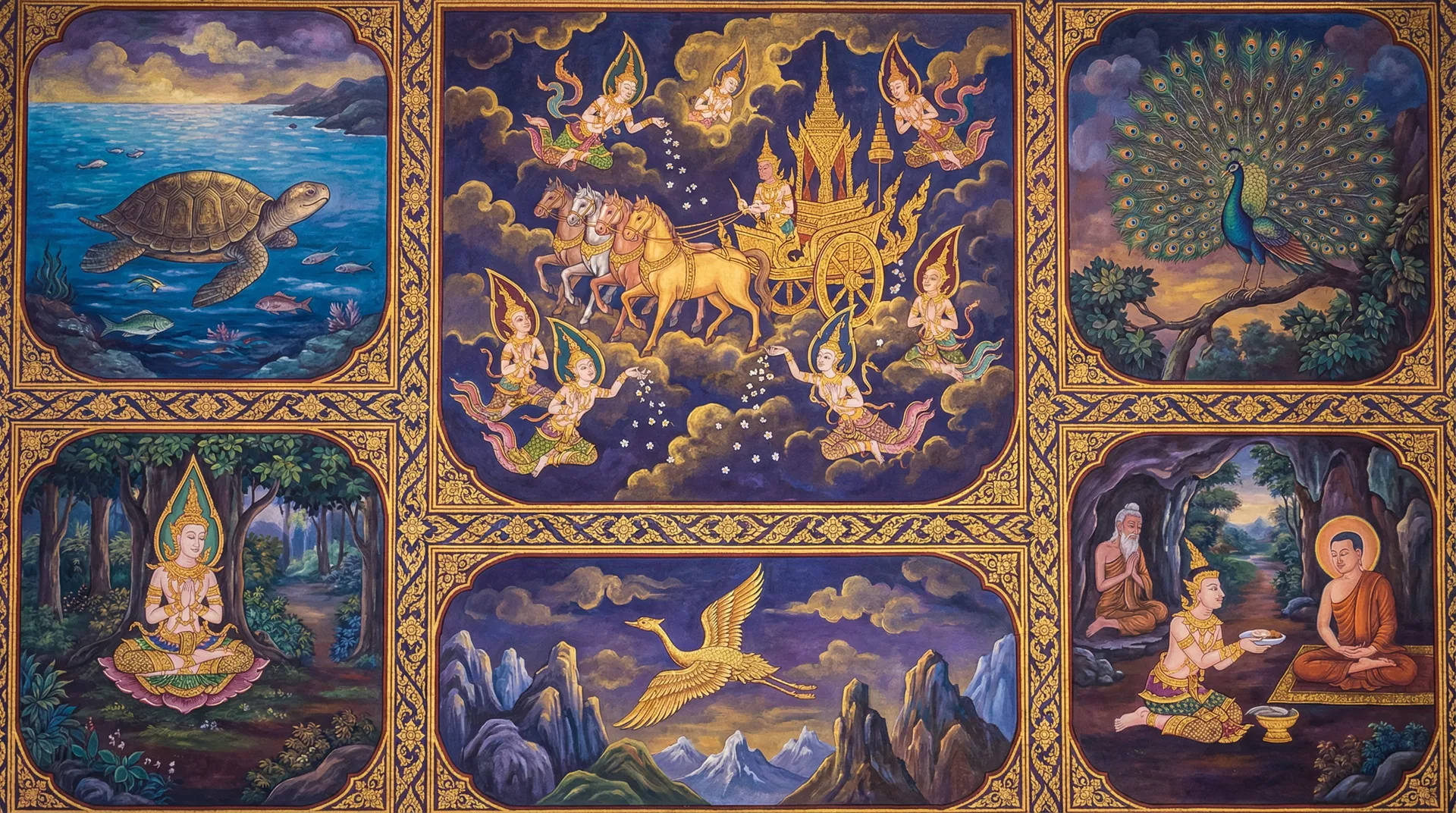 405Sattakanipāta
Vidhurapandita Jataka
Vidhurapandita JatakaIn the bustling city of Indapatta, capital of the kingdom of Kuru, ruled King D...
💡 Integrity, wisdom, and adherence to truth are the greatest shields against danger and deception, and ultimately lead to liberation and respect.
— Multiplex Ad —