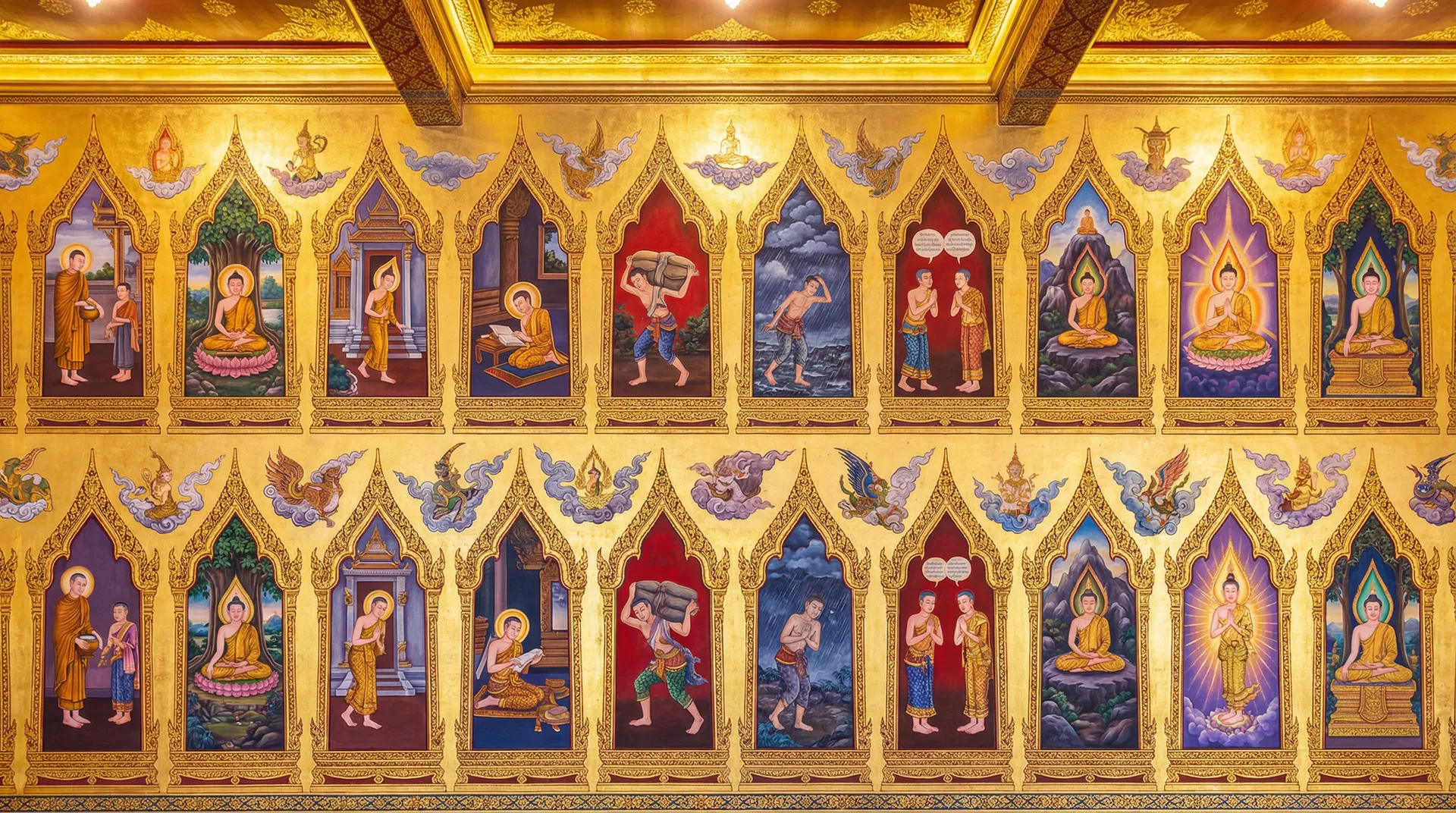
Mahakappina Jataka
The Tale of King Mahakappina and the Joy of Renunciation
Long ago, in the prosperous city of Savatthi, ruled a king named Mahakappina. He was a just ruler, beloved by his subjects, and his kingdom was a land of abundance. Yet, despite all his worldly possessions and the adoration of his people, a deep sense of unease often settled upon the king's heart. He found himself constantly seeking something more, a fulfillment that wealth and power could not provide.
One day, while observing the bustling marketplace, his gaze fell upon a solitary ascetic meditating beneath a banyan tree on the outskirts of the city. The ascetic, with his serene countenance and utter detachment from the surrounding chaos, captivated the king. A powerful yearning arose within Mahakappina – a desire to understand the source of such profound peace.
That evening, the king summoned his most trusted advisor. "My friend," he began, his voice filled with a new intensity, "I have a strange request. I wish to abdicate my throne and seek the path of renunciation. I feel a pull towards a life of simplicity, a life dedicated to understanding the true nature of existence."
The advisor, though taken aback, understood the king's sincere yearning. "Your Majesty," he replied, "your desire is noble. However, a kingdom is a complex entity. Your departure would leave a void that could lead to unrest. Perhaps there is a way to find peace without abandoning your responsibilities entirely."
But King Mahakappina's mind was set. He saw the ephemeral nature of worldly pleasures and the fleeting grasp of power. He longed for an unshakeable peace, a joy that transcended the ups and downs of life.
The next morning, the king made a momentous decision. He gathered his ministers and announced his intention to relinquish the throne. He appointed his capable and trusted nephew, whom he had secretly trained in the art of governance, to succeed him. He then, with a heart surprisingly light, walked out of the palace, dressed in simple robes, and made his way towards the banyan tree where the ascetic meditated.
Upon seeing the king approach, the ascetic opened his eyes. "Welcome, King Mahakappina," he said, his voice calm and resonant. "I have been expecting you."
Mahakappina, humbled and awestruck, bowed low. "Venerable sir," he said, "I have come to learn from you. My kingdom was prosperous, my life filled with comfort, yet I found no true joy. I seek the path that leads to lasting peace."
The ascetic smiled gently. "The joy you seek, King Mahakappina, is not found in acquiring more, but in letting go. It is in understanding that true happiness arises not from external circumstances, but from within. It is the joy of freedom from attachment, the peace of a mind unburdened by desire."
Under the tutelage of the ascetic, Mahakappina embraced the life of a renunciate. He shed the trappings of royalty, the pride of power, the anxieties of governance. He learned to meditate, to observe his thoughts without judgment, to find contentment in the simplest of things. He discovered that by giving up the illusion of control, he had gained true control over his own mind and emotions.
His days were filled with a profound sense of peace and clarity. He understood that the greatest wealth was not gold or jewels, but the freedom from suffering. He found joy in the chirping of birds, the rustling of leaves, the warmth of the sun on his skin. He had renounced a kingdom, but he had gained an immeasurable inner kingdom, a realm of boundless joy.
Meanwhile, back in Savatthi, the new king, Mahakappina's nephew, ruled with wisdom and compassion, guided by the principles his uncle had instilled in him. The kingdom continued to prosper, for the people were accustomed to just and benevolent leadership.
Years passed. King Mahakappina, now a respected elder and spiritual guide, was walking with his disciples when he passed by the very city he once ruled. He saw the prosperity, the happiness of the people, and felt no regret, only a deep sense of gratitude for the path he had chosen. He had proven that true renunciation was not an act of loss, but an act of profound gain – the gain of inner freedom and lasting joy.
He continued his journey, his heart filled with the serene joy of a soul liberated from the chains of worldly attachment. He had found the fulfillment he had so earnestly sought, not in the palaces of kings, but in the quiet solitude of a liberated mind.
— In-Article Ad —
💡Moral of the Story
True happiness and fulfillment are found not in the accumulation of worldly possessions or power, but in the practice of detachment and renunciation. Letting go of attachments leads to inner freedom and lasting peace.
Perfection: Renunciation (Nekkhamma)
— Ad Space (728x90) —
More Jataka Tales You May Enjoy
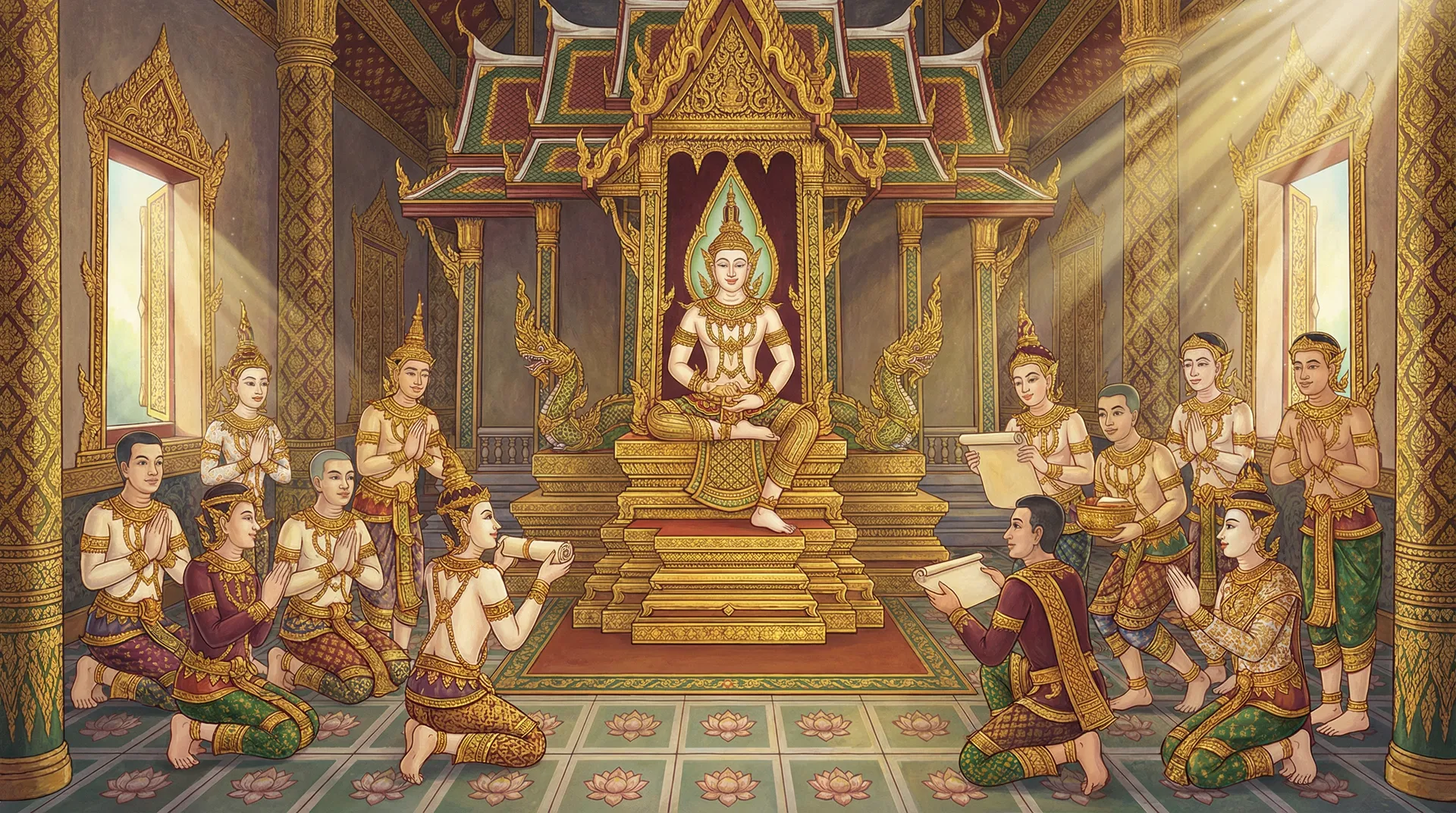 517Vīsatinipāta
Mahāsuvanna Jataka
The Golden Swan's FlightIn the ancient city of Mithila, nestled beside a shimmering lake, lived a ki...
💡 True power and prosperity are not achieved through aggression or conquest, but through wisdom, righteousness, and compassion. Upholding ethical principles is the foundation of a just and harmonious society.
 25Ekanipāta
The Bodhisatta as a Swan
The Bodhisatta as a SwanIn the shimmering expanse of a celestial lake, where the water was as clear ...
💡 True compassion knows no bounds, and celestial beings are called to act when suffering is present, bringing salvation.
 177Dukanipāta
Kuṅku Jātaka
Kuṅku JātakaIn the verdant plains of Kosala, where emerald rice paddies stretched as far as the eye ...
💡 True strength and peace originate from within. External objects, however comforting, cannot replace inner resilience, wisdom, and the courage to face adversity with integrity. Letting go of attachments, even cherished ones, can be an act of liberation.
 253Tikanipāta
Kusa-Jātaka
Kusa-JātakaIn the kingdom of Kampilla, nestled beside the sacred River Ganges, lived a king named Ud...
💡 Jealousy and hasty judgments can lead to terrible suffering and separation. True love is tested by adversity, and forgiveness is essential for healing and reconciliation. Patience, inner strength, and understanding are virtues that can overcome even the most profound injustices.
271TikanipātaNimi Jataka
Nimi JatakaLong ago, in the ancient city of Mithila, ruled a wise and just king named Nimi. His reig...
💡 True fulfillment is found not in escaping worldly duties for heavenly pleasures, but in embracing one's responsibilities with virtue and compassion, thereby continuing spiritual growth amidst life's challenges.
256TikanipātaKaccābarāva Jātaka
Kaccābarāva JātakaIn the ancient land of Mithila, where rivers flowed like silver ribbons and forest...
💡 The greatest strength lies in selfless sacrifice for the well-being of others.
— Multiplex Ad —