
The Tale of the Elephant Prince
547 Jataka Tales
73

The Tale of the Elephant Prince

Buddha24Ekanipāta
Listen
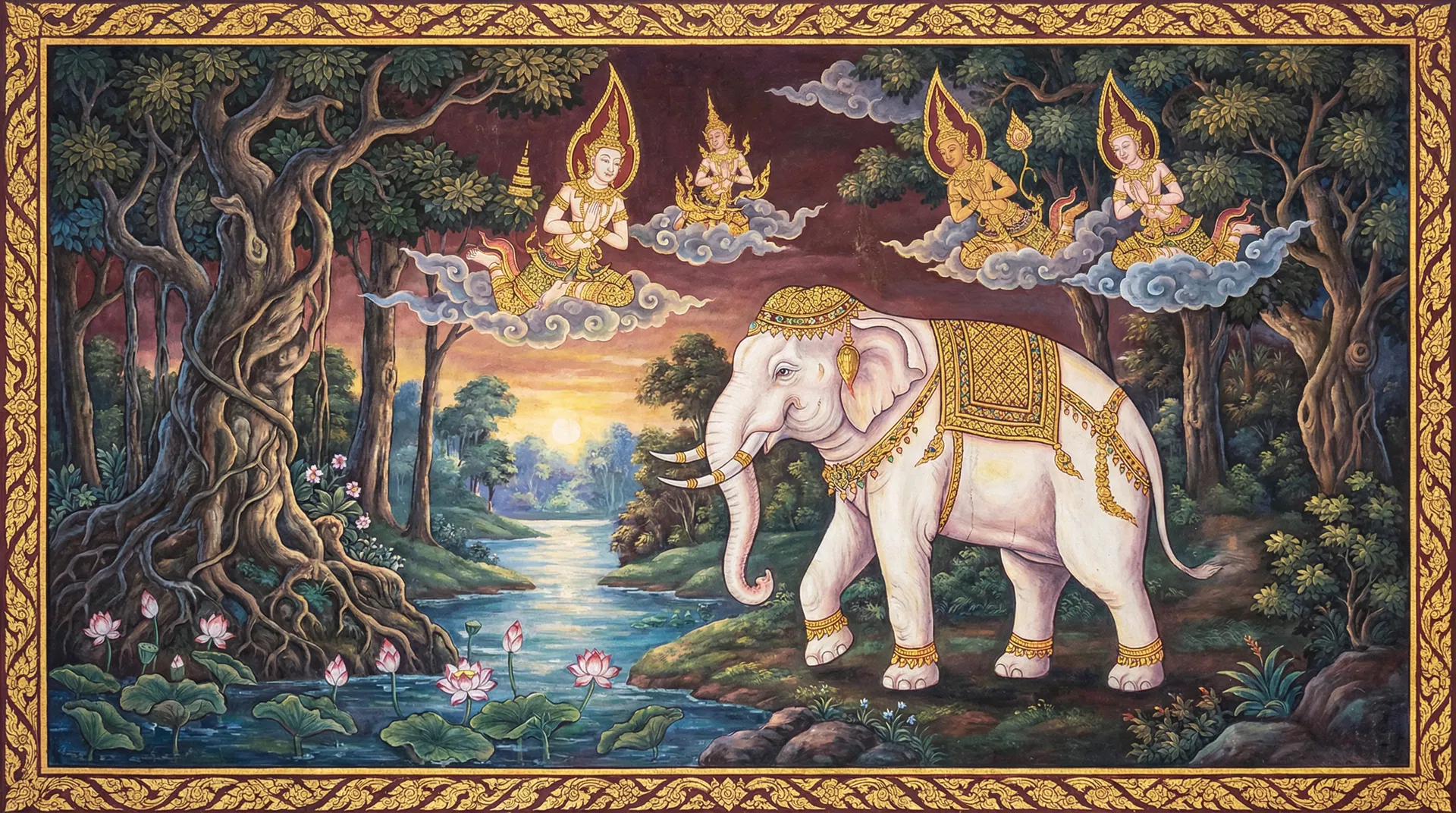
In a time long past, when the Bodhisatta was yet to attain full Buddhahood and was circulating through the cycle of rebirths, there ruled a prosperous land under a king who embodied the ten kingly virtues. This righteous monarch had a son, a prince of exquisite beauty, resembling a celestial being. Yet, his disposition was a stark contrast to his father's virtuous nature. The prince possessed a hard, unyielding heart and acted according to his whims, utterly disregarding the consequences of his actions. Despite his father's earnest teachings and guidance, the prince remained stubbornly unwilling to alter his ways. One day, the king, deeply troubled by his son's unruliness and the potential for future discord, decided upon a unique course of action. He summoned his most skilled artisans and commanded them to craft an elephant of immense size and lifelike appearance, yet entirely of wood. This magnificent wooden elephant was to be hollow, with a hidden chamber within its belly. The king then instructed his son, the prince, to enter the belly of this wooden elephant and remain there, hidden from view. Once the prince was concealed within, the king had the wooden elephant paraded through the city. As it moved, the king addressed the assembled populace, proclaiming, "Behold this magnificent elephant! It is said to possess immense strength and wisdom. However, it is also known to be exceedingly proud and unyielding. Whoever can tame this proud beast and make it bow to their will shall be rewarded handsomely, and shall be considered worthy of great honor." The prince, hearing these words from within the elephant, felt a surge of arrogance. He believed himself to be superior and thought that no one could truly control him. He remained silent, confident that his hidden presence would be discovered and that he would emerge victorious, proving his own unassailable spirit. He imagined the king and the people marveling at his cleverness and his unbreakability. Days turned into weeks, and the wooden elephant stood in the city square. The people, at first curious, eventually grew weary. The king, observing the prince's continued obstinacy and the lack of any genuine remorse or understanding, felt a profound sadness. He knew that true wisdom and strength lay not in pride, but in humility and the ability to change. He realized that his son, trapped in his own self-importance, was learning a harsh lesson about isolation and the futility of pride. Finally, the king ordered the wooden elephant to be opened. The prince emerged, blinking in the sunlight, no longer the proud and unyielding heir. The experience of being confined and ignored, of witnessing the world move on without acknowledging his supposed superiority, had begun to chip away at his arrogance. He saw the disappointment in his father's eyes and the indifference of the people. He understood that his pride had only led to his own confinement and a demonstration of his immaturity. The prince, humbled by his solitary confinement and the realization of his own folly, finally expressed remorse. He confessed his stubbornness and his foolish pride to his father. The king, seeing the genuine change in his son's heart, embraced him and began anew to impart his wisdom, which the prince now received with an open and receptive mind. The Bodhisatta, through this life, demonstrated that pride and arrogance are like a prison, isolating one from true understanding and the world around them. True strength is found in humility and the willingness to learn and grow.

— In-Article Ad —

💡Moral of the Story

True loyalty and devotion can overcome deception and protect the innocent.

Perfection: Loyalty and Courage

— Ad Space (728x90) —

More Jataka Tales You May Enjoy

The Young Prince's Filial Devotion
57Ekanipāta

The Young Prince's Filial Devotion

In the ancient city of Rājagaha, the capital of Magadha, there lived a wealthy merchant named Mahādh...

💡 Heed the warnings of the wise, even when they seem improbable. Do not let skepticism or the doubts of others blind you to potential dangers. Preparation and foresight can avert great suffering.

Mahā-pattakajātaka
529Mahānipāta

Mahā-pattakajātaka

The Tale of the Generous King In the ancient land of Kalinga, renowned for its fertile fields and pr...

💡 The greatest act of generosity is the selfless offering of oneself for the well-being of others. True giving comes from the heart and involves sacrifice.
Mahosadha Jataka
318Catukkanipāta

Mahosadha Jataka

Mahosadha JatakaIn the ancient city of Mithila, capital of the prosperous kingdom of Videha, lived a...

💡 Intellect and wisdom, when combined with foresight and compassion, are the most powerful tools for resolving conflicts, ensuring justice, and promoting the welfare of society.
Sujata Jataka
394Chakkanipāta

Sujata Jataka

Sujata JatakaIn a bustling city, there lived a young woman named Sujata. She was known throughout th...

💡 Truth and integrity are paramount. Even in the face of slander, a virtuous character will ultimately shine through.

Mahasattva Jataka
304Catukkanipāta

Mahasattva Jataka

Mahasattva JatakaIn the heart of the Himalayas, where snow-capped peaks touched the heavens and anci...

💡 True compassion involves selfless sacrifice for the well-being of others, even at the cost of one's own life. The greatest strength lies in the willingness to give.

Muni Jataka
297Tikanipāta

Muni Jataka

The Muni Jataka: The Ascetic of the Forest In the verdant forests of Kashi, where ancient trees whis...

💡 True strength lies not in the power to inflict harm, but in the wisdom to overcome one's own negative emotions and to respond to violence with compassion and forgiveness. Wisdom is the greatest treasure, for it leads to inner peace and liberation from suffering.

— Multiplex Ad —

This website uses cookies to improve your experience, analyze traffic, and display relevant advertisements. Privacy Policy