
The Tale of the Sword
547 Jataka Tales
74

The Tale of the Sword

Buddha24Ekanipāta
Listen
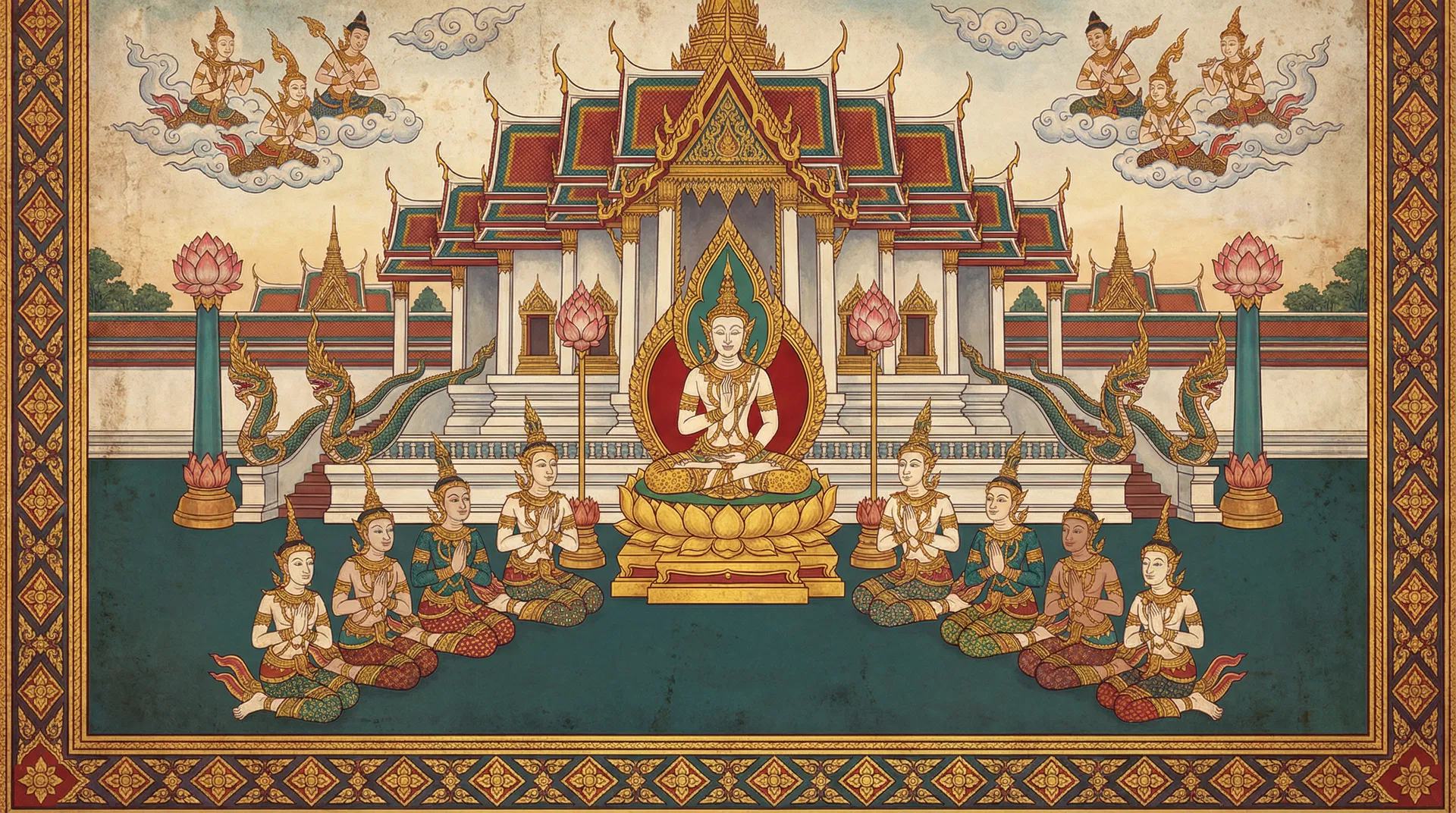
In the prosperous Kosala kingdom, within the renowned city of Savatthi, where King Pasenadi, the righteous monarch, held his court, lived a Brahmin named Kusambha. He was celebrated far and wide for his mastery of Vedic knowledge and rituals. Kusambha had three sons: the eldest was Subhadda, the middle was Bhadda, and the youngest was Jotipala. The Brahmin held deep affection for all his sons, but especially for Jotipala, who possessed a keen intellect and an insatiable curiosity for the Dhamma. One day, Brahmin Kusambha was preparing for a grand sacrificial ceremony. As he meticulously arranged the offerings and chanted the ancient verses, his youngest son, Jotipala, observed him with a thoughtful gaze. The boy, though young, harbored a deep, unyielding question that had been brewing within him. He approached his father, his brow furrowed with earnest inquiry. "Father," Jotipala began, his voice soft yet clear, "you are performing this elaborate ritual with such devotion. What is it that you seek from these offerings? What purpose does this sacrifice serve?" Kusambha, momentarily pausing his preparations, turned to his son. "My dear Jotipala," he replied, his voice tinged with the authority of tradition, "I am performing this yajna to appease the gods, to ensure prosperity, good fortune, and the well-being of our family and kingdom. It is the time-honored way to seek blessings." Jotipala listened intently, but his questioning spirit remained unsatisfied. "But Father," he pressed on, "if these gods are so powerful and benevolent, why do they require such elaborate offerings? Surely, their blessings should flow freely to all beings, regardless of whether they perform sacrifices or not. And if they are not appeased by these offerings, or if they are indeed powerful, then what is the point of this endeavor?" Kusambha, accustomed to unquestioning adherence to tradition, found his son's persistent questions unsettling. He tried to explain the intricacies of Vedic philosophy and the importance of fulfilling one's duties, but Jotipala's sharp mind continued to probe deeper, seeking the underlying truth rather than accepting dogma. The ceremony proceeded, but Jotipala's mind was elsewhere. He saw the fear and hope intertwined in the faces of those participating, their actions driven by a desire to ward off misfortune and attract good luck. He began to question the very nature of attachment and aversion, of desire and its fulfillment. He realized that true peace and liberation could not be found in external rituals or in the appeasement of deities, but within oneself. As Jotipala grew older, his spiritual inclinations deepened. He eventually renounced the worldly life and the Vedic traditions of his father, choosing instead the path of asceticism and contemplation. He sought to understand the nature of suffering and the cessation of suffering, a path illuminated by the teachings of the Buddha. The sharp, incisive nature of his questioning, much like the keen edge of a sword, cut through illusion and superficiality, leading him towards enlightenment. His father, Kusambha, though initially perplexed by his son's divergence, eventually came to understand Jotipala's profound wisdom. He saw that his son's relentless pursuit of truth, while unconventional, was a testament to his deep spiritual maturity. The moral lesson of this Jataka tale is that true wisdom and liberation are not found in blind adherence to tradition or external rituals, but in the courageous and insightful questioning of the self and the nature of reality. Just as a sharp sword can cut through deception, a discerning mind can sever the bonds of ignorance and attachment, leading to inner peace and enlightenment.

— In-Article Ad —

💡Moral of the Story

True strength lies in collective effort, resourcefulness, and perseverance, not in mythical solutions.

Perfection: Perseverance and Compassion

— Ad Space (728x90) —

More Jataka Tales You May Enjoy

Nandiya-Jātaka
251Tikanipāta

Nandiya-Jātaka

Nandiya-JātakaIn the heart of a lush forest, where ancient trees whispered secrets to the wind and s...

💡 True fulfillment and lasting happiness are found not in worldly possessions or power, but in detachment, simplicity, and the pursuit of spiritual enlightenment. The greatest leadership is often demonstrated through selfless sacrifice and the courage to follow one's highest calling.
Asadisa Jataka
429Navakanipāta

Asadisa Jataka

The Tale of the Unrivaled Gift In the magnificent city of Savatthi, there lived a king named Suppara...

💡 True generosity is selfless and unconditional. It is given without expectation of reward, without seeking praise, and without any thought of the giver's own comfort. Such giving nourishes both the recipient and the giver, bringing peace and contentment.

The Jataka of Dighavu, the Wrathful Prince
56Ekanipāta

The Jataka of Dighavu, the Wrathful Prince

In the magnificent city of Savatthi, in days long past, there reigned a king named Koravya. He posse...

💡 Beware of those who speak with honeyed words but harbor venom in their hearts. True wisdom lies not in seeking external remedies but in cultivating inner truth and understanding.

Beri Nataka
210Dukanipāta

Beri Nataka

Beri Nataka In the verdant kingdom of Kosala, where rolling hills met the azure sky, lived a wise an...

💡 In times of crisis, courage, wisdom, and selfless action are paramount. True leadership lies in the ability to identify and utilize overlooked resources for the greater good, even in the face of great personal risk.

Sujana Jataka
189Dukanipāta

Sujana Jataka

The Tale of the Kindhearted KingIn the opulent kingdom of Mithila, a land blessed with fertile plain...

💡 True leadership and genuine kindness are demonstrated through selfless generosity and a profound commitment to the welfare of others, even at great personal cost.

Sālūka Jātaka
168Dukanipāta

Sālūka Jātaka

Sālūka JātakaNestled beside a vast, tranquil lake, where lotus flowers bloomed in vibrant hues and t...

💡 Patience and inner stillness are not weaknesses but strengths. They allow for deeper understanding, greater wisdom, and enduring peace.

— Multiplex Ad —