
Mora Jataka
The Tale of the King, the Queen, and the Golden Peacock
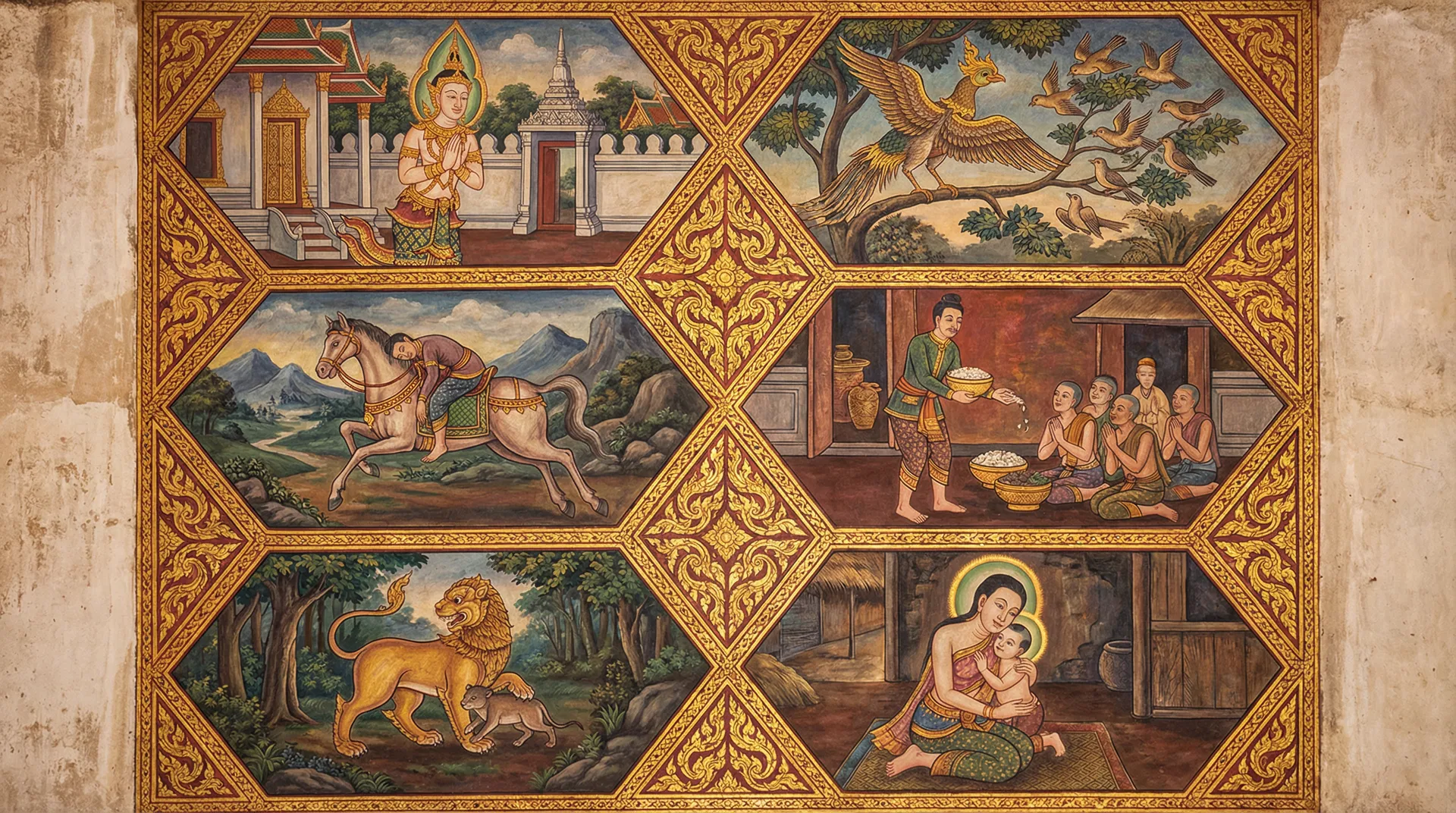
In the prosperous kingdom of Varanasi, nestled beside the sacred Ganges, ruled a wise and just king. He was blessed with a beautiful and virtuous queen, whose grace and kindness were admired by all. However, the king harbored a secret obsession: he was deeply infatuated with the exquisite beauty of a particular peacock, a magnificent creature whose plumage shimmered with hues of emerald, sapphire, and gold. This peacock, named Mora, was not just any bird; it possessed a voice of unparalleled melody and a heart of pure gold, radiating an aura of serenity and wisdom.
The king spent countless hours gazing at Mora, often neglecting his royal duties and even his beloved queen. He would sit for hours in the royal gardens, mesmerized by the peacock's dance and captivated by its enchanting song. The queen, though understanding of her husband's fascination, grew increasingly concerned. She saw how this infatuation was consuming him, isolating him from her and from the affairs of his kingdom.
One day, a wise ascetic, a man of deep spiritual insight who lived in the nearby forest, visited the palace. He observed the king's behavior and the queen's quiet distress. He approached the king, his eyes filled with gentle wisdom.
"Your Majesty," the ascetic began, his voice calm and resonant, "I see you are captivated by the beauty of this golden peacock. Its plumage is indeed glorious, and its song is a delight to the ears. But tell me, what true value does this beauty hold for you?"
The king, startled from his reverie, replied, "Venerable sir, this peacock is the most beautiful creature in all the world. Its song soothes my soul, and its presence brings me joy that no earthly possession can match. I find solace in its mere existence."
The ascetic smiled gently. "Beauty that captivates the senses is fleeting, Your Majesty. True beauty, the beauty that nourishes the soul and endures through all seasons, lies not in outward appearance, but in virtue, wisdom, and compassion. The peacock's song may please your ears, but does it teach you anything? Does its beauty inspire you to be a better ruler, a kinder husband?"
The king pondered the ascetic's words. He looked at Mora, then at his queen, whose gentle eyes held a quiet plea. He saw the truth in the ascetic's gentle rebuke. He had been so blinded by superficial beauty that he had overlooked the profound, enduring beauty of his queen's virtue and his own responsibilities.
"You speak truth, venerable sir," the king admitted, his voice filled with humility. "I have been lost in a superficial enchantment. I have mistaken a fleeting pleasure for true happiness."
The ascetic continued, "The golden peacock, in its natural state, is a creature of instinct and beauty. But its true gift, perhaps, is to remind you of the inner beauty that lies dormant within yourself and your queen. Seek the beauty of a righteous heart, of selfless deeds, and of profound understanding. That is the beauty that will truly enrich your life and your kingdom."
Inspired by the ascetic's wisdom, the king turned to his queen. He took her hand, his gaze filled with renewed love and respect. "My dearest queen," he said, his voice sincere, "forgive my foolish obsession. You possess a beauty far more profound and enduring than any bird's plumage. Your virtue, your kindness, your wisdom – these are the treasures that truly make my life rich."
From that day forward, King and queen were reunited, their bond strengthened by honesty and understanding. The king still appreciated Mora's beauty, but he no longer allowed it to consume him. He turned his attention back to his kingdom, ruling with greater wisdom and compassion, inspired by the enduring beauty of virtue he saw in his queen and the lessons of the wise ascetic. The golden peacock remained a symbol of exquisite natural beauty, but the king and queen now understood that true, lasting beauty resided in the qualities of the heart and the strength of virtuous character.
— In-Article Ad —
💡ၶေႃႈသွၼ်
ປັນຍາ ແມ່ນ ອາ ວຸດ ທີ່ສຳຄັນ ທີ່ສຸດ ໃນ ການ ແກ້ ໄຂ ບັນ ຫາ ທີ່ ສັບ ສົນ ແລະ ນຳ ມາ ເຊິ່ງ ຄວາມ ສຸກ ແລະ ຄວາມ ຈະ ເລີນ ສູ່ ສັງ ຄ ົມ.
ပႃႇရမီႇ: ປັນຍາບໍຣມີ
— Ad Space (728x90) —
ၸႃႇတၵဢၼ်ၼႃႈသူၼ်ၸႂ်
 177Dukanipāta
သပ်႐ႈ႐ႈကေ နာ႐ႈ
ꨀ ꨕꨮꨋꨲꨡꨤꨣꨲꨀꨮꨕꨲꨣꨲꨀꨕꨣꨲꨀꨮꨕꨣꨲꨀꨮꨕꨣꨲꨀꨮꨕꨣꨲꨀꨮꨕꨣꨲꨀꨮꨕꨣꨲꨀꨮꨕꨣꨲꨀꨮꨕꨣꨲꨀꨮꨕꨣꨲꨀꨮꨕꨣꨲꨀꨮꨕꨣꨲꨀꨮꨕꨣꨲꨀꨮꨕꨣꨲꨀꨮꨕꨣꨲꨀꨮꨕꨣꨲꨀꨮꨕꨣꨲꨀꨮꨕꨣꨲ...
💡 อย่าได้หลงเชื่อคำยุยงของคนพาล เพราะอาจนำมาซึ่งความเดือดร้อน และความเสียหายได้
50Ekanipātaၵဵင်းမႄးၵုမ်ႇမႄး
ၵဵင်းမႄးၵုမ်ႇမႄး ၵူၼ်းႁူမ်ႈလူမ်ႈၵႄႈၵႄႈၵႄႈၵႄႈၵႄႈၵႄႈၵႄႈၵႄႈၵႄႈၵႄႈၵႄႈၵႄႈၵႄႈၵႄႈၵႄႈၵႄႈၵႄႈၵႄႈၵႄႈၵႄႈၵႄႈၵႄႈၵ...
💡 ၵူၼ်းပဵၼ်လူႇၵၼ် ၵႂၢၼ်းပဵၼ်ႁူမ်ႈၸူမ်း ႁႂ်ႂးတေႃႉတႄႉ ၵူၼ်း ၵႂၢၼ်းႁႄႉ ႁႂ်ႂးတေႃႉလူႇ ႁႂ်ႂးတေႃႉပဵၼ်ႁႂ်ႂး ႁႂ်ႂးတေႃႉႁႄႉ ၵႂၢၼ်းပဵၼ်ႁူမ်ႈၸူမ်း ႁႂ်ႂးတေႃႉတႄႉ ၵူၼ်း ၵႂၢၼ်းႁႄႉ ႁႂ်ႂးတေႃႉလူႇ ႁႂ်ႂးတေႃႉပဵၼ်ႁႂ်ႂး ႁႂ်ႂးတေႃႉႁႄႉ ၵူၼ်းပဵၼ်လူႇၵၼ် ၵႂၢၼ်းပဵၼ်ႁူမ်ႈၸူမ်း ႁႂ်ႂးတေႃႉတႄႉ ၵူၼ်း ၵႂၢၼ်းႁႄႉ ႁႂ်ႂးတေႃႉလူႇ ႁႂ်ႂးတေႃႉပဵၼ်ႁႂ်ႂး ႁႂ်ႂးတေႃႉႁႄႉ
 422Aṭṭhakanipāta
Sammodamāna Jātaka
Sammodamāna JātakaIn the ancient city of Varanasi, nestled beside the sacred Ganges River, lived a w...
💡 ความตระหนี่เป็นกิเลสที่ทำให้ชีวิตมีค่าลดลง การรู้จักใช้ทรัพย์สินให้เป็นประโยชน์แก่ตนเองและผู้อื่น คือการทำให้ทรัพย์สินนั้นมีความหมาย.
 317Catukkanipāta
ၵႅင်း ၵႄႈ ၵႄႈ ႁႃ
ၵႄႈ ၵႄႈ ႁႃ ဢၼ် ၼႆႉ ဢမ်ႇ ၵႄႈ ၵႄႈ ႁႃ ၵူၼ်း ၵူၼ်း ၵူၼ်း ၵႄႈ ၵႄႈ ႁႃ ၵႄႈ ၵႄႈ ႁႃ ဢၼ် ၼႆႉ ဢမ်ႇ ၵႄႈ ၵႄႈ ႁႃ ၵ...
💡 ความสามัคคีและสติปัญญา สามารถเอาชนะอุปสรรคที่ใหญ่หลวงได้เสมอ แม้จะมีพละกำลังน้อยกว่าศัตรู แต่หากรู้จักใช้ปัญญาและร่วมมือกัน ก็สามารถเอาชนะได้อย่างง่ายดาย
 383Chakkanipāta
ၵုၼႃ႐ႃ႒ ၸႃႎႊ (ၵႄႊႊႊ 2)
ၼႂ်းၵႄႊႊႊ ၵႄႊႊႊ ၵႄႊႊႊ ၵႄႊႊႊ ၵႄႊႊႊ ၵႄႊႊႊ ၵႄႊႊႊ ၵႄႊႊႊ ၵႄႊႊႊ ၵႄႊႊႊ ၵႄႊႊႊ ၵႄႊႊႊ ၵႄႊႊႊ ၵႄႊႊႊ ၵႄႊႊႊ ၵႄႊႊႊ ...
💡 การมีเมตตาธรรม การบำเพ็ญเพียร และการเสียสละเพื่อส่วนรวม สามารถเอาชนะอุปสรรคและความชั่วร้ายได้.
311Catukkanipātaသဒၶမ္မၼ် ႄႊၵႊၵႊ
သဒၶမ္မၼ် ႄႊၵႊၵႊ ၼႂ်းပႄႈၵႄႈၼႃႈ ၵႄႈႁႃႈ ႄႊၵႊၵႊ ဢႃႊၵႊ ဢႃႊၵႊ ဢႃႊၵႊ ဢႃႊၵႊ ဢႃႊၵႊ ဢႃႊၵႊ ဢႃႊၵႊ ဢႃႊၵႊ ဢႃႊၵႊ ဢ...
💡 ႁၵ်ႉသႄႈလႄႈႁၵ်ႉပၼ်ႁႅင်းၵေႃႉၼႃႉ ဢၼ်မီးၵိၼ်းမႃး ၸွမ်းၼႃႉ ဢၼ်ပႃးၵေႃႉဢၼ်ပၼ်ႁႅင်း.
— Multiplex Ad —