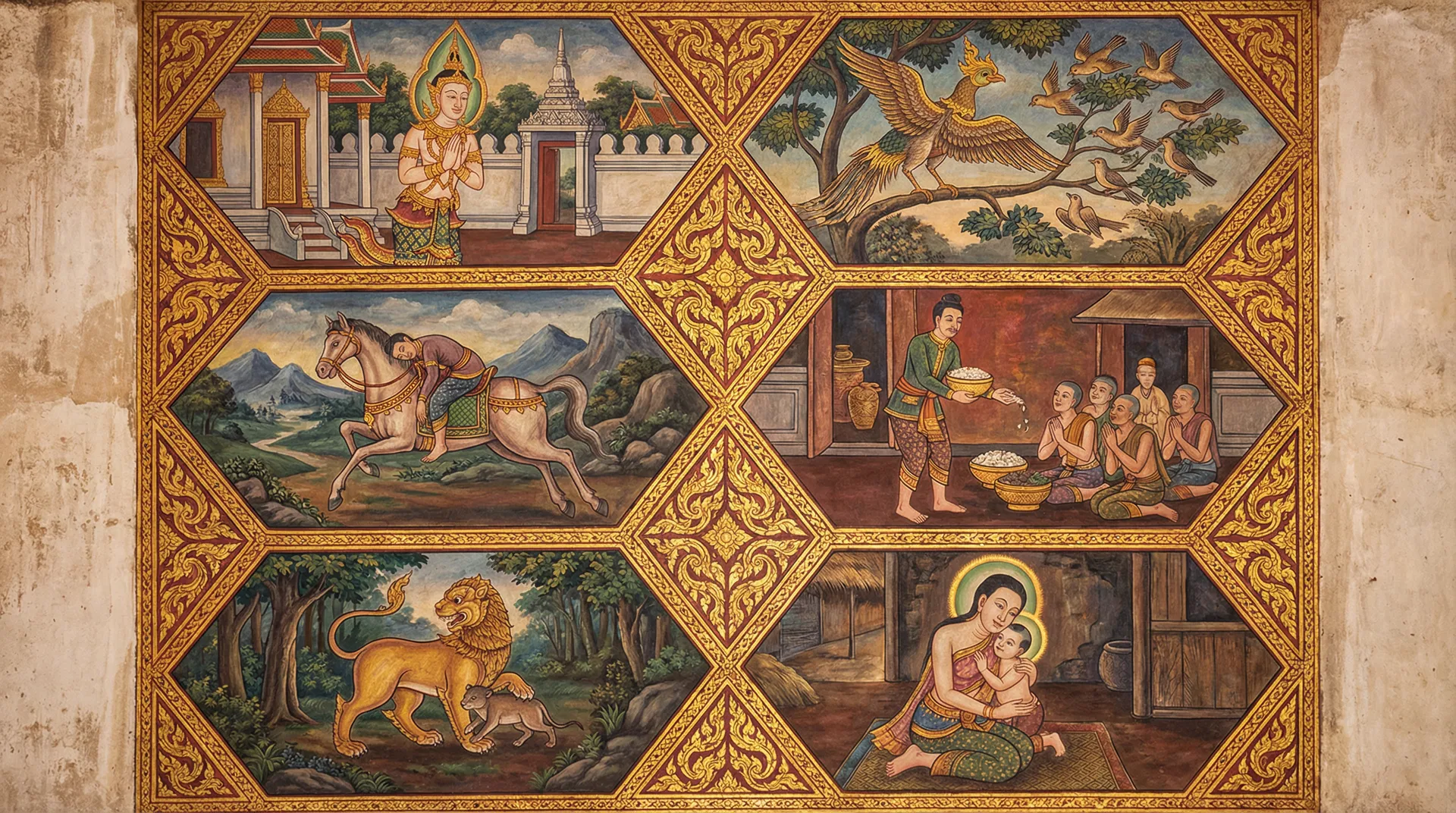
Mahasutasoma Jataka
Mahasutasoma Jataka
In a distant land, where ancient trees touched the heavens and rivers flowed like veins of silver, there reigned a wise and benevolent king. In a past life, the Bodhisatta was born as Prince Mahasutasoma, a young man whose wisdom was as profound as his compassion. His father, King Suraprabha, was a just ruler, but his kingdom was threatened by a fearsome Brahman, a sorcerer named Somadatta, who was addicted to the flesh of young men and demanded a terrible tribute. This Brahman, driven by a dark craving, would capture young men and consume them, leaving their families in perpetual grief.
The kingdom lived under a pall of fear. Each month, a lottery was held, and one young man was chosen to be offered to Somadatta. The cries of despair and the lamentations of mothers echoed through the land. King Suraprabha, despite his valiant efforts, could not find a way to defeat the sorcerer, whose magic was as potent as his hunger was insatiable.
Prince Mahasutasoma, witnessing the unending suffering of his people and the terror that gripped the kingdom, felt a deep resolve bloom in his heart. He knew that his duty as a prince was to protect his subjects, even if it meant sacrificing himself. He approached his father, his young face etched with determination.
'Father,' he said, his voice calm and steady, 'I can no longer bear to see our people suffer. I have decided to offer myself to the Brahman Somadatta. My life, freely given, may be the only way to appease his monstrous hunger and bring peace to our kingdom.'
King Suraprabha was grief-stricken. 'My son!' he cried, tears welling in his eyes. 'You are the future of our kingdom! I cannot let you face such a dreadful fate. There must be another way!'
'There is no other way, Father,' Mahasutasoma replied gently. 'My destiny calls me to this sacrifice. Do not weep for me. I go willingly, to save our people from this torment.'
The next day, the somber procession began. Prince Mahasutasoma, clad in simple white garments, walked towards the sorcerer's dwelling, a desolate hut on the outskirts of the kingdom. The people watched with heavy hearts, their faces etched with sorrow, yet holding onto a fragile hope that this sacrifice might finally end their ordeal.
When the prince arrived, Somadatta emerged, a gaunt figure with eyes that gleamed with a sinister hunger. His presence exuded an aura of dark power. 'So, a prince offers himself!' the Brahman sneered, his voice like the rasping of dry leaves. 'A tender morsel indeed! This is a feast worthy of my power!'
Prince Mahasutasoma, his heart filled with courage, stood his ground. 'Brahman,' he said, his voice unwavering, 'I am here to fulfill the pact. But before you claim my life, grant me a boon. Let us engage in a contest of knowledge and wisdom. If I prove superior, you shall release my people from your terrible demands and spare their lives. If you prevail, you may have my life and feast upon me.'
Somadatta, intrigued by the prince's audacity and confident in his own magical prowess and vast knowledge, let out a chilling laugh. 'A contest of wits with a mere mortal? How amusing! Very well, prince. Your courage is commendable, though your end is nigh. Ask your questions, and prepare to be consumed!'
The contest commenced. Prince Mahasutasoma, drawing upon his extensive studies and his innate wisdom, began to pose questions that challenged the Brahman's understanding of the world. He inquired about the nature of reality, the cycle of karma, the path to liberation, and the true meaning of virtue. Somadatta, accustomed to wielding power through fear and dark magic, found himself increasingly perplexed. His answers were steeped in ego, driven by selfish desires, and lacked any true understanding of spiritual truths.
When it was the Brahman's turn, he asked questions that were designed to intimidate and confuse. He probed the prince's understanding of death, of power, and of the limitations of mortals. But Prince Mahasutasoma, with his profound insight and unwavering faith, answered each question with clarity and wisdom, revealing the Brahman's ignorance and the emptiness of his power-hungry philosophy.
Finally, Prince Mahasutasoma posed a question that probed the very root of the Brahman's suffering: 'Brahman, you consume the flesh of young men, driven by a craving that seems insatiable. What, in your opinion, is the greatest pleasure a being can experience?'
Somadatta, after a moment of arrogant contemplation, declared, 'The greatest pleasure is the satisfaction of one's desires, the power to take what one wants, and the subjugation of others!'
Prince Mahasutasoma responded gently, 'You are mistaken, Brahman. The greatest pleasure is not found in fulfilling selfish desires or wielding power over others. True pleasure, lasting happiness, comes from cultivating compassion, from practicing generosity, and from understanding the interconnectedness of all beings. Your craving is a prison, and your power is an illusion that only leads to further suffering.'
Somadatta, confronted by the undeniable truth in the prince's words, felt a tremor of doubt within him. For the first time, he saw the hollowness of his existence, the endless cycle of craving and violence that defined his life. The prince's wisdom was a light that pierced through the darkness of his delusion.
Defeated not by any magical force, but by the sheer power of wisdom and truth, Somadatta lowered his head. 'Prince Mahasutasoma,' he rumbled, his voice devoid of its former arrogance, 'you have vanquished me. Your wisdom eclipses my dark arts. I have lived a life of misery, driven by insatiable hunger and false power. Your words have shown me the futility of my ways. I shall no longer demand sacrifices. I shall renounce this path of destruction and seek a way to atone for my past deeds.'
With that, the Brahman Somadatta, humbled and transformed, abandoned his sorcery and his wicked ways. He dedicated himself to a life of penance and reflection, seeking to mend the harm he had caused.
A wave of immense relief washed over the kingdom. The people rejoiced, their hearts filled with gratitude for their prince, who had saved them not with a sword, but with his profound wisdom and unwavering courage. Prince Mahasutasoma returned to his father's palace, hailed as a hero. He continued to learn and grow, eventually becoming a wise and just king himself, ruling his land with compassion and leading his people towards a path of righteousness and peace.
— In-Article Ad —
💡ၶေႃႈသွၼ်
ၵႂ်းဢႃႉၵႂ်းၵႂ်းဢႃႉၵႂ်းၵႂ်းၵႂ်းဢႃႉၵႂ်းၵႂ်းၵႂ်းဢႃႉၵႂ်းၵႂ်းဢႃႉၵႂ်းၵႂ်းဢႃႉၵႂ်းၵႂ်းဢႃႉၵႂ်းၵႂ်းဢႃႉၵႂ်းၵႂ်းဢႃႉၵႂ်းၵႂ်းဢႃႉၵႂ်းၵႂ်းဢႃႉၵႂ်းၵႂ်းဢႃႉၵႂ်းၵႂ်းဢႃႉၵႂ်းၵႂ်းဢႃႉၵႂ်းၵႂ်းဢႃႉၵႂ်းၵႂ်းဢႃႉၵႂ်းၵႂ်းဢႃႉၵႂ်းၵႂ်းဢႃႉၵႂ်းၵႂ်းဢႃႉၵႂ်းၵႂ်းဢႃႉၵႂ်းၵႂ်းဢႃႉၵႂ်းၵႂ်းဢႃႉၵႂ်းၵႂ်းဢႃႉၵႂ်းၵႂ်းဢႃႉၵႂ်းၵႂ်းဢႃႉၵႂ်းၵႂ်းဢႃႉၵႂ်းၵႂ်းဢႃႉၵႂ်းၵႂ်းဢႃႉၵႂ်းၵႂ်းဢႃႉၵႂ်းၵႂ်းဢႃႉၵႂ်းၵႂ်းဢႃႉၵႂ်းၵႂ်းဢႃႉၵႂ်းၵႂ်းဢႃႉၵႂ်းၵႂ်းဢႃႉၵႂ်းၵႂ်းဢႃႉၵႂ်းၵႂ်းဢႃႉၵႂ်းၵႂ်းဢႃႉၵႂ်းၵႂ်းဢႃႉၵႂ်းၵႂ်းဢႃႉၵႂ်းၵႂ်းဢႃႉၵႂ်းၵႂ်းဢႃႉၵႂ်းၵႂ်းဢႃႉၵႂ်းၵႂ်းဢႃႉၵႂ်းၵႂ်းဢႃႉၵႂ်းၵႂ်းဢႃႉၵႂ်းၵႂ်းဢႃႉၵႂ်းၵႂ်းဢႃႉၵႂ်းၵႂ်းဢႃႉၵႂ်းၵႂ်းဢႃႉၵႂ်းၵႂ်းဢႃႉၵႂ်းၵႂ်းဢႃႉၵႂ်းၵႂ်းဢႃႉၵႂ်းၵႂ်းဢႃႉၵႂ်းၵႂ်းဢႃႉၵႂ်းၵႂ်းဢႃႉၵႂ်းၵႂ်းဢႃႉၵႂ်းၵႂ်းဢႃႉၵႂ်းၵႂ်းဢႃႉၵႂ်းၵႂ်းဢႃႉၵႂ်းၵႂ်းဢႃႉၵႂ်းၵႂ်းဢႃႉၵႂ်းၵႂ်းဢႃႉၵႂ်းၵႂ်းဢႃႉၵႂ်းၵႂ်းဢႃႉၵႂ်းၵႂ်းဢႃႉၵႂ်းၵႂ်းဢႃႉၵႂ်းၵႂ်းဢႃႉၵႂ်းၵႂ်းဢႃႉၵႂ်းၵႂ်းဢႃႉၵႂ်းၵႂ်းဢႃႉၵႂ်းၵႂ်းဢႃႉၵႂ်းၵႂ်းဢႃႉၵႂ်းၵႂ်းဢႃႉၵႂ်းၵႂ်းဢႃႉၵႂ်းၵႂ်းဢႃႉၵႂ်းၵႂ်းဢႃႉၵႂ်းၵႂ်းဢႃႉၵႂ်းၵႂ်းဢႃႉၵႂ်းၵႂ်းဢႃႉၵႂ်းၵႂ်းဢႃႉၵႂ်းၵႂ်းဢႃႉၵႂ်းၵႂ်းဢႃႉၵႂ်းၵႂ်းဢႃႉၵႂ်းၵႂ်းဢႃႉၵႂ်းၵႂ်းဢႃႉၵႂ်းၵႂ်းဢႃႉၵႂ်းၵႂ်းဢႃႉၵႂ်းၵႂ်းဢႃႉၵႂ်းၵႂ်းဢႃႉၵႂ်းၵႂ်းဢႃႉၵႂ်းၵႂ်းဢႃႉၵႂ်းၵႂ်းဢႃႉၵႂ်းၵႂ်းဢႃႉၵႂ်းၵႂ်းဢႃႉၵႂ်းၵႂ်းဢႃႉၵႂ်းၵႂ်းဢႃႉၵႂ်းၵႂ်းဢႃႉၵႂ်းၵႂ်းဢႃႉၵႂ်းၵႂ်းဢႃႉၵႂ်းၵႂ်းဢႃႉၵႂ်းၵႂ်းဢႃႉၵႂ်းၵႂ်းဢႃႉၵႂ်းၵႂ်းဢႃႉၵႂ်းၵႂ်းဢႃႉၵႂ်းၵႂ်းဢႃႉၵႂ်းၵႂ်းဢႃႉၵႂ်းၵႂ်းဢႃႉၵႂ်းၵႂ်းဢႃႉၵႂ်းၵႂ်းဢႃႉၵႂ်းၵႂ်းဢႃႉၵႂ်းၵႂ်းဢႃႉၵႂ်းၵႂ်းဢႃႉၵႂ်းၵႂ်းဢႃႉၵႂ်းၵႂ်းဢႃႉၵႂ်းၵႂ်းဢႃႉၵႂ်းၵႂ်းဢႃႉၵႂ်းၵႂ်းဢႃႉၵႂ်းၵႂ်းဢႃႉၵႂ်းၵႂ်းဢႃႉၵႂ်းၵႂ်းဢႃႉၵႂ်းၵႂ်းဢႃႉၵႂ်းၵႂ်းဢႃႉၵႂ်းၵႂ်းဢႃႉၵႂ်းၵႂ်းဢႃႉၵႂ်းၵႂ်းဢႃႉၵႂ်းၵႂ်းဢႃႉၵႂ်းၵႂ်းဢႃႉၵႂ်းၵႂ်းဢႃႉၵႂ်းၵႂ်းဢႃႉၵႂ်းၵႂ်းဢႃႉၵႂ်းၵႂ်းဢႃႉၵႂ်းၵႂ်းဢႃႉၵႂ်းၵႂ်းဢႃႉၵႂ်းၵႂ်းဢႃႉၵႂ်းၵႂ်းဢႃႉၵႂ်းၵႂ်းဢႃႉၵႂ်းၵႂ်းဢႃႉၵႂ်းၵႂ်းဢႃႉၵႂ်းၵႂ်းဢႃႉၵႂ်းၵႂ်းဢႃႉၵႂ်းၵႂ်းဢႃႉၵႂ်းၵႂ်းဢႃႉၵႂ်းၵႂ်းဢႃႉၵႂ်းၵႂ်းဢႃႉၵႂ်းၵႂ်းဢႃႉၵႂ်းၵႂ်းဢႃႉၵႂ်းၵႂ်းဢႃႉၵႂ်းၵႂ်းဢႃႉၵႂ်းၵႂ်းဢႃႉၵႂ်းၵႂ်းဢႃႉၵႂ်းၵႂ်းဢႃႉၵႂ်းၵႂ်းဢႃႉၵႂ်းၵႂ်းဢႃႉၵႂ်းၵႂ်းဢႃႉၵႂ်းၵႂ်းဢႃႉၵႂ်းၵႂ်းဢႃႉၵႂ်းၵႂ်းဢႃႉၵႂ်းၵႂ်းဢႃႉၵႂ်းၵႂ်းဢႃႉၵႂ်းၵႂ်းဢႃႉၵႂ်းၵႂ်းဢႃႉၵႂ်းၵႂ်းဢႃႉၵႂ်းၵႂ်းဢႃႉၵႂ်းၵႂ်းဢႃႉၵႂ်းၵႂ်းဢႃႉၵႂ်းၵႂ်းဢႃႉၵႂ်းၵႂ်းဢႃႉၵႂ်းၵႂ်းဢႃႉၵႂ်းၵႂ်းဢႃႉၵႂ်းၵႂ်းဢႃႉၵႂ်းၵႂ်းဢႃႉၵႂ်းၵႂ်းဢႃႉၵႂ်းၵႂ်းဢႃႉၵႂ်းၵႂ်းဢႃႉၵႂ်းၵႂ်းဢႃႉၵႂ်းၵႂ်းဢႃႉၵႂ်းၵႂ်းဢႃႉၵႂ်းၵႂ်းဢႃႉၵႂ်းၵႂ်းဢႃႉၵႂ်းၵႂ်းဢႃႉၵႂ်းၵႂ်းဢႃႉၵႂ်းၵႂ်းဢႃႉၵႂ်းၵႂ်းဢႃႉၵႂ်းၵႂ်းဢႃႉၵႂ်းၵႂ်းဢႃႉၵႂ်းၵႂ်းဢႃႉၵႂ်းၵႂ်းဢႃႉၵႂ်းၵႂ်းဢႃႉၵႂ်းၵႂ်းဢႃႉၵႂ်းၵႂ်းဢႃႉၵႂ်းၵႂ်းဢႃႉၵႂ်းၵႂ်းဢႃႉၵႂ်းၵႂ်းဢႃႉၵႂ်းၵႂ်းဢႃႉၵႂ်းၵႂ်းဢႃႉၵႂ်းၵႂ်းဢႃႉၵႂ်းၵႂ်းဢႃႉၵႂ်းၵႂ်းဢႃႉၵႂ်းၵႂ်းဢႃႉၵႂ်းၵႂ်းဢႃႉၵႂ်းၵႂ်းဢႃႉၵႂ်းၵႂ်းဢႃႉၵႂ်းၵႂ်းဢႃႉၵႂ်းၵႂ်းဢႃႉၵႂ်းၵႂ်းဢႃႉၵႂ်းၵႂ်းဢႃႉၵႂ်းၵႂ်းဢႃႉၵႂ်းၵႂ်းဢႃႉၵႂ်းၵႂ်းဢႃႉၵႂ်းၵႂ်းဢႃႉၵႂ်းၵႂ်းဢႃႉၵႂ်းၵႂ်းဢႃႉ
ပႃႇရမီႇ: วิริยบารมี
— Ad Space (728x90) —
ၸႃႇတၵဢၼ်ၼႃႈသူၼ်ၸႂ်
 95Ekanipāta
Mahasattva Jataka
Mahasattva JatakaIn the heart of ancient India, amidst the lush greenery and the symphony of chirpin...
💡 ปั๋นล้ำปั๋นต๋าง ย่อมเป๋นก๋ำม๋าก๋ำจ๋าง ต๋างกำจ๋ายโก๋งเฮี่ยง
 477Terasanipāta
ႁႃးၵႃးၵႂၢင်းၶႄ
ၼႂ်းၸႄႄႊး ၸဝ်ႊး ၵႂႊ ၼႂ်း ၽူႊ ၸႄႄႊး ၵႂႊ ဢၼ် ၵႂႊ ၽူႊ ၸႄႄႊး ၵႂႊ ဢၼ် ၵႂႊ ၽူႊ ၸႄႄႊး ၵႂႊ ဢၼ် ၵႂႊ ၽူႊ ၸႄႄႊး...
💡 การให้ทานที่ยิ่งใหญ่ที่สุด คือการให้สิ่งที่มีค่าที่สุดของเรา โดยไม่หวังผลตอบแทนใดๆ
129Ekanipātaသီရိဝိစယ ဇာတ်တော်
သီရိဝိစယ ဇာတ်တော် ဘုရားရှင်လက်ထက်တော်အခါက ဟိမဝန္တာတောကြီးအတွင်း၌ သတ္တဝါအပေါင်းတို့အတူတကွ ငြိမ်းချမ်...
💡 အလွန်ကောင်းမွန်သော မိဘ၊ ခင်ပွန်း သို့မဟုတ် သားသမီးတို့သည် မိသားစုအတွက် အလွန်အရေးကြီးသည်။ မိသားစုတစ်စုလုံး၏ ပျော်ရွှင်မှုနှင့် အောင်မြင်မှုအတွက် ကူညီပေးကြသည်။
128Ekanipātaႉႉႉႉႉႉႉႉႉႉႉႉႉႉႉႉႉႉႉႉႉႉႉႉႉႉႉႉႉႉႉႉႉႉႉႉႉႉႉႉႉႉႉႉႉႉႉႉႉႉႉႉႉႉႉႉႉႉႉႉႉႉႉႉႉႉႉႉႉႉႉႉႉႉႉႉႉႉႉႉႉႉႉႉႉႉႉႉႉႉႉႉႉႉႉႉႉႉႉႉႉႉႉႉႉႉႉႉႉႉႉႉႉႉႉႉႉႉႉႉႉႉႉႉႉႉႉႉႉႉႉႉႉႉႉႉႉႉႉႉႉႉႉႉႉႉႉႉႉႉႉႉႉႉႉႉႉႉႉႉႉႉႉႉႉႉႉႉႉႉႉႉႉႉႉႉႉႉႉႉႉႉႉႉႉႉႉႉႉႉႉႉႉႉႉႉႉႉႉႉႉႉႉႉႉႉႉႉႉႉႉႉႉႉႉႉႉႉႉႉႉႉႉႉႉႉႉႉႉႉႉႉႉႉႉႉႉႉႉႉႉႉႉႉႉႉႉႉႉႉႉႉႉႉႉႉႉႉႉႉႉႉႉႉႉႉႉႉႉႉႉႉႉႉႉႉႉႉႉႉႉႉႉႉႉႉႉႉႉႉႉႉႉႉႉႉႉႉႉႉႉႉႉႉႉႉႉႉႉႉႉႉႉႉႉႉႉႉႉႉႉႉႉႉႉႉႉႉႉႉႉႉႉႉႉႉႉႉႉႉႉႉႉႉႉႉႉႉႉႉႉႉႉႉႉႉႉႉႉႉႉႉႉႉႉႉႉႉႉႉႉႉႉႉႉႉႉႉႉႉႉႉႉႉႉႉႉႉႉႉႉႉႉႉႉႉႉႉႉႉႉႉႉႉႉႉႉႉႉႉႉႉႉႉႉႉႉႉႉႉႉႉႉႉႉႉႉႉႉႉႉႉႉႉႉႉႉႉႉႉႉႉႉႉႉႉႉႉႉႉႉႉႉႉႉႉႉႉႉႉႉႉႉႉႉႉႉႉႉႉႉႉႉႉႉႉႉႉႉႉႉႉႉႉႉႉႉႉႉႉႉႉႉႉႉႉႉႉႉႉႉႉႉႉႉႉႉႉႉႉႉႉႉႉႉႉႉႉႉႉႉႉႉႉႉႉႉႉႉႉႉႉႉႉႉႉႉႉႉႉႉႉႉႉႉႉႉႉႉႉႉႉႉႉႉႉႉႉႉႉႉႉႉႉႉႉႉႉႉႉႉႉႉႉႉႉႉႉႉႉႉႉႉႉႉႉႉႉႉႉႉႉႉႉႉႉႉႉႉႉႉႉႉႉႉႉႉႉႉႉႉႉႉႉႉႉႉႉႉႉႉႉႉႉႉႉႉႉႉႉႉႉႉႉႉႉႉႉႉႉႉႉႉႉႉႉႉႉႉႉႉႉႉႉႉႉႉႉႉႉႉႉႉႉႉႉႉႉႉႉႉႉႉႉႉႉႉႉႉႉႉႉႉႉႉႉႉႉႉႉႉႉႉႉႉႉႉႉႉႉႉႉႉႉႉႉႉႉႉႉႉႉႉႉႉႉႉႉႉႉႉႉႉႉႉႉႉႉႉႉႉႉႉႉႉႉႉႉႉႉႉႉႉႉႉႉႉႉႉႉႉႉႉႉႉႉႉႉႉႉႉႉႉႉႉႉႉႉႉႉႉႉႉႉႉႉႉႉႉႉႉႉႉႉႉႉႉႉႉႉႉႉႉႉႉႉႉႉႉႉႉႉႉႉႉႉႉႉႉႉႉႉႉႉႉႉႉႉႉႉႉႉႉႉႉႉႉႉႉႉႉႉႉႉႉႉႉႉႉႉႉႉႉႉႉႉႉႉႉႉႉႉႉႉႉႉႉႉႉႉႉႉႉႉႉႉႉႉႉႉႉႉႉႉႉႉႉႉႉႉႉႉႉႉႉႉႉႉႉႉႉႉႉႉႉႉႉႉႉႉႉႉႉႉႉႉႉႉႉႉႉႉႉႉႉႉႉႉႉႉႉႉႉႉႉႉႉႉႉႉႉႉႉႉႉႉႉႉႉႉႉႉႉႉႉႉႉႉႉႉႉႉႉႉႉႉႉႉႉႉႉႉႉႉႉႉႉႉႉႉႉႉႉႉႉႉႉႉႉႉႉႉႉႉႉႉႉႉႉႉႉႉႉႉႉႉႉႉႉႉႉႉႉႉႉႉႉႉႉႉႉႉႉႉႉႉႉႉႉႉႉႉႉႉႉႉႉႉႉႉႉႉႉႉႉႉႉႉႉႉႉႉႉႉႉႉႉႉႉႉႉႉႉႉႉႉႉႉႉႉႉႉႉႉႉႉႉႉႉႉႉႉႉႉႉႉႉႉႉႉႉႉႉႉႉႉႉႉႉႉႉႉႉႉႉႉႉႉႉႉႉႉႉႉႉႉႉႉႉႉႉႉႉႉႉႉႉႉႉႉႉႉႉႉႉႉႉႉႉႉႉႉႉႉႉႉႉႉႉႉႉႉႉႉႉႉႉႉႉႉႉႉႉႉႉႉႉႉႉႉႉႉႉႉႉႉႉႉႉႉႉႉႉႉႉႉႉႉႉႉႉႉႉႉႉႉႉႉႉႉႉႉႉႉႉႉႉႉႉႉႉႉႉႉႉႉႉႉႉႉႉႉႉႉႉႉႉႉႉႉႉႉႉႉႉႉႉႉႉႉႉႉႉႉႉႉႉႉႉႉႉႉႉႉႉႉႉႉႉႉႉႉႉႉႉႉႉႉႉႉႉႉႉႉႉႉႉႉႉႉႉႉႉႉႉႉႉႉႉႉႉႉႉႉႉႉႉႉႉႉႉႉႉႉႉႉႉႉႉႉႉႉႉႉႉႉႉႉႉႉႉႉႉႉႉႉႉႉႉႉႉႉႉႉႉႉႉႉႉႉႉႉႉႉႉႉႉႉႉႉႉႉႉႉႉႉႉႉႉႉႉႉႉႉႉႉႉႉႉႉႉႉႉႉႉႉႉႉႉႉႉႉႉႉႉႉႉႉႉႉႉႉႉႉႉႉႉႉႉႉႉႉႉႉႉႉႉႉႉႉႉႉႉႉႉႉႉႉႉႉႉႉႉႉႉႉႉႉႉႉႉႉႉႉႉႉႉႉႉႉႉႉႉႉႉႉႉႉႉႉႉႉႉႉႉႉႉႉႉႉႉႉႉႉႉႉႉႉႉႉႉႉႉႉႉႉႉႉႉႉႉႉႉႉႉႉႉႉႉႉႉႉႉႉႉႉႉႉႉႉႉႉႉႉႉႉႉႉႉႉႉႉႉႉႉႉႉႉႉႉႉႉႉႉႉႉႉႉႉႉႉႉႉႉႉႉႉႉႉႉႉႉႉႉႉႉႉႉႉႉႉႉႉႉႉႉႉႉႉႉႉႉႉႉႉႉႉႉႉႉႉႉႉႉႉႉႉႉႉႉႉႉႉႉႉႉႉႉႉႉႉႉႉႉႉႉႉႉႉႉႉႉႉႉႉႉႉႉႉႉႉႉႉႉႉႉႉႉႉႉႉႉႉႉႉႉႉႉႉႉႉႉႉႉႉႉႉႉႉႉႉႉႉႉႉႉႉႉႉႉႉႉႉႉႉႉႉႉႉႉႉႉႉႉႉႉႉႉႉႉႉႉႉႉႉႉႉႉႉႉႉႉႉႉႉႉႉႉႉႉႉႉႉႉႉႉႉႉႉႉႉႉႉႉႉႉႉႉႉႉႉႉႉႉႉႉႉႉႉႉႉႉႉႉႉႉႉႉႉႉႉႉႉႉႉႉႉႉႉႉႉႉႉႉႉႉႉႉႉႉႉႉႉႉႉႉႉႉႉႉႉႉႉႉႉႉႉႉႉႉႉႉႉႉႉႉႉႉႉႉႉႉႉႉႉႉႉႉႉႉႉႉႉႉႉႉႉႉႉႉႉႉႉႉႉႉႉႉႉႉႉႉႉႉႉႉႉႉႉႉႉႉႉႉႉႉႉႉႉႉႉႉႉႉႉႉႉႉႉႉႉႉႉႉႉႉႉႉႉႉႉႉႉႉႉႉႉႉႉႉႉႉႉႉႉႉႉႉႉႉႉႉႉႉႉႉႉႉႉႉႉႉႉႉႉႉႉႉႉႉႉႉႉႉႉႉႉႉႉႉႉႉႉႉႉႉႉႉႉႉႉႉႉႉႉႉႉႉႉႉႉႉႉႉႉႉႉႉႉႉႉႉႉႉႉႉႉႉႉႉႉႉႉႉႉႉႉႉႉႉႉႉႉႉႉႉႉႉႉႉႉႉႉႉႉႉႉႉႉႉႉႉႉႉႉႉႉႉႉႉႉႉႉႉႉႉႉႉႉႉႉႉႉႉႉႉႉႉႉႉႉႉႉႉႉႉႉႉႉႉႉႉႉႉႉႉႉႉႉႉႉႉႉႉႉႉႉႉႉႉႉႉႉႉႉႉႉႉႉႉႉႉႉႉႉႉႉႉႉႉႉႉႉႉႉႉႉႉႉႉႉႉႉႉႉႉႉႉႉႉႉႉႉႉႉႉႉႉႉႉႉႉႉႉႉႉႉႉႉႉႉႉႉႉႉႉႉႉႉႉႉႉႉႉႉႉႉႉႉႉႉႉႉႉႉႉႉႉႉႉႉႉႉႉႉႉႉႉႉႉႉႉႉႉႉႉႉႉႉႉႉႉႉႉႉႉႉႉႉႉႉႉႉႉႉႉႉႉႉႉႉႉႉႉႉႉႉႉႉႉႉႉႉႉႉႉႉႉႉႉႉႉႉႉႉႉႉႉႉႉႉႉႉႉႉႉႉႉႉႉႉႉႉႉႉႉႉႉႉႉႉႉႉႉႉႉႉႉႉႉႉႉႉႉႉႉႉႉႉႉႉႉႉႉႉႉႉႉႉႉႉႉႉႉႉႉႉႉႉႉႉႉႉႉႉႉႉႉႉႉႉႉႉႉႉႉႉႉႉႉႉႉႉႉႉႉႉႉႉႉႉႉႉႉႉႉႉႉႉႉႉႉႉႉႉႉႉႉႉႉႉႉႉႉႉႉႉႉႉႉႉႉႉႉႉႉႉႉႉႉႉႉႉႉႉႉႉႉႉႉႉႉႉႉႉႉႉႉႉႉႉႉႉႉႉႉႉႉႉႉႉႉႉႉႉႉႉႉႉႉႉႉႉႉႉႉႉႉႉႉႉႉႉႉႉႉႉႉႉႉႉႉႉႉႉႉႉႉႉႉႉႉႉႉႉႉႉႉႉႉႉႉႉႉႉႉႉႉႉႉႉႉႉႉႉႉႉႉႉႉႉႉႉႉႉႉႉႉႉႉႉႉႉႉႉႉႉႉႉႉႉႉႉႉႉႉႉႉႉႉႉႉႉႉႉႉႉႉႉႉႉႉႉႉႉႉႉႉႉႉႉႉႉႉႉႉႉႉႉႉႉႉႉႉႉႉႉႉႉႉႉႉႉႉႉႉႉႉႉႉႉႉႉႉႉႉႉႉႉႉႉႉႉႉႉႉႉႉႉႉႉႉႉႉႉႉႉႉႉႉႉႉႉႉႉႉႉႉႉႉႉႉႉႉႉႉႉႉႉႉႉႉႉႉႉႉႉႉႉႉႉႉႉႉႉႉႉႉႉႉႉႉႉႉႉႉႉႉႉႉႉႉႉႉႉႉႉႉႉႉႉႉႉႉႉႉႉႉႉႉႉႉႉႉႉႉႉႉႉႉႉႉႉႉႉႉႉႉႉႉႉႉႉႉႉႉႉႉႉႉႉႉႉႉႉႉႉႉႉႉႉႉႉႉႉႉႉႉႉႉႉႉႉႉႉႉႉႉႉႉႉႉႉႉႉႉႉႉႉႉႉႉႉႉႉႉႉႉႉႉႉႉႉႉႉႉႉႉႉႉႉႉႉႉႉႉႉႉႉႉႉႉႉႉႉႉႉႉႉႉႉႉႉႉႉႉႉႉႉႉႉႉႉႉႉႉႉႉႉႉႉႉႉႉႉႉႉႉႉႉႉႉႉႉႉႉႉႉႉႉႉႉႉႉႉႉႉႉႉႉႉႉႉႉႉႉႉႉႉႉႉႉႉႉႉႉႉႉႉႉႉႉႉႉႉႉႉႉႉႉႉႉႉႉႉႉႉႉႉႉႉႉႉႉႉႉႉႉႉႉႉႉႉႉႉႉႉႉႉႉႉႉႉႉႉႉႉႉႉႉႉႉႉႉႉႉႉႉႉႉႉႉႉႉႉႉႉႉႉႉႉႉႉႉႉႉႉႉႉႉႉႉႉႉႉႉႉႉႉႉႉႉႉႉႉႉႉႉႉႉႉႉႉႉႉႉႉႉႉႉႉႉႉႉႉႉႉႉႉႉႉႉႉႉႉႉႉႉႉႉႉႉႉႉႉႉႉႉႉႉႉႉႉႉႉႉႉႉႉႉႉႉႉႉႉႉႉႉႉႉႉႉႉႉႉႉႉႉႉႉႉႉႉႉႉႉႉႉႉႉႉႉႉႉႉႉႉႉႉႉႉႉႉႉႉႉႉႉႉႉႉႉႉႉႉႉႉႉႉႉႉႉႉႉႉႉႉႉႉႉႉႉႉႉႉႉႉႉႉႉႉႉႉႉႉႉႉႉႉႉႉႉႉႉႉႉႉႉႉႉႉႉႉႉႉႉႉႉႉႉႉႉႉႉႉႉႉႉႉႉႉႉႉႉႉႉႉႉႉႉႉႉႉႉႉႉႉႉႉႉႉႉႉႉႉႉႉႉႉႉႉႉႉႉႉႉႉႉႉႉႉႉႉႉႉႉႉႉႉႉႉႉႉႉႉႉႉႉႉႉႉႉႉႉႉႉႉႉႉႉႉႉႉႉႉႉႉႉႉႉႉႉႉႉႉႉႉႉႉႉႉႉႉႉႉႉႉႉႉႉႉႉႉႉႉႉႉႉႉႉႉႉႉႉႉႉႉႉႉႉႉႉႉႉႉႉႉႉႉႉႉႉႉႉႉႉႉႉႉႉႉႉႉႉႉႉႉႉႉႉႉႉႉႉႉႉႉႉႉႉႉႉႉႉႉႉႉႉႉႉႉႉႉႉႉႉႉႉႉႉႉႉႉႉႉႉႉႉႉႉႉႉႉႉႉႉႉႉႉႉႉႉႉႉႉႉႉႉႉႉႉႉႉႉႉႉႉႉႉႉႉႉႉႉႉႉႉႉႉႉႉႉႉႉႉႉႉႉႉႉႉႉႉႉႉႉႉႉႉႉႉႉႉႉႉႉႉႉႉႉႉႉႉႉႉႉႉႉႉႉႉႉႉႉႉႉႉႉႉႉႉႉႉႉႉႉႉႉႉႉႉႉႉႉႉႉႉႉႉႉႉႉႉႉႉႉႉႉႉႉႉႉႉႉႉႉႉႉႉႉႉႉႉႉႉႉႉႉႉႉႉႉႉႉႉႉႉႉႉႉႉႉႉႉႉႉႉႉႉႉႉႉႉႉႉႉႉႉႉႉႉႉႉႉႉႉႉႉႉႉႉႉႉႉႉႉႉႉႉႉႉႉႉႉႉႉႉႉႉႉႉႉႉႉႉႉႉႉႉႉႉႉႉႉႉႉႉႉႉႉႉႉႉႉႉႉႉႉႉႉႉႉႉႉႉႉႉႉႉႉႉႉႉႉႉႉႉႉႉႉႉႉႉႉႉႉႉႉႉႉႉႉႉႉႉႉႉႉႉႉႉႉႉႉႉႉႉႉႉႉႉႉႉႉႉႉႉႉႉႉႉႉႉႉႉႉႉႉႉႉႉႉႉႉႉႉႉႉႉႉႉႉႉႉႉႉႉႉႉႉႉႉႉႉႉႉႉႉႉႉႉႉႉႉႉႉႉႉႉႉႉႉႉႉႉႉႉႉႉႉႉႉႉႉႉႉႉႉႉႉႉႉႉႉႉႉႉႉႉႉႉႉႉႉႉႉႉႉႉႉႉႉႉႉႉႉႉႉႉႉႉႉႉႉႉႉႉႉႉႉႉႉႉႉႉႉႉႉႉႉႉႉႉႉႉႉႉႉႉႉႉႉႉႉႉႉႉႉႉႉႉႉႉႉႉႉႉႉႉႉႉႉႉႉႉႉႉႉႉႉႉႉႉႉႉႉႉႉႉႉႉႉႉႉႉႉႉႉႉႉႉႉႉႉႉႉႉႉႉႉႉႉႉႉႉႉႉႉႉႉႉႉႉႉႉႉႉႉႉႉႉႉႉႉႉႉႉႉႉႉႉႉႉႉႉႉႉႉႉႉႉႉႉႉႉႉႉႉႉႉႉႉႉႉႉႉႉႉႉႉႉႉႉႉႉႉႉႉႉႉႉႉႉႉႉႉႉႉႉႉႉႉႉႉႉႉႉႉႉႉႉႉႉႉႉႉႉႉႉႉႉႉႉႉႉႉႉႉႉႉႉႉႉႉႉႉႉႉႉႉႉႉႉႉႉႉႉႉႉႉႉႉႉႉႉႉႉႉႉႉႉႉႉႉႉႉႉႉႉႉႉႉႉႉႉႉႉႉႉႉႉႉႉႉႉႉႉႉႉႉႉႉႉႉႉႉႉႉႉႉႉႉႉႉႉႉႉႉႉႉႉႉႉႉႉႉႉႉႉႉႉႉႉႉႉႉႉႉႉႉႉႉႉႉႉႉႉႉႉႉႉႉႉႉႉႉႉႉႉႉႉႉႉႉႉႉႉႉႉႉႉႉႉႉႉႉႉႉႉႉႉႉႉႉႉႉႉႉႉႉႉႉႉႉႉႉႉႉႉႉႉႉႉႉႉႉႉႉႉႉႉႉႉႉႉႉႉႉႉႉႉႉႉႉႉႉႉႉႉႉႉႉႉႉႉႉႉႉႉႉႉႉႉႉႉႉႉႉႉႉႉႉႉႉႉႉႉႉႉႉႉႉႉႉႉႉႉႉႉႉႉႉႉႉႉႉႉႉႉႉႉႉႉႉႉႉႉႉႉႉႉႉႉႉႉႉႉႉႉႉႉႉႉႉႉႉႉႉႉႉႉႉႉႉႉႉႉႉႉႉႉႉႉႉႉႉႉႉႉႉႉႉႉႉႉႉႉႉႉႉႉႉႉႉႉႉႉႉႉႉႉႉႉႉႉႉႉႉႉႉႉႉႉႉႉႉႉႉႉႉႉႉႉႉႉႉႉႉႉႉႉႉႉႉႉႉႉႉႉႉႉႉႉႉႉႉႉႉႉႉႉႉႉႉႉႉႉႉႉႉႉႉႉႉႉႉႉႉႉႉႉႉႉႉႉႉႉႉႉႉႉႉႉႉႉႉႉႉႉႉႉႉႉႉႉႉႉႉႉႉႉႉႉႉႉႉႉႉႉႉႉႉႉႉႉႉႉႉႉႉႉႉႉႉႉႉႉႉႉႉႉႉႉႉႉႉႉႉႉႉႉႉႉႉႉႉႉႉႉႉႉႉႉႉႉႉႉႉႉႉႉႉႉႉႉႉႉႉႉႉႉႉႉႉႉႉႉႉႉႉႉႉႉႉႉႉႉႉႉႉႉႉႉႉႉႉႉႉႉႉႉႉႉႉႉႉႉႉႉႉႉႉႉႉႉႉႉႉႉႉႉႉႉႉႉႉႉႉႉႉႉႉႉႉႉႉႉႉႉႉႉႉႉႉႉႉႉႉႉႉႉႉႉႉႉႉႉႉႉႉႉႉႉႉႉႉႉႉႉႉႉႉႉႉႉႉႉႉႉႉႉႉႉႉႉႉႉႉႉႉႉႉႉႉႉႉႉႉႉႉႉႉႉႉႉႉႉႉႉႉႉႉႉႉႉႉႉႉႉႉႉႉႉႉႉႉႉႉႉႉႉႉႉႉႉႉႉႉႉႉႉႉႉႉႉႉႉႉႉႉႉႉႉႉႉႉႉႉႉႉႉႉႉႉႉႉႉႉႉႉႉႉႉႉႉႉႉႉႉႉႉႉႉႉႉႉႉႉႉႉႉႉႉႉႉႉႉႉႉႉႉႉႉႉႉႉႉႉႉႉႉႉႉႉႉႉႉႉႉႉႉႉႉႉႉႉႉႉႉႉႉႉႉႉႉႉႉႉႉႉႉႉႉႉႉႉႉႉႉႉႉႉႉႉႉႉႉႉႉႉႉႉႉႉႉႉႉႉႉႉႉႉႉႉႉႉႉႉႉႉႉႉႉႉႉႉႉႉႉႉႉႉႉႉႉႉႉႉႉႉႉႉႉႉႉႉႉႉႉႉႉႉႉႉႉႉႉႉႉႉႉႉႉႉႉႉႉႉႉႉႉႉႉႉႉႉႉႉႉႉႉႉႉႉႉႉႉႉႉႉႉႉႉႉႉႉႉႉႉႉႉႉႉႉႉႉႉႉႉႉႉႉႉႉႉႉႉႉႉႉႉႉႉႉႉႉႉႉႉႉႉႉႉႉႉႉႉႉႉႉႉႉႉႉႉႉႉႉႉႉႉႉႉႉႉႉႉႉႉႉႉႉႉႉႉႉႉႉႉႉႉႉႉႉႉႉႉႉႉႉႉႉႉႉႉႉႉႉႉႉႉႉႉႉႉႉႉႉႉႉႉႉႉႉႉႉႉႉႉႉႉႉႉႉႉႉႉႉႉႉႉႉႉႉႉႉႉႉႉႉႉႉႉႉႉႉႉႉႉႉႉႉႉႉႉႉႉႉႉႉႉႉႉႉႉႉႉႉႉႉႉႉႉႉႉႉႉႉႉႉႉႉႉႉႉႉႉႉႉႉႉႉႉႉႉႉႉႉႉႉႉႉႉႉႉႉႉႉႉႉႉႉႉႉႉႉႉႉႉႉႉႉႉႉႉႉႉႉႉႉႉႉႉႉႉႉႉႉႉႉႉႉႉႉႉႉႉႉႉႉႉႉႉႉႉႉႉႉႉႉႉႉႉႉႉႉႉႉႉႉႉႉႉႉႉႉႉႉႉႉႉႉႉႉႉႉႉႉႉႉႉႉႉႉႉႉႉႉႉႉႉႉႉႉႉႉႉႉႉႉႉႉႉႉႉႉႉႉႉႉႉႉႉႉႉႉႉႉႉႉႉႉႉႉႉႉႉႉႉႉႉႉႉႉႉႉႉႉႉႉႉႉႉႉႉႉႉႉႉႉႉႉႉႉႉႉႉႉႉႉႉႉႉႉႉႉႉႉႉႉႉႉႉႉႉႉႉႉႉႉႉႉႉႉႉႉႉႉႉႉႉႉႉႉႉႉႉႉႉႉႉႉႉႉႉႉႉႉႉႉႉႉႉႉႉႉႉႉႉႉႉႉႉႉႉႉႉႉႉႉႉႉႉႉႉႉႉႉႉႉႉႉႉႉႉႉႉႉႉႉႉႉႉႉႉႉႉႉႉႉႉႉႉႉႉႉႉႉႉႉႉႉႉႉႉႉႉႉႉႉႉႉႉႉႉႉႉႉႉႉႉႉႉႉႉႉႉႉႉႉႉႉႉႉႉႉႉႉႉႉႉႉႉႉႉႉႉႉႉႉႉႉႉႉႉႉႉႉႉႉႉႉႉႉႉႉႉႉႉႉႉႉႉႉႉႉႉႉႉႉႉႉႉႉႉႉႉႉႉႉႉႉႉႉႉႉႉႉႉႉႉႉႉႉႉႉႉႉႉႉႉႉႉႉႉႉႉႉႉႉႉႉႉႉႉႉႉႉႉႉႉႉႉႉႉႉႉႉႉႉႉႉႉႉႉႉႉႉႉႉႉႉႉႉႉႉႉႉႉႉႉႉႉႉႉႉႉႉႉႉႉႉႉႉႉႉႉႉႉႉႉႉႉႉႉႉႉႉႉႉႉႉႉႉႉႉႉႉႉႉႉႉႉႉႉႉႉႉႉႉႉႉႉႉႉႉႉႉႉႉႉႉႉႉႉႉႉႉႉႉႉႉႉႉႉႉႉႉႉႉႉႉႉႉႉႉႉႉႉႉႉႉႉႉႉႉႉႉႉႉႉႉႉႉႉႉႉႉႉႉႉႉႉႉႉႉႉႉႉႉႉႉႉႉႉႉႉႉႉႉႉႉႉႉႉႉႉႉႉႉႉႉႉႉႉႉႉႉႉႉႉႉႉႉႉႉႉႉႉႉႉႉႉႉႉႉႉႉႉႉႉႉႉႉႉႉႉႉႉႉႉႉႉႉႉႉႉႉႉႉႉႉႉႉႉႉႉႉႉႉႉႉႉႉႉႉႉႉႉႉႉႉႉႉႉႉႉႉႉႉႉႉႉႉႉႉႉႉႉႉႉႉႉႉႉႉႉႉႉႉႉႉႉႉႉႉႉႉႉႉႉႉႉႉႉႉႉႉႉႉႉႉႉႉႉႉႉႉႉႉႉႉႉႉႉႉႉႉႉႉႉႉႉႉႉႉႉႉႉႉႉႉႉႉႉႉႉႉႉႉႉႉႉႉႉႉႉႉႉႉႉႉႉႉႉႉႉႉႉႉႉႉႉႉႉႉႉႉႉႉႉႉႉႉႉႉႉႉႉႉႉႉႉႉႉႉႉႉႉႉႉႉႉႉႉႉႉႉႉႉႉႉႉႉႉႉႉႉႉႉႉႉႉႉႉႉႉႉႉႉႉႉႉႉႉႉႉႉႉႉႉႉႉႉႉႉႉႉႉႉႉႉႉႉႉႉႉႉႉႉႉႉႉႉႉႉႉႉႉႉႉႉႉႉႉႉႉႉႉႉႉႉႉႉႉႉႉႉႉႉႉႉႉႉႉႉႉႉႉႉႉႉႉႉႉႉႉႉႉႉႉႉႉႉႉႉႉႉႉႉႉႉႉႉႉႉႉႉႉႉႉႉႉႉႉႉႉႉႉႉႉႉႉႉႉႉႉႉႉႉႉႉႉႉႉႉႉႉႉႉႉႉႉႉႉႉႉႉႉႉႉႉႉႉႉႉႉႉႉႉႉႉႉႉႉႉႉႉႉႉႉႉႉႉႉႉႉႉႉႉႉႉႉႉႉႉႉႉႉႉႉႉႉႉႉႉႉႉႉႉႉႉႉႉႉႉႉႉႉႉႉႉႉႉႉႉႉႉႉႉႉႉႉႉႉႉႉႉႉႉႉႉႉႉႉႉႉႉႉႉႉႉႉႉႉႉႉႉႉႉႉႉႉႉႉႉႉႉႉႉႉႉႉႉႉႉႉႉႉႉႉႉႉႉႉႉႉႉႉႉႉႉႉႉႉႉႉႉႉႉႉႉႉႉႉႉႉႉႉႉႉႉႉႉႉႉႉႉႉႉႉႉႉႉႉႉႉႉႉႉႉႉႉႉႉႉႉႉႉႉႉႉႉႉႉႉႉႉႉႉႉႉႉႉႉႉႉႉႉႉႉႉႉႉႉႉႉႉႉႉႉႉႉႉႉႉႉႉႉႉႉႉႉႉႉႉႉႉႉႉႉႉႉႉႉႉႉႉႉႉႉႉႉႉႉႉႉႉႉႉႉႉႉႉႉႉႉႉႉႉႉႉႉႉႉႉႉႉႉႉႉႉႉႉႉႉႉႉႉႉႉႉႉႉႉႉႉႉႉႉႉႉႉႉႉႉႉႉႉႉႉႉႉႉႉႉႉႉႉႉႉႉႉႉႉႉႉႉႉႉႉႉႉႉႉႉႉႉႉႉႉႉႉႉႉႉႉႉႉႉႉႉႉႉႉႉႉႉႉႉႉႉႉႉႉႉႉႉႉႉႉႉႉႉႉႉႉႉႉႉႉႉႉႉႉႉႉႉႉႉႉႉႉႉႉႉႉႉႉႉႉႉႉႉႉႉႉႉႉႉႉႉႉႉႉႉႉႉႉႉႉႉႉႉႉႉႉႉႉႉႉႉႉႉႉႉႉႉႉႉႉႉႉႉႉႉႉႉႉႉႉႉႉႉႉႉႉႉႉႉႉႉႉႉႉႉႉႉႉႉႉႉႉႉႉႉႉႉႉႉႉႉႉႉႉႉႉႉႉႉႉႉႉႉႉႉႉႉႉႉႉႉႉႉႉႉႉႉႉႉႉႉႉႉႉႉႉႉႉႉႉႉႉႉႉႉႉႉႉႉႉႉႉႉႉႉႉႉႉႉႉႉႉႉႉႉႉႉႉႉႉႉႉႉႉႉႉႉႉႉႉႉႉႉႉႉႉႉႉႉႉႉႉႉႉႉႉႉႉႉႉႉႉႉႉႉႉႉႉႉႉႉႉႉႉႉႉႉႉႉႉႉႉႉႉႉႉႉႉႉႉႉႉႉႉႉႉႉႉႉႉႉႉႉႉႉႉႉႉႉႉႉႉႉႉႉႉႉႉႉႉႉႉႉႉႉႉႉႉႉႉႉႉႉႉႉႉႉႉႉႉႉႉႉႉႉႉႉႉႉႉႉႉႉႉႉႉႉႉႉႉႉႉႉႉႉႉႉႉႉႉႉႉႉႉႉႉႉႉႉႉႉႉႉႉႉႉႉႉႉႉႉႉႉႉႉႉႉႉႉႉႉႉႉႉႉႉႉႉႉႉႉႉႉႉႉႉႉႉႉႉႉႉႉႉႉႉႉႉႉႉႉႉႉႉႉႉႉႉႉႉႉႉႉႉႉႉႉႉႉႉႉႉႉႉႉႉႉႉႉႉႉႉႉႉႉႉႉႉႉႉႉႉႉႉႉႉႉႉႉႉႉႉႉႉႉႉႉႉႉႉႉႉႉႉႉႉႉႉႉႉႉႉႉႉႉႉႉႉႉႉႉႉႉႉႉႉႉႉႉႉႉႉႉႉႉႉႉႉႉႉႉႉႉႉႉႉႉႉႉႉႉႉႉႉႉႉႉႉႉႉႉႉႉႉႉႉႉႉႉႉႉႉႉႉႉႉႉႉႉႉႉႉႉႉႉႉႉႉႉႉႉႉႉႉႉႉႉႉႉႉႉႉႉႉႉႉႉႉႉႉႉႉႉႉႉႉႉႉႉႉႉႉႉႉႉႉႉႉႉႉႉႉႉႉႉႉႉႉႉႉႉႉႉႉႉႉႉႉႉႉႉႉႉႉႉႉႉႉႉႉႉႉႉႉႉႉႉႉႉႉႉႉႉႉႉႉႉႉႉႉႉႉႉႉႉႉႉႉႉႉႉႉႉႉႉႉႉႉႉႉႉႉႉႉႉႉႉႉႉႉႉႉႉႉႉႉႉႉႉႉႉႉႉႉႉႉႉႉႉႉႉႉႉႉႉႉႉႉႉႉႉႉႉႉႉႉႉႉႉႉႉႉႉႉႉႉႉႉႉႉႉႉႉႉႉႉႉႉႉႉႉႉႉႉႉႉႉႉႉႉႉႉႉႉႉႉႉႉႉႉႉႉႉႉႉႉႉႉႉႉႉႉႉႉႉႉႉႉႉႉႉႉႉႉႉႉႉႉႉႉႉႉႉႉႉႉႉႉႉႉႉႉႉႉႉႉႉႉႉႉႉႉႉႉႉႉႉႉႉႉႉႉႉႉႉႉႉႉႉႉႉႉႉႉႉႉႉႉႉႉႉႉႉႉႉႉႉႉႉႉႉႉႉႉႉႉႉႉႉႉႉႉႉႉႉႉႉႉႉႉႉႉႉႉႉႉႉႉႉႉႉႉႉႉႉႉႉႉႉႉႉႉႉႉႉႉႉႉႉႉႉႉႉႉႉႉႉႉႉႉႉႉႉႉႉႉႉႉႉႉႉႉႉႉႉႉႉႉႉႉႉႉႉႉႉႉႉႉႉႉႉႉႉႉႉႉႉႉႉႉႉႉႉႉႉႉႉႉႉႉႉႉႉႉႉႉႉႉႉႉႉႉႉႉႉႉႉႉႉႉႉႉႉႉႉႉႉႉႉႉႉႉႉႉႉႉႉႉႉႉႉႉႉႉႉႉႉႉႉႉႉႉႉႉႉႉႉႉႉႉႉႉႉႉႉႉႉႉႉႉႉႉႉႉႉႉႉႉႉႉႉႉႉႉႉႉႉႉႉႉႉႉႉႉႉႉႉႉႉႉႉႉႉႉႉႉႉႉႉႉႉႉႉႉႉႉႉႉႉႉႉႉႉႉႉႉႉႉႉႉႉႉႉႉႉႉႉႉႉႉႉႉႉႉႉႉႉႉႉႉႉႉႉႉႉႉႉႉႉႉႉႉႉႉႉႉႉႉႉႉႉႉႉႉႉႉႉႉႉႉႉႉႉႉႉႉႉႉႉႉႉႉႉႉႉႉႉႉႉႉႉႉႉႉႉႉႉႉႉႉႉႉႉႉႉႉႉႉႉႉႉႉႉႉႉႉႉႉႉႉႉႉႉႉႉႉႉႉႉႉႉႉႉႉႉႉႉႉႉႉႉႉႉႉႉႉႉႉႉႉႉႉႉႉႉႉႉႉႉႉႉႉႉႉႉႉႉႉႉႉႉႉႉႉႉႉႉႉႉႉႉႉႉႉႉႉႉႉႉႉႉႉႉႉႉႉႉႉႉႉႉႉႉႉႉႉႉႉႉႉႉႉႉႉႉႉႉႉႉႉႉႉႉႉႉႉႉႉႉႉႉႉႉႉႉႉႉႉႉႉႉႉႉႉႉႉႉႉႉႉႉႉႉႉႉႉႉႉႉႉႉႉႉႉႉႉႉႉႉႉႉႉႉႉႉႉႉႉႉႉႉႉႉႉႉႉႉႉႉႉႉႉႉႉႉႉႉႉႉႉႉႉႉႉႉႉႉႉႉႉႉႉႉႉႉႉႉႉႉႉႉႉႉႉႉႉႉႉႉႉႉႉႉႉႉႉႉႉႉႉႉႉႉႉႉႉႉႉႉႉႉႉႉႉႉႉႉႉႉႉႉႉႉႉႉႉႉႉႉႉႉႉႉႉႉႉႉႉႉႉႉႉႉႉႉႉႉႉႉႉႉႉႉႉႉႉႉႉႉႉႉႉႉႉႉႉႉႉႉႉႉႉႉႉႉႉႉႉႉႉႉႉႉႉႉႉႉႉႉႉႉႉႉႉႉႉႉႉႉႉႉႉႉႉႉႉႉႉႉႉႉႉႉႉႉႉႉႉႉႉႉႉႉႉႉႉႉႉႉႉႉႉႉႉႉႉႉႉႉႉႉႉႉႉႉႉႉႉႉႉႉႉႉႉႉႉႉႉႉႉႉႉႉႉႉႉႉႉႉႉႉႉႉႉႉႉႉႉႉႉႉႉႉႉႉႉႉႉႉႉႉႉႉႉႉႉႉႉႉႉႉႉႉႉႉႉႉႉႉႉႉႉႉႉႉႉႉႉႉႉႉႉႉႉႉႉႉႉႉႉႉႉႉႉႉႉႉႉႉႉႉႉႉႉႉႉႉႉႉႉႉႉႉႉႉႉႉႉႉႉႉႉႉႉႉႉႉႉႉႉႉႉႉႉႉႉႉႉႉႉႉႉႉႉႉႉႉႉႉႉႉႉႉႉႉႉႉႉႉႉႉႉႉႉႉႉႉႉႉႉႉႉႉႉႉႉႉႉႉႉႉႉႉႉႉႉႉႉႉႉႉႉႉႉႉႉႉႉႉႉႉႉႉႉႉႉႉႉႉႉႉႉႉႉႉႉႉႉႉႉႉႉႉႉႉႉႉႉႉႉႉႉႉႉႉႉႉႉႉႉႉႉႉႉႉႉႉႉႉႉႉႉႉႉႉႉႉႉႉႉႉႉႉႉႉႉႉႉႉႉႉႉႉႉႉႉႉႉႉႉႉႉႉႉႉႉႉႉႉႉႉႉႉႉႉႉႉႉႉႉႉႉႉႉႉႉႉႉႉႉႉႉႉႉႉႉႉႉႉႉႉႉႉႉႉႉႉႉႉႉႉႉႉႉႉႉႉႉႉႉႉႉႉႉႉႉႉႉႉႉႉႉႉႉႉႉႉႉႉႉႉႉႉႉႉႉႉႉႉႉႉႉႉႉႉႉႉႉႉႉႉႉႉႉႉႉႉႉႉႉႉႉႉႉႉႉႉႉႉႉႉႉႉႉႉႉႉႉႉႉႉႉႉႉႉႉႉႉႉႉႉႉႉႉႉႉႉႉႉႉႉႉႉႉႉႉႉႉႉႉႉႉႉႉႉႉႉႉႉႉႉႉႉႉႉႉႉႉႉႉႉ
မႁႃ႐ႰႫႰႰ႐ ၵူၼ်းၼႂ်းပီၩ႐Ⴐ႐Ⴐ႐Ⴐ႐႐Ⴐ႐႐Ⴐ႐႐Ⴐ႐႐႐Ⴐ႐႐႐႐႐႐႐႐႐႐႐႐႐႐႐႐႐႐႐႐႐႐႐႐႐႐႐႐႐႐႐႐႐႐႐႐႐႐႐႐႐႐႐႐႐႐႐႐႐႐႐႐႐႐႐႐႐႐...
💡 ความเมตตาและการช่วยเหลือผู้อื่น ย่อมได้รับผลตอบแทนที่ดีกลับคืนมา.
36Ekanipātaဢ㐕သ㐀㐘㐀㐪㐀㐝㐀㐫㐀㐂㐊㐀㐀㐀㐀㐙㐀㐝㐀㐫㐀㐂㐊㐀㐀㐀㐀㐙
ၵ㐀㐀㐀㐀㐀㐀㐀㐀㐀㐀㐀㐀㐀㐀㐀㐀㐀㐀㐀㐀㐀㐀㐀㐀㐀㐀㐀㐀㐀㐀㐀㐀㐀㐀㐀㐀㐀㐀㐀㐀㐀㐀㐀㐀㐀㐀㐀㐀㐀㐀㐀㐀㐀㐀㐀㐀㐀㐀㐀㐀㐀㐀㐀㐀㐀㐀㐀㐀㐀㐀㐀㐀㐀㐀㐀㐀㐀㐀㐀㐀㐀㐀㐀㐀㐀㐀㐀㐀㐀㐀㐀㐀㐀㐀㐀㐀㐀㐀㐀...
💡 การช่วยเหลือผู้อื่นให้กลับตัวกลับใจ เป็นสิ่งที่ประเสริฐยิ่งกว่าการให้ทรัพย์สินเพียงอย่างเดียว ความสุขที่แท้จริงอยู่ที่การทำความดีและการแบ่งปัน.
2EkanipātaThe Bodhisatta's Golden Chariot
The Bodhisatta's Golden Chariot In a time long past, when the kingdom of Mithila flourished under t...
💡 ความดีงามและความซื่อสัตย์สุจริต ย่อมชนะความโลภและความอิจฉาริษยาเสมอ การเป็นผู้นำที่แท้จริง ต้องเปี่ยมด้วยทศพิธราชธรรม มีความเมตตากรุณาต่ออาณาประชาราษฎร์ และพร้อมที่จะเสียสละเพื่อส่วนรวม
— Multiplex Ad —