
Temiya Jataka
Temiya Jataka
In the kingdom of Wajira, King Kalabhu ruled. His queen, Subhadda, was pregnant with their first child. However, from the moment of conception, the unborn prince, later known as Temiya, exhibited a peculiar reluctance towards worldly existence. He felt the pervasive suffering and impermanence inherent in life and developed a profound aversion to being born into such a realm.
During the queen's pregnancy, Prince Temiya remained motionless within the womb. He refused to move, to kick, or to show any sign of life. This caused great distress to Queen Subhadda, who suffered immensely from the lack of fetal movement. The royal physicians were baffled, and the court was filled with anxiety. The king, fearing for his wife's health and the future of his heir, tried various means to encourage the prince to move, but to no avail.
Finally, after many years, the queen gave birth to a son. The child, however, remained inert, his eyes wide open, gazing at the world with an expression of deep sorrow and detachment. He showed no interest in playing, crying, or engaging with his surroundings. This unnerving stillness led the people to believe he was either a fool or cursed. They called him Temiya, meaning 'unmoving' or 'immovable'.
King Kalabhu and Queen Subhadda were heartbroken. They longed for their son to be like other children, to show joy and engage with life. They tried everything – offering him toys, engaging him in games, and surrounding him with happy stimuli – but Temiya remained unmoved, his profound understanding of suffering making him indifferent to worldly pleasures.
As Temiya grew older, his stillness and apparent lack of interest in life intensified. The courtiers and ministers began to pressure King Kalabhu. They argued that an heir who showed no ambition, no desire, and no engagement with the world could not possibly rule effectively. They feared for the kingdom's future if such a person were to ascend the throne.
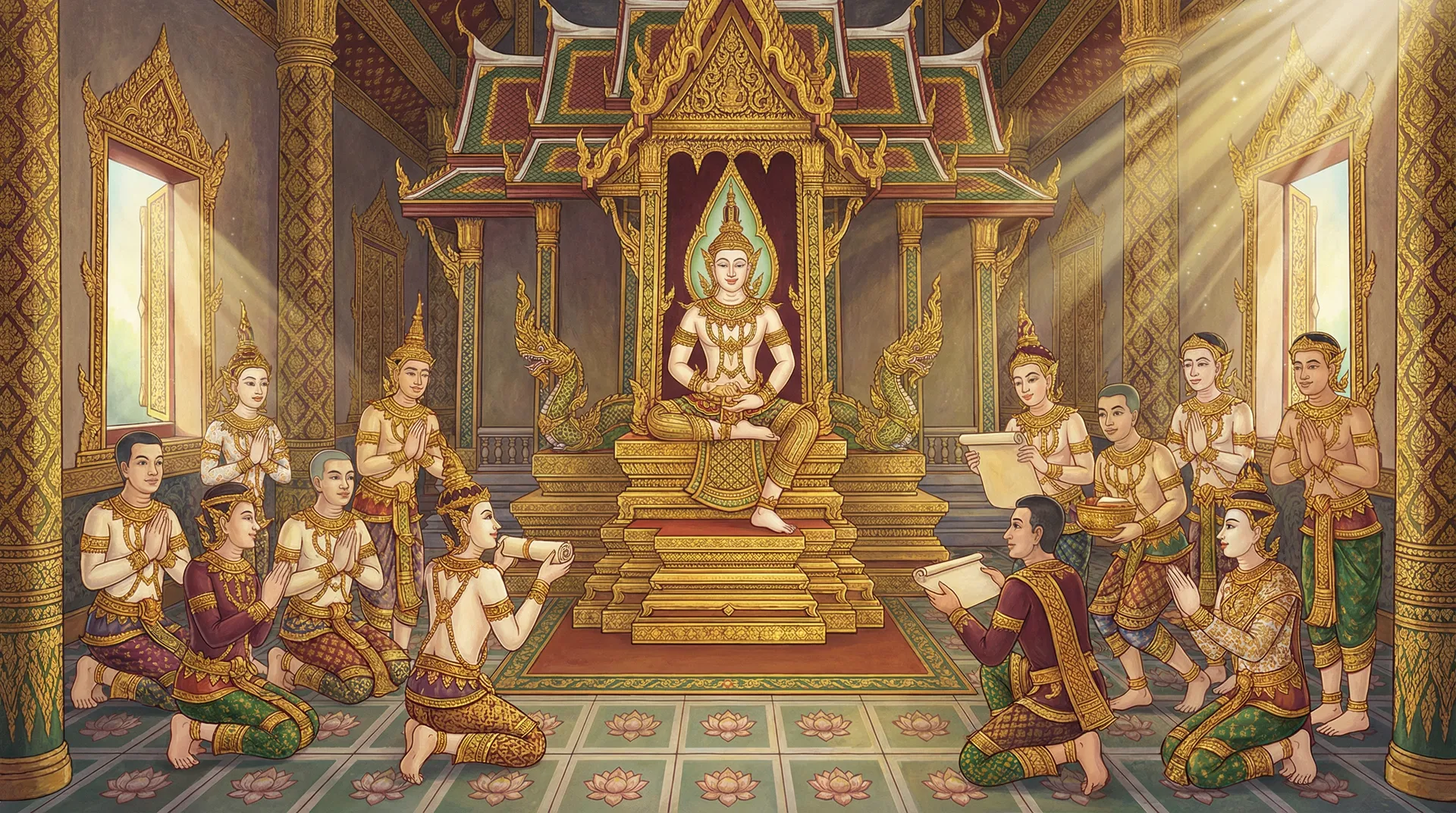
Under immense pressure, King Kalabhu made a difficult decision. He ordered Temiya to be taken out of the city and buried alive in a graveyard, believing that this harsh reality might shock him into action or, at the very least, remove the perceived threat to the kingdom. Temiya, understanding the king's intentions and his own desire to avoid worldly life, did not resist. He was taken to the graveyard and placed in a newly dug grave, covered with earth, leaving only his face exposed.
As Temiya lay in the grave, experiencing the stark reality of mortality and the transient nature of life, he felt no fear or despair. Instead, he found a strange sense of peace. He reflected on the suffering inherent in birth, aging, sickness, and death, and his resolve to renounce the world was solidified. In that moment, as if a divine sign, the earth around him began to tremble, and a chariot of gold descended from the heavens.
The divine beings who arrived explained that they had come to take Prince Temiya to a realm of eternal bliss, recognizing his profound detachment and his aspiration for liberation from the cycle of suffering. Temiya, without hesitation, ascended the golden chariot and departed from the earthly realm, leaving behind a bewildered king and a populace stunned by the divine intervention. The king and queen, witnessing this, finally understood their son's true nature and the depth of his spiritual aspiration.
The Temiya Jataka is a profound story about renunciation and the understanding of suffering. It illustrates that true freedom comes not from clinging to worldly possessions or power, but from detachment and the realization of impermanence. Temiya's story serves as a powerful reminder of the spiritual path and the ultimate goal of liberation from the cycle of rebirth.
— In-Article Ad —
💡කතාවේ ආදර්ශය
Attachment to worldly life leads to suffering. True liberation and peace are found in detachment, renunciation, and the understanding of impermanence. Sometimes, the greatest strength lies in stillness and profound spiritual insight, rather than outward action.
පාරමිතා: Renunciation (Nekkhamma Paramita), Detachment (Viraga Paramita)
— Ad Space (728x90) —
ඔබට ප්රිය ජාතක කතා
 513Vīsatinipāta
තම්බදාඨ ජාතකය
තම්බදාඨ ජාතකය පුරාතනයේ රජදහනක් තිබිණි. ඒ රජදහනේ රජකම් කළේ ධර්මිෂ්ඨ රජකෙනෙකි. රජුට ඉතාම සුන්දර,...
💡 අතීත කර්ම ඵල, ඉවසීමෙන් පිළිගැනීම, සැනසිල්ලට මාර්ගයයි.
 253Tikanipāta
කණ්හජාතකය
කණ්හජාතකයඅතීතයේ, රජෙකු පාලනය කළ බරණැස් නුවර, 'කණ්හ' නම් වල් ඌරු පැටියෙක් වාසය කළේය. කණ්හ, අනෙක් ඌරන්...
💡 නුවණින් හා වෙහෙස මහන්සි වී වැඩ කිරීමෙන්, ඕනෑම බාධකයක් ජයගෙන, සාර්ථක ජීවිතයක් ගත කළ හැකිය.
28Ekanipātaදුම්බර ජාතකය
දුම්බර ජාතකය ඈත අතීතයේ, බරණැස් රජුන්ගේ රාජධානියේ, ස්වර්ණමය යුගයක් පැවතිණි. රජතුමා ධර්මිෂ්ඨ වූය...
💡 අනුකම්පාව සහ ධර්මිෂ්ඨකම අගය කළ යුතු ගුණ ධර්මයන්ය. නමුත් සංසාරයෙන් මිදීමට නම්, බුදුරජාණන් වහන්සේගේ ධර්මය අනුගමනය කිරීම අත්යවශ්ය වේ.
59Ekanipātaමිත්ර බෝසතාණන් වහන්සේ
මිත්ර බෝසතාණන් වහන්සේබොහෝ කලකට පෙර, එක්තරා මහා නගරයක, මිත්ර බෝසතාණන් වහන්සේ, අතිශයින්ම මිත්රශීලී,...
💡 මිත්රත්වය, සහයෝගය, සහ කරුණාව, ඕනෑම අභියෝගයක් ජය ගැනීමට, සහ සාමයෙන්, සමෘද්ධියෙන්, ජීවත් වීමට උපකාරී වේ.
14Ekanipātaරණසිංහයාගේ ධෛර්යය
රණසිංහයාගේ ධෛර්යය ඈත අතීතයේ, ඝන වනයක් මැද, රජ මාළිගාවකට සමාන වූ විශාල ගල් ලෙනක, රණසිංහයා නම් වූ බෝසත...
💡 ධෛර්යය යනු බිය නොමැතිකම නොවේ, නමුත් බිය තිබියදීත් නිවැරදි දේ කිරීමයි.
37Ekanipātaකපුටු ජාතකය
කපුටු ජාතකය ඈත අතීතයේ, රජ දහන ගොඩනැඟී, ධර්මිෂ්ඨ රජවරු පාලනය කළ කාලයක, කර්ණාටක දේශයේ මගධ නම් රා...
💡 ධර්මයෙහි පිහිටා කටයුතු කරන්නවුන්ට සෙත සැලසේ. ධර්මය අත්හැර කටයුතු කරන්නවුන්ට විපත් පැමිණේ.
— Multiplex Ad —